








































Reviews
Explore reviews, comparisons, and buying guides for engraving and cutting machines. Learn about key differences, performance highlights, and ideal use cases to confidently select the right equipment.
Popular Posts

Metal Engraving Tools: Types and How to Choose
Metal engraving tools are widely used in sectors such as jewellery production, watchmaking, industrial marking, and customised product manufacturing. Selecting the right tool can greatly enhance engraving accuracy, efficiency, and overall finish quality.
This guide introduces the main types of metal engraving tools and helps you choose the most appropriate solution based on your project requirements, materials, and preferred engraving results. Whether you are a professional workshop operator or an EU-based DIY enthusiast, you'll gain a clear understanding of which tool suits your workflow best.
In this article:
Part 1: Metal Laser Engraving Machines
Type 1: Blue Diode Laser Engraver
Type 2: IR Laser Engraver
Type 3: Fibre Laser Engraver
Part 2: CNC Metal Engraving Machines
Part 3: Hand Metal Engraving Tools
Part 4: Electric Metal Engraving Tools
Part 5: How to Choose the Metal Tool Engraver
Part 6: FAQs about Metal Engraving Tools
Part 1: Metal Laser Engraving Machines
Metal laser engraving machines use a concentrated beam of light to engrave, mark, or cut metal surfaces with high precision. They are widely used in both creative workshops and industrial manufacturing environments. The best laser type depends on the material, engraving depth, and finish required.
Benefits of Metal Laser Engraving
High precision: Produces detailed patterns, fine text, and sharp graphics
Non-contact engraving: No mechanical force reduces deformation and surface wear
Efficient batch processing: Ideal for repeated production runs
Material versatility: Works across multiple metals and, depending on configuration, other materials
Across the EU, laser engraving machines are commonly used in jewellery production, product identification, and customised manufacturing, particularly in small workshops and maker spaces.
Type 1: Blue Diode Laser Engraver
Blue diode laser engravers are best suited for coated metals, including painted surfaces and anodised aluminium. They are not designed for deep engraving on bare metals, but they perform well on pre-treated surfaces.
EU-based DIY users often select diode lasers for personalisation projects involving coated promotional items, aluminium accessories, and decorative plates.
Type 2: IR Laser Engraver
Infrared laser engravers can mark directly onto bare metals without surface coatings. They work well on stainless steel, aluminium, and similar materials, producing clean, durable marks.
In EU workshops, IR lasers are frequently used for product labelling, industrial identification, and customised metal engraving.
Type 3: Fibre Laser Engraver
Fibre laser engravers typically offer higher power levels, often starting at 20W. This allows for deeper engraving and cutting of thin metal sheets. Compared to IR diode lasers, fibre lasers provide faster speeds, deeper engraving, and stronger contrast, making them suitable for industrial applications.
EU manufacturers commonly choose fibre lasers for serial marking, component identification, and long-lasting industrial engraving.
Best Metal Laser Engraving Machines
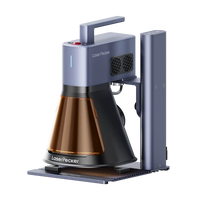
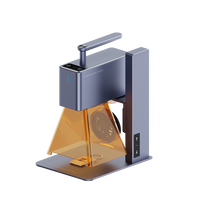
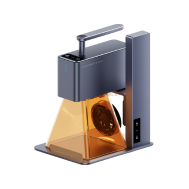
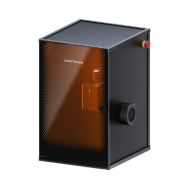
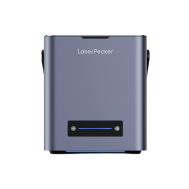
The LaserPecker LP5 combines a 20W fibre laser and a 20W diode laser (1064nm & 450nm), enabling engraving on both coated and uncoated metals.
Key Features:
Compact design: Suitable for small EU workshops and desktop setups
Fast engraving speed: Up to 10,000 mm/s for improved efficiency
Deep engraving capability: Durable markings across multiple metal types
3D coin engraving: Detailed relief engraving on metal items
Thin metal cutting: Cuts aluminium, copper, and stainless steel sheets up to 1 mm
Colour engraving on stainless steel: Long-lasting colour marking capability
Expandable working area: Slide extension (160 × 300 mm) for larger parts
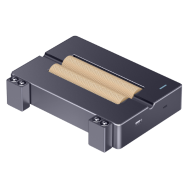
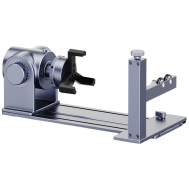
Rotary attachment support: Suitable for cylindrical items such as jewellery and cups
Software compatibility: Works with LightBurn and LaserPecker Design Space
Indoor-safe operation: Class 1 safety enclosure suitable for workshop environments
In the EU, this dual-laser configuration is particularly valued by small manufacturers and engraving studios that need flexibility across different metal types.
Part 2: CNC Metal Engraving Machines
CNC metal engraving machines are automated systems that use digital design files to precisely engrave or cut metal components. They are particularly well suited for producing repeated parts with consistent quality, making them ideal for serial numbering, product identification, and large-scale production.
These machines can also create complex 2D and 3D designs that would be extremely difficult to achieve manually. As a result, CNC engraving machines are widely used in both small workshops and industrial manufacturing environments.
Across the EU, CNC metal engraving machines are frequently adopted by engineering workshops, fabrication businesses, and customised product manufacturers that require reliable, repeatable production workflows.
Benefits of CNC Metal Engraving
Automation: Reduces manual work and improves operational efficiency
Consistent output: Ensures uniform engraving for branding and product identification
Advanced design capability: Supports intricate 2D and 3D engraving
Production flexibility: Suitable for small batches and high-volume manufacturing
Part 3: Hand Metal Engraving Tools
Hand metal engraving is a traditional method that uses manual tools such as burins, gravers, and chisels to carve designs into metal surfaces. This technique requires experience and precision but allows for distinctive artistic effects that are difficult to achieve with automated equipment.
While hand engraving typically takes longer than machine engraving, it provides superior control over engraving depth, line weight, and texture. This makes it ideal for decorative metalwork, bespoke jewellery, and limited-edition pieces.
Across the EU, hand engraving is commonly used by jewellery artisans, restoration specialists, and craft workshops producing customised metal products.
Benefits of Hand Metal Engraving
Creative flexibility: Allows for unique textures and artistic detailing
Individual customisation: Each item can be crafted differently
Precise manual control: Better management of depth, shading, and line quality
Part 4: Electric Metal Engraving Tools
Electric metal engraving tools feature vibrating or rotary tips that simplify the engraving process. They reduce manual workload while maintaining user control, offering a balance between traditional hand engraving and fully automated systems.
These tools are well suited for small-scale engraving, repetitive detailing, and light modification tasks. Many electric engravers include interchangeable tips, allowing users to create different patterns and finishes.
Across the EU, electric engraving tools are frequently used by DIY enthusiasts, small workshops, and maintenance technicians who need a flexible and cost-effective engraving solution.
Benefits of Electric Metal Engraving Tools
Lower user fatigue: Reduces strain during extended use
Faster workflow: Ideal for repeating patterns and small corrections
Versatile tip options: Supports multiple attachments for different engraving effects
Part 5: How to Choose the Metal Tool Engraver?
Selecting the right metal engraving tool depends on the material, engraving depth, production volume, and precision requirements. Budget and workspace considerations are also important. Manual tools are best suited for artistic applications, while laser and CNC systems are more appropriate for professional or industrial use.
Across the EU, users often choose engraving tools based on whether they operate small workshops, manufacturing facilities, or customised product businesses.
Material Compatibility
When choosing a metal engraving tool, consider the materials involved, such as stainless steel, aluminium, brass, or coated metals.
Diode lasers: Best for painted or anodised surfaces
IR lasers: Suitable for direct marking on bare metals
Fibre lasers: Ideal for deep engraving and industrial durability
Additional engraving options include:
Hand engraving tools: Provide artistic flexibility but require skill and are slower for production work
Electric engravers: Suitable for small modifications but limited in precision and depth on hard metals
CNC engraving machines: Deliver consistent results on bare metals but require more setup, space, and investment
These differences help determine the most suitable tool for specific materials and production needs.
Depth and Durability
Consider the required engraving depth and long-term durability. Light decorative engraving can be achieved with lower-power lasers or manual tools. For industrial marking, deeper engraving with fibre lasers or CNC machines is recommended.
In EU manufacturing environments, durable engraving is often required for product identification, traceability, and compliance markings.
Budget and Production Volume
Budget and production scale should guide your decision.
Entry-level use: Hand tools and electric engravers are economical options
Small workshop production: Desktop laser engravers provide flexibility
Industrial production: CNC machines and fibre lasers support large-scale output
EU small businesses frequently begin with compact laser systems before expanding to higher-power solutions.
Precision and Detail Requirements
Precision requirements also affect tool selection. Laser and CNC machines provide high accuracy and repeatability, making them suitable for logos, identification marks, and technical components. Hand engraving tools allow for artistic control and bespoke finishes.
Part 6: FAQs about Metal Engraving Tools
Q1. Can all laser engravers mark untreated metal?
No. Blue diode lasers usually require coated or anodised surfaces. Infrared (1064nm) and fibre lasers can engrave directly on bare metals. Fibre lasers also support deeper engraving and cutting of thin metal sheets, making them suitable for industrial applications.
Q2. What is the difference between CNC engraving and manual engraving?
CNC engraving offers consistent and repeatable output, ideal for product identification, serial numbers, and production workflows. Manual engraving provides artistic flexibility and custom detailing. Many EU workshops use CNC machines for base engraving and manual tools for finishing work.
Q3. Why is the LP5 suitable for professional environments?
The LP5 features both a 20W fibre laser and a 20W diode laser, allowing it to engrave coated and uncoated metals. With speeds up to 10,000 mm/s and support for deep engraving, cutting, and colour marking, it is suitable for production environments. Optional accessories such as rotary attachments expand its capabilities.
Q4. Which engraving tool is best for EU workshop use?
Desktop laser engravers are widely used in EU workshops due to their compact size and versatility. Dual-laser systems allow users to engrave different metal types without switching equipment, improving workflow efficiency.
Q5. Do I need ventilation when engraving metal indoors?
Yes. Laser engraving may generate fumes depending on the material. Proper ventilation or air purification systems are recommended for safe indoor operation, particularly in enclosed workshop environments.
Q6. What is the most precise metal engraving method?
Laser engraving and CNC engraving provide the highest precision. Fibre lasers offer excellent detail for metal marking, while CNC machines are ideal for repeatable mechanical engraving with tight tolerances.
Conclusion
Selecting the right metal engraving tool requires careful consideration of several factors, including material type, engraving depth, production scale, and the level of precision required.
Hand tools are best suited for artistic detailing and customised, one-off pieces
Electric tools provide faster operation and greater convenience for regular use
CNC systems ensure high precision and repeatability, especially in production environments
Metal laser engravers, such as the LP5, offer a balance of power, versatility, and professional results
Across the EU, users often choose tools based on both performance and scalability―whether for DIY projects, small businesses, or industrial applications.
Combining multiple tools can also enhance results. For instance, laser engraving can be used for accuracy and consistency, while manual finishing adds texture and detail.
By understanding the capabilities of each tool and matching them to your specific needs, you can achieve efficient workflows, consistent output, and high-quality engraving results across a wide range of applications.
Reviews
June 23, 2026