
















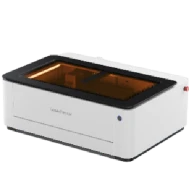
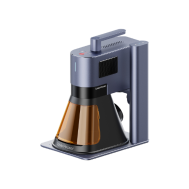
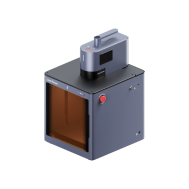
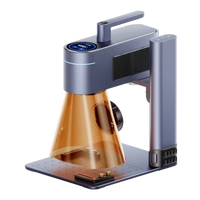
























Jewellery customisation is increasingly popular across the EU, driving demand for reliable laser engraving machines in both small businesses and professional workshops. These machines offer precise engraving, efficient performance, and compatibility with materials such as metals, plastics, and coated surfaces—ideal for rings, pendants, and customised accessories.
With a wide range of models available, selecting the right machine can be complex. This guide covers essential factors including engraving precision, material compatibility, software workflow, and performance efficiency to help you choose the best option for your needs.

In this article:
Part 1: Benefits of a Laser Engraving Machine for Jewellery
A reliable jewellery laser engraving machine can enhance both production quality and operational efficiency. Across the EU, these machines are widely used by independent makers, small businesses, and professional workshops looking to scale their customisation capabilities.
1. Wide Material Compatibility
Laser engravers can process a diverse range of materials commonly used in jewellery production, such as:
- Precious metals including gold, silver, and platinum
- Treated and coated metal surfaces
- Materials like plastic, wood, leather, and glass
This flexibility allows EU businesses to diversify their product offerings without requiring multiple specialised tools.
2. Precision and Detail Quality
Laser engraving systems deliver consistent, high-precision results, enabling:
- Sharp and clean engraving lines
- Fine text and intricate detailing
- Complex graphics, logos, and QR codes
This is especially valuable in the EU market, where craftsmanship and detail are key factors in product differentiation.
3. Suitable for Curved and Irregular Surfaces
Laser engravers can accurately work on non-flat surfaces, making them ideal for:
- Rings, including inner surface engraving
- Bracelets and curved accessories
- Small pendants and decorative items
- Industrial-style metal tags
For EU-based custom jewellery businesses, this expands the range of possible designs and applications.
4. Scalable Production Efficiency
With advanced software capabilities, users can:
- Store and reuse engraving designs
- Standardise production using templates
- Handle batch processing with consistent results
This makes laser engraving machines a practical solution for both customised orders and small-scale manufacturing across the EU.
5. Non-Contact Process for Material Safety
Laser engraving does not require physical contact with the material, which provides several advantages:
- Eliminates the risk of scratches or surface damage
- Preserves delicate finishes and coatings
- Ensures uniform engraving quality across multiple items
This is particularly important for EU manufacturers working with premium or high-value jewellery products. In the EU, compliance with safety standards and indoor operation is often a priority. Many users prefer machines with enclosed designs (Class 1 laser safety) or those compatible with air filtration systems to ensure safe use in studios or small business environments.
Part 2: How a Jewellery Laser Engraving Machine Works
A jewellery laser engraving machine operates by projecting a concentrated beam of light onto the surface of a material. When the laser interacts with the jewellery, it generates heat that causes the material to vaporise, oxidise, or melt in a controlled way, producing a precise engraving.
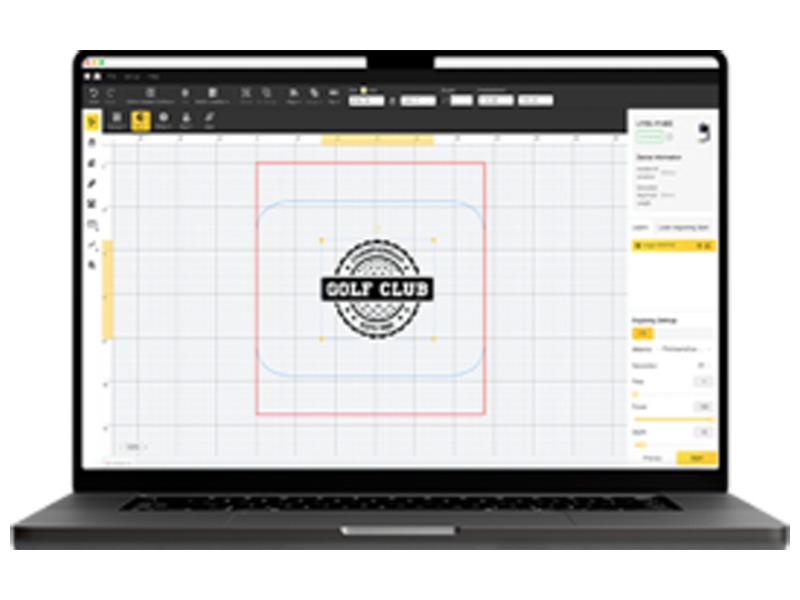
The entire process is guided by software, which controls essential parameters such as engraving depth, spacing, laser power, speed, and focal accuracy. This ensures that digital designs are accurately reproduced on physical materials.
Step-by-Step Workflow
1. Design Preparation
Create or import a design file into the engraving software.
Common file formats used across the EU include SVG, DXF, and bitmap images for customised jewellery production.
2. Parameter Adjustment
Configure the machine settings according to the material type, including:
- Power output
- Engraving speed
- Resolution
Proper calibration is key to achieving consistent, high-quality results.
3. Laser Focusing
Optical lenses focus the laser beam onto the material surface with high precision.
Accurate focusing ensures optimal engraving clarity and detail.
4. Engraving Execution
The laser follows the programmed design path, engraving the material with precision and consistency.
This enables detailed graphics, logos, and fine text even on small or complex jewellery items.
5. Finishing Process
After engraving, additional finishing steps may be applied, such as:
- Surface cleaning
- Polishing
- Brushing
These processes improve visual contrast and enhance the final presentation.
Across the EU, users often prioritise workflow efficiency and consistency, especially in small-scale manufacturing environments. Machines with stable software performance and repeatable results are particularly valued for batch production and customised orders.
Part 3: Main Types of Jewellery Engraving Machines
Selecting the right laser engraving machine for jewellery requires a clear understanding of how different laser types perform across materials and applications. Each technology offers specific advantages depending on production needs and business scale.
Type 1: Fibre Laser Engravers for Jewellery
Fibre lasers are the preferred solution for engraving metals. With a wavelength of approximately 1064 nm, they are highly effective for:
- Precious metals such as gold, silver, and platinum
- Titanium and stainless steel
- Industrial metal applications
They provide deep engraving, strong contrast marking, and high-speed performance.
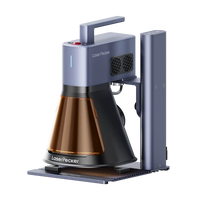
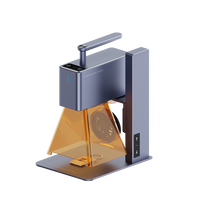
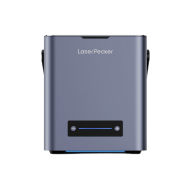
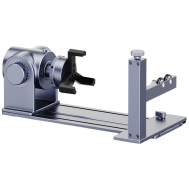
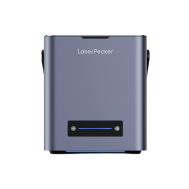
The LaserPecker LP5 can also handle curved surfaces like rings when used with rotary accessories, making it suitable for customised jewellery production across the EU.
Professional jewellers favour fibre lasers for their reliability, precision, and long-term durability.
Type 2: Infrared Laser Engravers for Jewellery
Infrared lasers share similar characteristics with fibre lasers but typically operate at lower power levels. They are mainly used for surface marking rather than deep engraving.
Best applications include:
- Soft metals
- Coated or plated jewellery
- Thin and sensitive materials
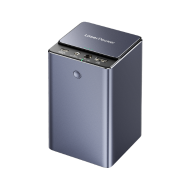
Infrared machines such as the LaserPecker LP4 are a cost-effective option for EU small businesses and workshops that require consistent marking without high capital investment.
Type 3: Diode Laser Engravers for Jewellery
Diode lasers (around 450 nm) are designed primarily for non-metal materials, including:
- Wood and bamboo
- Acrylic and resin
- Leather
- Coated surfaces
They are affordable, easy to operate, and widely used by hobbyists and small-scale producers across the EU.
Although not suitable for direct metal engraving, they are ideal for producing customised jewellery made from alternative materials.
Type 4: CO2 Laser Engravers for Jewellery
CO2 lasers operate at 10,600 nm and are well-suited for processing non-metal materials such as:
- Acrylic
- Glass
- Wood
- Leather
They can mark coated metals but require pre-treatment for raw metal engraving.
For EU businesses specialising in acrylic or glass jewellery production, CO2 lasers offer high-quality finishes and efficient cutting performance.
Comparison Table: Laser Types Overview
| Laser Type | Best Materials | Precision | Depth Capability | Ideal User |
|---|---|---|---|---|
| Fibre Laser | Gold, silver, platinum, titanium, steel | ★★★★★ | ★★★★★ | Professional jewellers |
| Infrared Laser | Soft metals, coated metals, acrylic, plastic | ★★★★☆ | ★★★★☆ | Small studios |
| Diode Laser | Wood, acrylic, leather, coated materials | ★★★☆☆ | ★★☆☆☆ | Beginners, hobbyists |
| CO2 Laser | Acrylic, glass, wood, leather | ★★★★☆ | ★★★☆☆ | Acrylic jewellery makers |
Why Businesses in the EU Are Moving Towards Dual-Laser Systems in 2026
Across the EU, more jewellery businesses are adopting multi-functional laser systems to improve efficiency and reduce equipment costs.
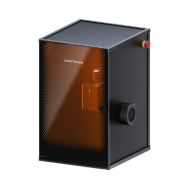
The LaserPecker LP5 combines:
- 20W fibre laser for metal engraving
- 20W diode laser for non-metal processing
This enables users to handle a wide range of materials within a single machine, including metals, plastics, leather, and wood.
Key advantages include:
- High-speed engraving (up to 10,000 mm/s)
- Support for 3D engraving applications
- Compatibility with rotary accessories
- Seamless integration with common engraving software
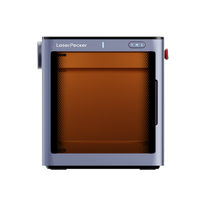
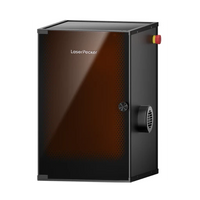
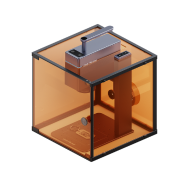
Its compact footprint and optional enclosed design make it suitable for:
- Small workshops
- Retail environments
- Educational settings
- Production studios
For EU users seeking versatility, consistency, and cost-efficiency, a dual-laser solution like the LaserPecker LP5 offers a strong balance between performance and flexibility.
Part 4: FAQs about Laser Engraving Machines for Jewellery
Q1. What is the best laser for jewellery engraving?
For engraving metal jewellery, fibre lasers are the preferred choice due to their precision, speed, and ability to create deep, permanent markings.
If you work with both metal and non-metal materials, a dual-laser system such as the LaserPecker LP5 provides a versatile solution for a wide range of applications.
Q2. Can 14k gold be laser engraved?
Yes, 14k gold can be engraved using fibre or infrared lasers without causing damage.
These systems allow for:
- Detailed engravings
- High-contrast surface marks
- Custom text and decorative patterns
This makes them suitable for personalised jewellery production across the EU.
Q3. Is it possible to engrave inside rings using a laser machine?
Yes, engraving the inside of rings is possible with modern laser systems.
A rotary attachment enables the ring to rotate precisely during engraving, ensuring consistent results. Fibre lasers are particularly effective for engraving precious metals such as gold and platinum.
Q4. CO2 vs fibre laser: which one should you choose?
The choice depends on the materials you plan to work with:
- Fibre lasers: Ideal for metals and industrial applications
- CO2 lasers: Best for acrylic, wood, leather, and glass
For EU businesses handling diverse materials, combining both technologies in one system can improve efficiency and reduce equipment costs.
Q5. What safety features should you look for in the EU?
In the EU market, safety and compliance are key considerations. Look for machines that offer:
- Enclosed designs (Class 1 laser safety)
- Effective air filtration or fume extraction
- Stable and certified electrical components
These features help ensure safe operation in workshops, retail environments, and educational settings.
Q6. What is the average price of a jewellery laser engraving machine in the EU?
Pricing varies depending on machine type and performance:
- Entry-level diode lasers: €200–€600
- Mid-range infrared systems: €800–€2,000
- Professional fibre or dual-laser machines: €2,000+
EU buyers often prioritise long-term reliability and compliance when selecting equipment for business use.
Conclusion
Selecting the right jewellery laser engraving machine in 2026 depends largely on your materials, production requirements, and desired level of precision.
Fibre lasers continue to be the most effective option for metal engraving, delivering high accuracy and consistent results. Diode and CO2 systems are more suitable for non-metal materials such as acrylic, wood, and glass.
For businesses across the EU seeking a versatile and space-efficient solution, dual-laser systems such as the LaserPecker LP5 offer the ability to process multiple materials within a single machine.
By choosing the right equipment, you can improve production efficiency, maintain consistent quality, and expand your capabilities in customised jewellery manufacturing.