






































Glass engraving is a widely used method for personalising items such as home décor, drinkware, jewellery, awards, and gifts. From engraving names on wine glasses to creating intricate designs on vases or customising branded glassware for businesses, selecting the right tool plays a key role in achieving clean and consistent results.
Across the EU, glass engraving is increasingly popular among DIY enthusiasts, crafters, and small businesses looking to produce customised products locally with a professional appearance.
With advancements in engraving technology, it has become more accessible to beginners—allowing users to start from home setups while still maintaining precision and quality.
In this guide, we'll introduce six essential glass engraving tools for 2026, helping you identify the most suitable option based on your skill level, application needs, and production goals.

In this article:
- Part 1: Common Use Cases of Glass Engraving
- Part 2: How to Choose the Right Glass Engraving Tool for Your Needs
-
Part 3: Six Popular Glass Engraving Tools
- Type 1: Diamond-Tipped Engraving Pen
- Type 2: Carbide Scribe / Tungsten Carbide Etching Needle
- Type 3: Electric Engraving Pen
- Type 4: Mini Rotary Tool
- Type 5: Sandblasting Gun
- Type 6: Laser Engraving Machine for Glass
- Part 4: Which Glass Engraving Tool Is Best in 2026
- Part 5: FAQs About Glass Engraving Tools
Part 1: Common Use Cases of Glass Engraving
Glass engraving serves a variety of purposes, ranging from business applications to creative and decorative projects.
Across the EU, it is widely used by artisans, small enterprises, and DIY enthusiasts who want to produce customised glass items with a professional finish. Common use cases include:
- Wine, whisky, and champagne glasses personalised with names or initials
- Glass jars, ornaments, and photo frames designed as customised gifts
- Business logos engraved on glassware or signage for bars, cafés, and local brands
- Decorative patterns applied to vases, mirrors, and architectural glass elements
- Memorial pieces and engraved awards for events or recognition
- Creative etched artwork for hobby or artistic expression
Glass engraving offers great flexibility in terms of design. You can create anything from simple text, such as names and dates, to more complex designs like floral motifs or branded logos—making it suitable for both personal projects and small-scale production across the EU market.
Part 2: How to Choose the Right Glass Engraving Tool for Your Needs
Selecting the right glass engraving tool depends on several practical factors that influence both quality and efficiency.
Across the EU, hobbyists often begin with affordable manual tools, while professionals and small businesses tend to adopt laser engraving machines for precision and repeatability.
Consider the following points before making your choice:
-
Required level of detail
Detailed graphics, branding elements, or complex patterns demand precise tools, while simple text engraving can be handled with more basic equipment. -
Size of your projects
Small items such as drinkware or jewellery require different handling compared to larger applications like mirrors, signage, or decorative panels. -
Your experience level
Handheld tools require more control and practice. In contrast, laser engravers provide automated precision, making them a suitable option for beginners and professionals alike. -
Budget range
Basic engraving tools may cost around €10–€20, whereas advanced laser systems involve a higher investment but offer greater capabilities. -
Work volume and frequency
For occasional use or hobby projects, manual tools are often sufficient. For higher-volume production or commercial use, laser engraving machines deliver better speed and consistency.
By clearly defining your intended use—whether for personal projects or small-scale production—you can choose a tool that aligns with your needs within the EU market.
Part 3: Six Popular Glass Engraving Tools
A wide range of glass engraving tools is available across the EU market, each offering different levels of control, precision, and efficiency.
While hobbyists often begin with manual tools, professionals and small businesses in the EU increasingly prefer powered and laser-based solutions for consistent, scalable production.
Type 1: Diamond-Tipped Engraving Pen
A diamond-tipped engraving pen is a basic hand tool that scratches glass surfaces using a hardened tip. It is suitable for fine lines, small text, and simple decorative designs.
Its affordability and ease of use make it a common entry-level choice across the EU.
Best for:
- Simple drawings and outlines
- Personalised text such as names or initials
- Portable use without electricity
Limitations:
- Requires manual control and precision
- Inconsistent results compared to machines
- Not suitable for large-scale or complex designs
Type 2: Carbide Scribe / Tungsten Carbide Etching Needle
This tool uses a tungsten carbide tip to engrave hard surfaces like glass with precision. It is particularly effective for straight lines and controlled markings.
It is widely used in the EU for technical marking, scoring, and simple engraving tasks.
Best for:
- Straight lines and precision marking
- Glass labelling and scoring
- Shallow engravings
Limitations:
- Manual operation requires skill
- Limited artistic flexibility
- Not suitable for detailed or shaded designs
Type 3: Electric Engraving Pen
An electric engraving pen uses motor-driven motion to simplify the engraving process. It reduces hand pressure and improves consistency compared to manual tools.
In the EU, it is often chosen by beginners looking for a balance between affordability and improved control.
Best for:
- Beginners and light DIY use
- Simple designs and text
- Basic shading effects
Limitations:
- Limited precision for complex artwork
- Dependent on hand stability
- Less professional finish than advanced methods
Type 4: Mini Rotary Tool
A mini rotary tool uses high-speed rotation and interchangeable bits to engrave glass. It offers more flexibility and depth compared to engraving pens.
With appropriate bits, it can produce detailed textures and patterns, making it suitable for creative projects across the EU.
Best for:
- Detailed engraving and textures
- Versatile applications
- Deeper carving work
Limitations:
- Requires experience and control
- Risk of damaging glass surfaces
- Not ideal for high-volume production
Type 5: Sandblasting Gun
Sandblasting systems use abrasive materials to etch glass evenly, producing a consistent frosted appearance.
This method is commonly used in the EU for signage, decorative panels, and branded glassware.
Best for:
- Large-scale designs
- Frosted finishes
- Consistent surface engraving
Limitations:
- Requires specialised equipment and ventilation
- Higher cost and setup complexity
- Limited fine detail
Type 6: Laser Engraving Machine for Glass
Laser engraving machines provide high precision by using a focused beam to etch designs onto glass. They are capable of producing detailed graphics, logos, and photo-quality images.
Across the EU, these machines are widely adopted by small businesses and professionals for their accuracy, repeatability, and efficiency in both custom and batch production.
Best for:
- Complex and detailed designs
- Branding, personalised items, and production work
- Repeatable, high-quality output
Limitations:
- Higher upfront cost
- Requires setup and power supply
- Initial learning curve
Part 4: Which Glass Engraving Tool Is Best in 2026
In 2026, laser engraving machines are regarded as the most effective solution for glass engraving across the EU. They offer a combination of precision, speed, and ease of operation, making them suitable for both hobby users and professional applications.
Compared to manual tools, laser engravers deliver consistent and repeatable results—an important factor for small businesses and production workflows within the EU market.
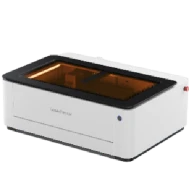
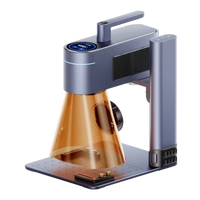
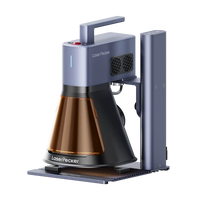
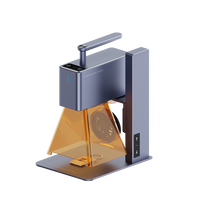
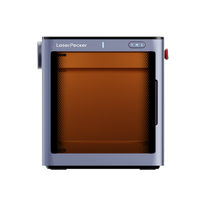
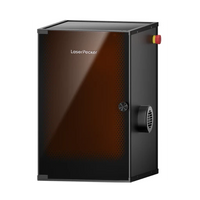
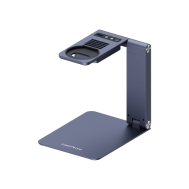
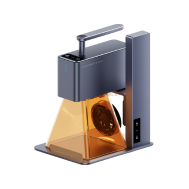
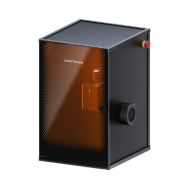
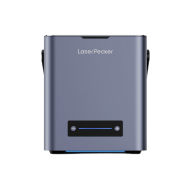
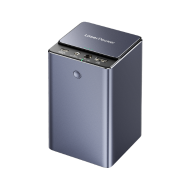
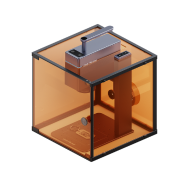
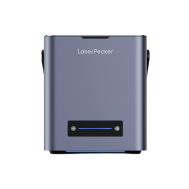
Top Pick: LP2 Plus + LaserPecker Rotary Extension
The LP2 Plus is a versatile and portable engraving machine designed for beginners and small-scale businesses across the EU.
Featuring a 10W diode laser, it provides precise engraving and reliable performance on a wide range of materials, including coated glass surfaces. For optimal glass engraving results, applying a marking spray or coating is recommended to enhance contrast.
Why the LP2 Plus is suitable for glass engraving:
- Fast engraving speeds up to 4,000 mm/s for efficient production
- 10W diode laser for accurate and consistent results
- Wide material compatibility (100+ materials supported)
- Dual red-dot focusing system for easy setup
- Portable and space-efficient design
- Flexible engraving angles for different applications
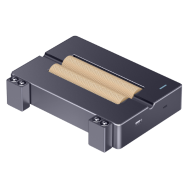
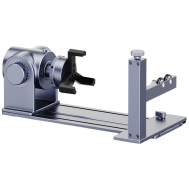
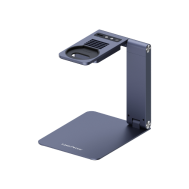
Rotary Engraving Capability
With the LaserPecker Rotary Extension, the LP2 Plus can engrave round and cylindrical glass objects with precision.
Compatible with:
- Wine glasses
- Drinking glasses
- Bottles and containers
- Cylindrical glass items
This setup ensures stable rotation and uniform engraving quality, making it suitable for customised products and small-batch production.
For EU users, the LP2 Plus is particularly suitable for:
- Indoor workshops and small businesses
- Personalised product creators
- Scalable engraving setups with limited space
Which Type of Glass Is Best for Engraving?
The type of glass you choose has a direct impact on engraving quality and safety. Some materials respond well to engraving processes, while others may crack or degrade.
Recommended Glass Types
The following glass types are generally suitable for engraving:
- Soda-lime glass
- Borosilicate glass (e.g. Pyrex)
- Lead-free crystal glass
- Frosted glass
- Stained glass
- Non-tempered drinkware
These materials provide stable and predictable results when engraved using laser or mechanical tools.
Glass Types to Avoid
The following materials are not recommended unless using specialised industrial equipment:
- Tempered glass – may shatter due to internal stress
- Laminated glass – inner layers can melt or burn
- Low-grade glass – inconsistent structure increases failure risk
- Coated glass – coatings may produce fumes or degrade under heat
Testing on a sample piece before starting your final project is strongly recommended to ensure safe operation and optimal engraving results.
Part 5: FAQs About Glass Engraving Tools
Q1. What tools are commonly used for glass engraving and etching?
Common tools include diamond engraving pens, rotary tools with diamond bits, sandblasting systems, and laser engraving machines.
Across the EU, beginners often start with manual tools, while professionals and small businesses prefer laser engravers for their precision, efficiency, and ability to produce repeatable results.
Q2. Is it safe to engrave tempered glass?
No, engraving tempered glass is generally unsafe. The internal tension within the material can cause it to break or shatter during engraving.
Most standard engraving tools, including laser machines, are not suitable for tempered glass. Non-tempered glass is a safer and more reliable option.
Q3. What are the most common mistakes in glass engraving?
Typical mistakes include:
- Excessive pressure during engraving
- Incorrect tool or bit selection
- Using unsuitable glass materials
- Failing to clean the surface beforehand
- Improper machine settings
Testing on a sample piece is strongly recommended to ensure proper results.
Q4. What is the difference between etching and engraving glass?
Etching removes a thin layer from the glass surface using chemicals or abrasive processes, producing a frosted effect.
Engraving involves cutting deeper into the glass using mechanical tools or lasers, resulting in more visible and long-lasting designs.
Q5. Is laser engraving more effective than hand engraving?
Laser engraving is more effective for achieving precise, consistent, and repeatable results, especially for logos and production work.
Hand engraving is better suited for artistic or custom one-off designs where uniqueness is more important than uniformity.
Q6. Which glass engraving tool is best for beginners in the EU?
Beginners can start with simple tools such as diamond-tipped pens or electric engravers.
For users looking to scale up or improve consistency, laser engraving machines are widely used across the EU due to their reliability and efficiency.
Conclusion
Glass engraving presents strong creative and commercial potential, from customised gifts to branded glass products. While manual and electric tools can be useful for beginners, they often lack the precision, efficiency, and consistency required for professional results.
For users across the EU aiming to grow or scale production, laser engraving machines offer a more reliable and efficient long-term solution. Entry-level systems such as the LaserPecker LP2 Plus provide a balance of performance, ease of use, and flexibility.
With its compact form, high-speed engraving, and compatibility with rotary accessories, the LP2 Plus is well suited for indoor workshops, small businesses, and personalised product creators seeking consistent, high-quality output.