




























L’acrylique est largement utilisé dans toute l’Europe pour la signalétique, les projets de design et le prototypage de produits. Qu’il s’agisse de décorations personnalisées ou d’applications industrielles, il est essentiel d’obtenir des coupes nettes et des dimensions précises pour garantir des résultats de haute qualité. Le choix de la bonne machine de découpe est donc une décision importante.
Les différentes méthodes de découpe donnent des résultats très différents, et tous les outils ne sont pas conçus pour traiter efficacement l’acrylique. Dans ce guide, nous présentons les principaux types de machines de découpe de l’acrylique, expliquons leur fonctionnement et vous aidons à choisir l’option la plus adaptée pour une découpe rapide et précise dans vos projets.

Dans cet article :
- Partie 1 : Qu’est-ce qu’une machine de découpe de l’acrylique ?
- Partie 2 : Quatre types courants de machines et d’outils de découpe de l’acrylique
- Type 1 : Outils manuels de découpe de l’acrylique
- Type 2 : Scies et machines de découpe mécaniques
- Type 3 : Fraiseuse CNC pour la découpe de l’acrylique
- Type 4 : Machine de découpe laser de l’acrylique
- Partie 3 : Quelle machine de découpe laser convient à l’acrylique
- Partie 4 : FAQ sur les machines de découpe de l’acrylique
Partie 1 : Qu’est-ce qu’une machine de découpe de l’acrylique ?
Une machine de découpe de l’acrylique sert à découper des plaques d’acrylique selon une grande variété de formes et de dimensions. Ces machines vont des outils manuels basiques aux systèmes sophistiqués à commande numérique. Leur fonction principale est d’obtenir des coupes nettes avec une grande précision dimensionnelle et une qualité de bord constante.
En tant que matériau, l’acrylique est à la fois rigide et cassant, ce qui nécessite une méthode de découpe différente de celle utilisée pour le bois ou le métal. Une force, des vibrations ou une chaleur excessives peuvent provoquer des fissures ou des bords irréguliers. Le choix de la machine de découpe de l’acrylique doit donc tenir compte non seulement de sa capacité de coupe, mais aussi de son efficacité à gérer la force, la température et les mouvements.
Dans toute l’Europe, les machines de découpe de l’acrylique sont largement utilisées dans la production industrielle, ainsi que par les amateurs et les petites entreprises. Elles permettent de transformer des plaques planes en pièces fonctionnelles, en éléments décoratifs ou en produits finis, tandis que la découpe précise réduit le besoin de post-traitement.
Applications courantes
Les machines de découpe de l’acrylique sont couramment utilisées dans divers secteurs et pour différentes applications créatives, notamment :
- Systèmes de signalétique et d’affichage
- Présentoirs de produits
- Panneaux décoratifs
- Éléments d’éclairage
- Maquettes architecturales
- Projets de bricolage et de fabrication
- Cadeaux personnalisés
L’acrylique étant souvent apprécié pour sa transparence, il est essentiel d’obtenir des bords lisses et nets.
Caractéristiques de l’acrylique
L’acrylique possède des caractéristiques propres qui influencent la manière dont il doit être découpé :
- Solide mais cassant : susceptible de s’ébrécher sous l’effet de contraintes inégales
- Sensible à la chaleur : se ramollit sous l’effet de la chaleur, mais peut fondre en cas de surchauffe
- Visuellement peu tolérant : les imperfections de surface sont facilement perceptibles
Pour ces raisons, la précision, la stabilité et un contrôle précis pendant la découpe sont essentiels.
Partie 2 : quatre types courants de machines et d’outils de découpe de l’acrylique
Il existe plusieurs méthodes pour découper l’acrylique, chacune offrant différents niveaux de précision, de rapidité et de compatibilité avec les matériaux. La meilleure option dépend de l’épaisseur de l’acrylique, des exigences du projet et de l’échelle de production.
Type 1 : outils manuels de découpe de l’acrylique
Les outils manuels de découpe de l’acrylique comprennent généralement des couteaux à rainer et des outils de découpe portatifs. Le matériau est entaillé le long d’une ligne marquée, puis cassé proprement.
Avantages :
- Abordables et faciles à utiliser
- Portatifs et légers
- Adaptés aux découpes droites dans l’acrylique fin
- Aucune source d’alimentation requise
Limites :
- Découpes droites uniquement
- Précision moindre
- Bords plus grossiers
- Ne convient pas aux formes complexes ni aux panneaux d’acrylique plus épais
Type 2 : scies et machines de découpe mécanique
Ce groupe comprend les scies circulaires sur table, les scies à ruban et les scies sauteuses équipées de lames compatibles avec le plastique.
Avantages :
- Découpe plus rapide des plaques d’acrylique plus épaisses
- Équipement courant dans les ateliers
- Adaptée au façonnage et à la préparation grossiers
Limites :
- Le contact de la lame peut provoquer des éclats ou faire fondre le matériau
- Précision limitée des détails
- Une finition supplémentaire des bords est souvent nécessaire
Type 3 : défonceuse CNC pour la découpe de l’acrylique
Les défonceuses CNC utilisent des fraises rotatives entraînées par un moteur et contrôlées par un logiciel pour découper, graver et usiner des plaques d’acrylique.
Les applications courantes comprennent :
- Systèmes de présentation
- Composants architecturaux
- Panneaux personnalisés
- Prototypes fonctionnels
- Produits décoratifs en acrylique
Comme la fraise entre directement en contact avec l’acrylique, un contrôle précis de la vitesse d’avance et de la vitesse de broche est nécessaire.
Avantages :
- Répétabilité constante
- Adaptée aux matériaux plus épais
- Prend en charge les profils et les formes complexes
- Adaptée à la production à moyenne échelle
Limites :
- Des marques d’outil peuvent apparaître sur les bords
- Les fraises nécessitent un entretien et un remplacement réguliers
- Moins adaptées aux détails ultra-fins que les machines de découpe laser
Type 4 : machine de découpe laser pour acrylique
Les machines de découpe laser découpent l’acrylique à l’aide d’un faisceau laser focalisé plutôt qu’avec une lame physique. Le matériau est fondu ou vaporisé le long d’un tracé de découpe numérique, ce qui permet d’obtenir des résultats nets et précis.
Les utilisations courantes comprennent :
- Produits décoratifs
- Signalétique commerciale
- Prototypage
- Formes en acrylique complexes
- Cadeaux personnalisés
La découpe sans contact réduit les contraintes exercées sur le matériau tout en améliorant la répétabilité et en limitant les déchets.
Avantages :
- Découpe de haute précision
- Bords lisses nécessitant un minimum de finition
- Excellent pour les motifs détaillés et les petits composants
- Qualité de production constante
- Aucune déformation physique
- Permet la découpe et la gravure
Limites :
- Nécessite une ventilation adéquate
- Coût initial de l’équipement plus élevé
Tableau comparatif des machines de découpe de l’acrylique
| Méthode de découpe | Précision | Qualité des bords | Formes complexes | Entretien | Cas d’utilisation idéal |
|---|---|---|---|---|---|
| Outils manuels | Faible | Grossière | Non | Très faible | Découpes droites sur acrylique fin |
| Scies mécaniques | Moyenne | Inégale | Limitée | Moyenne | Feuilles épaisses et découpes grossières |
| Fraiseuse CNC | Moyenne à élevée | Modérée | Oui | Élevée | Panneaux, composants et prototypes |
| Machine de découpe laser | Élevée | Lisse | Excellent | Faible | Découpe et gravure de précision sur acrylique |
Comment choisir une machine de découpe laser pour l’acrylique
Lors du choix d’une machine de découpe laser pour l’acrylique, plusieurs facteurs de performance doivent être pris en compte.
Stabilité et précision du mouvement
Un mouvement fluide de la machine est essentiel pour obtenir une découpe nette de l’acrylique.
Les caractéristiques importantes incluent :
- Structure de châssis stable
- Systèmes de déplacement précis
- Fonctionnement à faibles vibrations
Gestion de la chaleur et contrôle de la puissance
L’acrylique est sensible à la surchauffe.
Une machine fiable doit offrir :
- Réglages de puissance ajustables
- Puissance stable du faisceau
- Application contrôlée de la chaleur
Fonction d’assistance à l’air
L’assistance à l’air améliore la qualité de la découpe de l’acrylique en :
- L’élimination des débris
- La réduction des résidus de brûlure
- Une meilleure finition des bords
- Des découpes plus propres
Découpe et gravure combinées
De nombreux projets nécessitent à la fois de la découpe et de la gravure.
La double fonctionnalité améliore :
- Efficacité du flux de travail
- Précision de l’alignement
- Flexibilité de la production
Simplicité du logiciel et du flux de travail
Un logiciel performant et des commandes intuitives contribuent à réduire les erreurs de configuration et à améliorer la productivité.
Fonctionnalités recommandées :
- Large compatibilité des fichiers
- Transfert facile des conceptions
- Commandes simples de la machine
La prise en compte de ces caractéristiques aidera à identifier la machine de découpe laser la plus adaptée aux applications sur acrylique.
Partie 3 : Quelle machine de découpe laser convient à l’acrylique ?
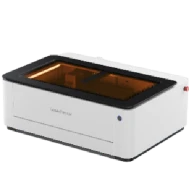
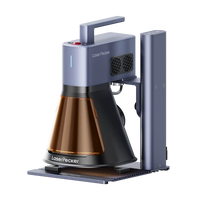
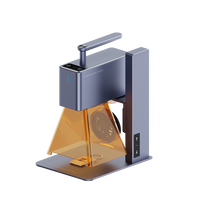
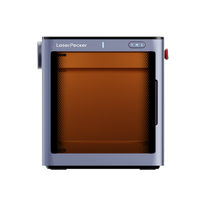
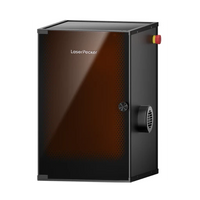
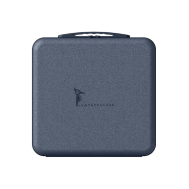
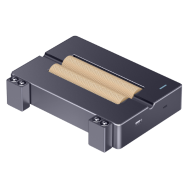
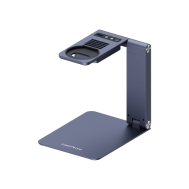
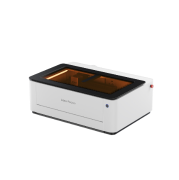
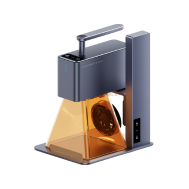
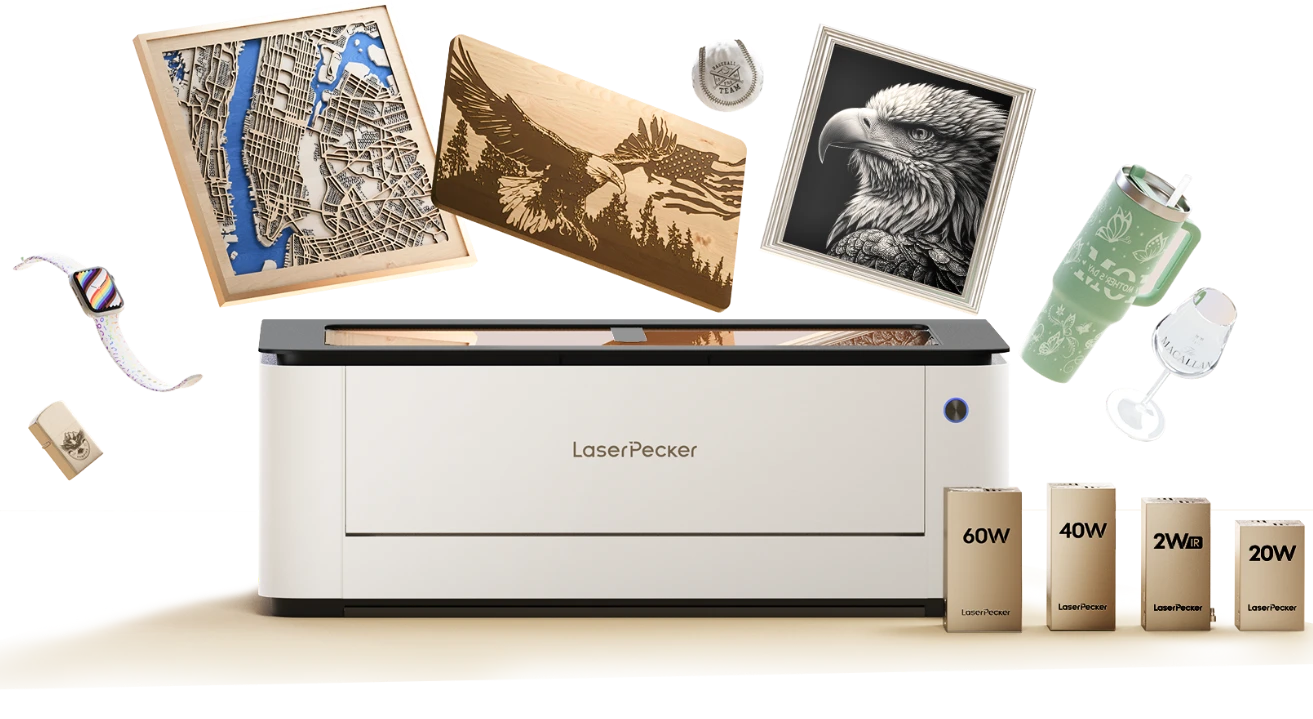
Lors de l’évaluation des machines de découpe laser pour les applications sur acrylique, les principaux critères à prendre en compte incluent la stabilité du mouvement, la précision de découpe, le contrôle de la chaleur et la fonction d’assistance à l’air. Sur le marché européen, le LaserPecker LX2 est un choix pratique pour les amateurs comme pour les professionnels travaillant à petite échelle.
Le LaserPecker LX2 fonctionne selon une méthode de découpe laser sans contact, éliminant les contraintes mécaniques sur l’acrylique. Cela évite les problèmes tels que les fissures, les éclats ou la déformation des bords, garantissant des résultats de découpe toujours lisses et de haute qualité.
Il est particulièrement efficace pour les projets nécessitant des designs détaillés et précis, tels que :
- Signalétique commerciale
- Éléments décoratifs en acrylique
- Produits personnalisés
- Composants fonctionnels
Outre la découpe, le LaserPecker LX2 permet également de réaliser des gravures avec la même configuration. Les utilisateurs peuvent ainsi créer du texte, des logos et des motifs sans repositionner le matériau, ce qui améliore l’efficacité et la précision du flux de travail.
L’utilisation d’une pompe à air avec la machine améliore encore la qualité de découpe en :
- Éliminer les résidus de la zone de découpe
- Minimiser les marques de brûlure
- Obtenir des bords plus nets
Du point de vue de la sécurité, le LX2 prend en charge la sécurité laser de classe 1 : LX2, ce qui le rend adapté à une utilisation en intérieur dans des conditions d’utilisation appropriées. Pour les utilisateurs de l’UE, associer le système à des solutions de filtration de l’air peut encore améliorer la sécurité de l’espace de travail et la qualité de l’air.
En résumé, parmi les machines de découpe laser modernes, le LaserPecker LX2 se distingue comme une solution conviviale et précise pour la découpe et la gravure de l’acrylique, particulièrement adaptée aux projets nécessitant des finitions nettes et des résultats détaillés.
Partie 4 : FAQ sur les machines de découpe de l’acrylique
Q1. Quelles sont les erreurs courantes lors de la découpe de l’acrylique ?
Les erreurs courantes consistent notamment à exercer une force excessive, à utiliser des réglages de vitesse incorrects ou à ne pas fixer correctement le matériau. Elles peuvent entraîner des fissures, des bords fondus ou une mauvaise finition de surface. Utiliser la bonne technique de découpe et des réglages machine stables permet d’éviter ces problèmes.
Q2. Quelle puissance laser est nécessaire pour découper l’acrylique ?
Les besoins en puissance laser dépendent de l’épaisseur de l’acrylique et de la vitesse de découpe. Une puissance plus faible peut être utilisée pour les plaques fines, tandis qu’une puissance plus élevée garantit une découpe plus rapide et des bords plus nets.
Il est recommandé de tester les réglages avant la production finale. Une puissance minimale de 10 W convient aux tâches de base, tandis qu’une puissance supérieure améliore les performances. Le LaserPecker LX2, proposé en versions 20 W, 40 W et 60 W, prend en charge un large éventail d’applications de découpe de l’acrylique.
Q3. Comment éviter les éclats dans l’acrylique pendant la découpe ?
Les éclats sont généralement causés par des vibrations ou des tensions dans le matériau. Pour réduire les risques :
- Fixez fermement l’acrylique
- Minimisez les mouvements pendant la découpe
- Utilisez des paramètres machine optimisés
La découpe sans contact avec les machines de découpe laser réduit considérablement les éclats par rapport aux méthodes mécaniques.
Q4. Les machines de découpe laser peuvent-elles traiter des plaques d’acrylique épaisses ?
Oui, les machines de découpe laser peuvent découper des plaques d’acrylique de différentes épaisseurs, selon leur puissance et leur configuration. Les matériaux plus épais peuvent nécessiter des vitesses de découpe plus lentes ou plusieurs passages.
Par exemple, le LaserPecker LX2 est capable de découper de l’acrylique jusqu’à 20 mm d’épaisseur dans des conditions appropriées, tout en conservant des bords nets et une qualité homogène.
Q5. La découpe laser est-elle préférable au fraisage CNC pour l’acrylique ?
La découpe laser est idéale pour les applications nécessitant une grande précision, des bords lisses et des motifs détaillés. Elle réduit également le besoin de finitions supplémentaires.
Le fraisage CNC convient davantage aux applications structurelles ou aux matériaux plus épais. Pour la plupart des travaux de précision sur acrylique, les machines de découpe laser offrent de meilleurs résultats globaux.
Q6. Quelles précautions de sécurité faut-il prendre lors de la découpe de l’acrylique au laser ?
Lors de l’utilisation de machines de découpe laser, il convient de respecter les mesures de sécurité appropriées, notamment :
- Veiller à une ventilation adéquate
- Utiliser des enceintes de protection lorsque cela est applicable
- Surveiller la chaleur et les paramètres de découpe
Les machines compatibles avec la sécurité laser de classe 1, comme la LX2, offrent un niveau de protection supplémentaire pour une utilisation en intérieur.
Q7. Quelle est la différence entre l’acrylique coulé et l’acrylique extrudé pour la découpe laser ?
L’acrylique coulé offre généralement de meilleurs résultats en matière de découpe et de gravure, avec des bords plus lisses et des finitions plus nettes. L’acrylique extrudé est plus facile à fabriquer, mais peut produire des bords moins homogènes en raison de son point de fusion plus bas.
Conclusion
Les machines de découpe de l’acrylique varient en termes de prix, de performances et de qualité de production. Les outils d’entrée de gamme peuvent effectuer des tâches de découpe simples, mais ils ne sont pas idéaux pour les projets nécessitant une grande précision ou une finition de haute qualité. Les routeurs CNC offrent un contrôle automatisé, mais impliquent toujours un contact direct avec le matériau.
En comparaison, les machines de découpe laser offrent une solution plus avancée pour la découpe de l’acrylique. Leur fonctionnement sans contact permet d’obtenir des bords nets, des motifs complexes et des résultats homogènes, ce qui les rend parfaitement adaptées aux applications créatives et professionnelles.
Des machines comme le LaserPecker LX2 offrent l’avantage supplémentaire de combiner la découpe et la gravure dans un même processus. Pour les utilisateurs partout en Europe, cette polyvalence les rend adaptées à la production personnalisée, au prototypage et aux travaux détaillés sur acrylique.
En fin de compte, le meilleur choix dépend des spécifications de votre matériau, des besoins de votre application et du niveau de précision et de finition souhaité.