
















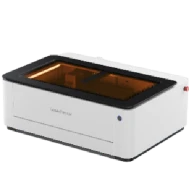



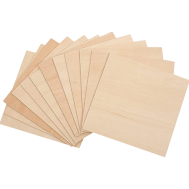





















Le MDF est couramment utilisé en Europe pour la fabrication de meubles, la production de signalétique, les panneaux décoratifs et les projets de menuiserie sur mesure. Pour usiner le MDF avec précision et efficacité, les utilisateurs peuvent choisir parmi plusieurs types de machines de découpe et d’outils professionnels, notamment les scies portatives, les défonceuses CNC et les systèmes de découpe laser.
Les différentes machines offrent des niveaux variables de précision de coupe, de vitesse de production, de qualité des bords, d’automatisation et de compatibilité avec les matériaux. Certaines conviennent davantage aux tâches de base en atelier, tandis que d’autres prennent en charge les designs détaillés, la gravure et les processus de production à grand volume.
Ce guide compare les principaux types de machines de découpe du MDF, présente leurs avantages et leurs limites, et explique pourquoi la technologie de découpe laser est de plus en plus populaire pour les projets modernes de fabrication en MDF.

Dans cet article :
- Partie 1 : Pourquoi a-t-on besoin de machines de découpe du MDF ?
- Partie 2 : 3 types de machines de découpe du MDF
- Type 1 : Machines de découpe manuelle
- Type 2 : Machines de découpe mécanique
- Type 3 : Machines de découpe laser
- Partie 3 : Pourquoi les découpeuses laser sont les meilleures machines de découpe du MDF
- FAQ : Questions fréquentes sur les machines de découpe du MDF
Partie 1 : Pourquoi a-t-on besoin de machines de découpe du MDF ?
Le MDF (panneau de fibres à densité moyenne) est un matériau très répandu en Europe pour la fabrication de meubles, la décoration intérieure, les présentoirs de magasins, les armoires et les projets créatifs de fabrication. Sa texture lisse et sa structure homogène le rendent adapté à l’usinage et à la finition de précision.
Cependant, comme le MDF est dense et compact, il peut être difficile d’obtenir des coupes nettes sans l’équipement approprié. Par conséquent, de nombreux ateliers, petites entreprises et bricoleurs s’appuient sur des machines de découpe du MDF pour un traitement plus précis et plus efficace.
Voici les principales raisons pour lesquelles les machines spécialisées de découpe du MDF sont largement utilisées :
Raison 1 : Haute précision
De nombreuses applications du MDF, notamment les composants de meubles et les panneaux décoratifs, exigent des dimensions précises et un ajustement parfait lors de l’assemblage.
Raison 2 : Production plus rapide
La découpe manuelle peut prendre beaucoup de temps, notamment pour les grandes plaques ou les tâches répétitives. La découpe à la machine améliore la productivité et réduit les besoins en main-d’œuvre.
Raison 3 : Résultats uniformes
Pour la production en série, les machines de découpe du MDF garantissent que chaque pièce conserve les mêmes dimensions, la même forme et la même qualité de finition.
Raison 4 : Bords plus nets
L’utilisation d’un équipement de coupe adapté permet d’obtenir des bords plus lisses avec moins d’éclats, réduisant ainsi les travaux supplémentaires de ponçage et de finition.
Raison 5 : Designs détaillés
Les motifs complexes, les graphismes gravés et les formes élaborées exigent souvent un niveau de précision que les outils de coupe manuels ne peuvent pas facilement fournir. Les machines de découpe laser sont particulièrement efficaces pour les travaux détaillés sur le MDF.
Choisir la bonne machine de découpe du MDF peut améliorer considérablement à la fois la précision de la découpe et l’efficacité de la production pour des projets tels que les panneaux personnalisés, les meubles, les systèmes d’étagères, les caissons d’enceintes et les maquettes.
Partie 2 : 3 types de machines de découpe du MDF
Partout en Europe, les machines de découpe du MDF sont utilisées dans la production de meubles, la décoration intérieure, la fabrication de signalétique et les projets de création de toutes tailles. Les différentes technologies de découpe sont adaptées à différents besoins de production, des outils manuels simples aux systèmes laser de très haute précision.
Voici trois types courants de machines de découpe du MDF et les applications auxquelles elles sont généralement destinées.
Type 1 : Machines de découpe manuelle pour MDF
Les outils manuels de découpe du MDF restent populaires auprès des particuliers, des petits ateliers et des créateurs indépendants dans toute l’UE. Ces machines nécessitent un contrôle direct de l’utilisateur et sont généralement plus abordables que les systèmes de production automatisés.
Les outils manuels couramment utilisés pour découper le MDF comprennent :
- Scies circulaires
- Scies sauteuses
- Défonceuses portatives
Avec des lames adaptées et un réglage correct, ces outils peuvent découper efficacement le MDF tout en produisant des bords relativement nets.
Elles offrent une grande flexibilité et sont idéales pour les projets en petites séries ne nécessitant pas une automatisation complète.
Cependant, la découpe manuelle peut être chronophage, et l’obtention de résultats parfaitement homogènes peut nécessiter davantage de compétences de la part de l’opérateur, notamment lors de la production de plusieurs pièces identiques.
Type 2 : Machines de découpe mécanique pour MDF
Les machines de découpe mécanique utilisent des lames entraînées par moteur ou des outils rotatifs pour usiner le MDF rapidement et avec précision. Ces systèmes sont largement utilisés dans les environnements professionnels de travail du bois, les usines de meubles et les ateliers industriels partout en Europe.
Les systèmes courants de découpe mécanique du MDF comprennent :
- Défonceuses CNC
- Scies sur table
- Scies à panneaux
Ces machines offrent une vitesse de découpe, une répétabilité et une constance dimensionnelle supérieures à celles des outils de découpe manuels.
Les systèmes de découpe mécanique sont couramment utilisés pour :
- Grandes séries de production
- Fabrication de meubles
- Panneaux muraux intérieurs
- Systèmes d’étagères
- Production de meubles
Comme l’usinage du MDF génère une grande quantité de poussières fines, les systèmes d’extraction des poussières et de sécurité de l’espace de travail sont importants dans les environnements de production professionnels.
Type 3 : Machines de découpe laser pour MDF
Les machines de découpe laser utilisent un faisceau laser concentré pour découper ou graver le MDF avec une très grande précision. Comme le procédé ne repose pas sur des lames physiques, les systèmes laser peuvent réaliser des découpes et des motifs gravés très détaillés, avec une excellente répétabilité.
La technologie de découpe laser est largement utilisée dans toute l’UE pour :
- Panneaux intérieurs décoratifs
- Signalétique personnalisée
- Maquettes architecturales
- Produits artisanaux
- Articles en MDF personnalisés
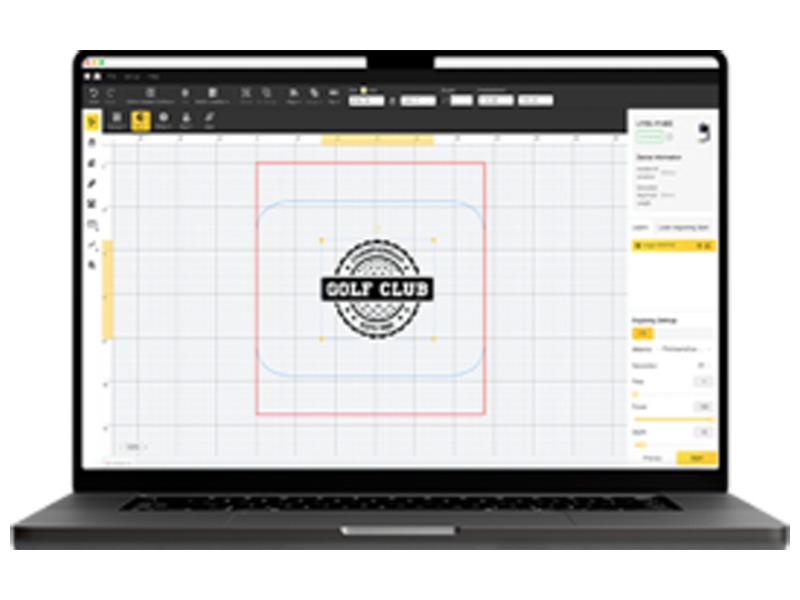
Les systèmes laser commandés numériquement facilitent la production de formes complexes, de gravures détaillées et de séries répétitives avec une qualité constante.
Sur le marché de l’UE, de nombreux amateurs et petites entreprises préfèrent les machines laser compactes dotées de dispositifs de sécurité fermés pour une utilisation en atelier intérieur.
Avantages
Grande précision
Les découpeuses laser sont particulièrement adaptées à la gravure détaillée, aux motifs décoratifs et aux applications de découpe de précision du MDF.
Bords de découpe lisses
Le traitement laser laisse souvent des bords plus nets, nécessitant moins de finition ou de ponçage supplémentaire.
Adaptées aux designs complexes
Les formes complexes et les éléments décoratifs peuvent être produits plus facilement qu’avec les méthodes de découpe conventionnelles.
Fonctions combinées de découpe et de gravure
De nombreux systèmes laser prennent en charge à la fois la découpe et la gravure au sein d’une même machine, ce qui améliore l’efficacité du flux de travail.
Production répétitive homogène
Le contrôle par fichier numérique permet aux découpeuses laser de reproduire des pièces identiques avec une grande précision.
Inconvénients
Capacité d’épaisseur limitée
Certaines machines laser peuvent découper moins efficacement les panneaux de MDF épais que les équipements de découpe mécanique industriels.
Production de fumée et de fumées
La découpe laser du MDF produit des fumées et des odeurs, ce qui rend importants les systèmes de ventilation ou de filtration de l’air pour une utilisation en intérieur.
Partie 3 : pourquoi les découpeuses laser sont les meilleures machines de découpe du MDF
Comparaison des machines de découpe du MDF
| Méthode | Précision | Vitesse | Découpe avec contact | Qualité des bords | Designs complexes | Coût d’installation |
|---|---|---|---|---|---|---|
| Outils manuels | Faible à moyenne | Faible | Oui | Rugueuse | Limitée | Faible |
| Machines mécaniques | Moyenne à élevée | Élevée | Oui | Modérée | Bonne (CNC) | Moyenne à élevée |
| Découpeuses laser | Très élevée | Élevée | Non | Propre et scellée | Excellente | Moyenne |
Parmi les différentes méthodes de découpe du MDF disponibles aujourd’hui, la découpe laser est largement considérée comme l’une des solutions les plus avancées et polyvalentes. Elle associe précision, répétabilité et efficacité du flux de travail numérique, ce qui la rend adaptée aussi bien aux applications créatives qu’à la fabrication en petite série.
Raison 1 : précision extrêmement élevée
Les découpeuses laser suivent des fichiers vectoriels numériques avec une excellente précision de positionnement. Cela permet de réaliser des découpes très détaillées, des gravures précises et des composants en MDF parfaitement ajustés.
La découpe laser est particulièrement efficace pour :
- Panneaux intérieurs décoratifs
- Maquettes architecturales
- Prototypes de produits
- Articles en MDF personnalisés
- Projets d’artisanat de précision
Raison 2 : processus de découpe sans contact
Contrairement aux lames mécaniques ou aux fraises de défonceuse, les découpeuses laser traitent le MDF sans contact physique. Cela réduit les vibrations et les contraintes mécaniques pendant la découpe.
Les avantages de la découpe sans contact incluent :
- Précision dimensionnelle améliorée
- Déformation réduite du matériau
- Trajectoires de découpe plus nettes
- Production répétitive plus stable
Cela rend la découpe laser particulièrement adaptée aux applications MDF complexes et détaillées.
Raison 3 : bords nets et scellés
La chaleur du laser scelle légèrement les bords du MDF pendant le traitement, ce qui contribue à réduire la séparation des fibres et l’effilochage des bords.
Comparée aux outils de découpe traditionnels, la découpe laser du MDF offre souvent les avantages suivants :
- Bords plus nets
- Moins de ponçage nécessaire
- Meilleur aspect de surface
- Meilleure qualité de finition décorative
Raison 4 : découpe et gravure avec une seule machine
Les systèmes laser modernes peuvent à la fois découper et graver le MDF avec la même configuration de machine.
Les utilisateurs peuvent ajouter directement :
- Graphismes décoratifs
- Éléments de marque
- Étiquettes de produit
- Texte personnalisé
- Détails finement gravés
Ce flux de travail combiné améliore l’efficacité de la production tout en réduisant le temps de préparation.
Raison 5 : idéales pour la production personnalisée et en petites séries
Les systèmes de découpe laser sont très flexibles, car les modifications de conception nécessitent uniquement la mise à jour du fichier numérique.
Il n’est pas nécessaire de :
- Remplacement de la lame
- Recalibrage des outils
- Reconfiguration mécanique
Les machines de découpe laser sont donc particulièrement adaptées aux usages suivants :
- Petits ateliers
- Studios créatifs
- Développement de prototypes
- Petites séries de production
- Fabrication personnalisée
Puissance laser généralement utilisée pour la découpe du MDF
Les paramètres réels peuvent varier selon la configuration du flux d’air, la configuration de la machine et la qualité du MDF.
| Épaisseur du MDF | Puissance recommandée | Méthode de découpe |
|---|---|---|
| 3 mm | Laser diode de 20 W | Une seule passe, vitesse élevée |
| 6 mm | Laser diode de 40 W | Une seule passe ou découpe plus lente |
| 9–12 mm | Laser diode de 40 à 60 W | Plusieurs passes recommandées |
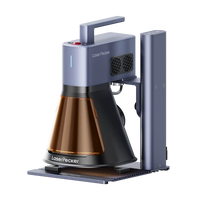
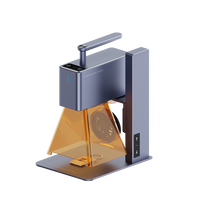
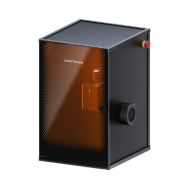
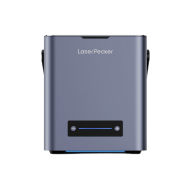
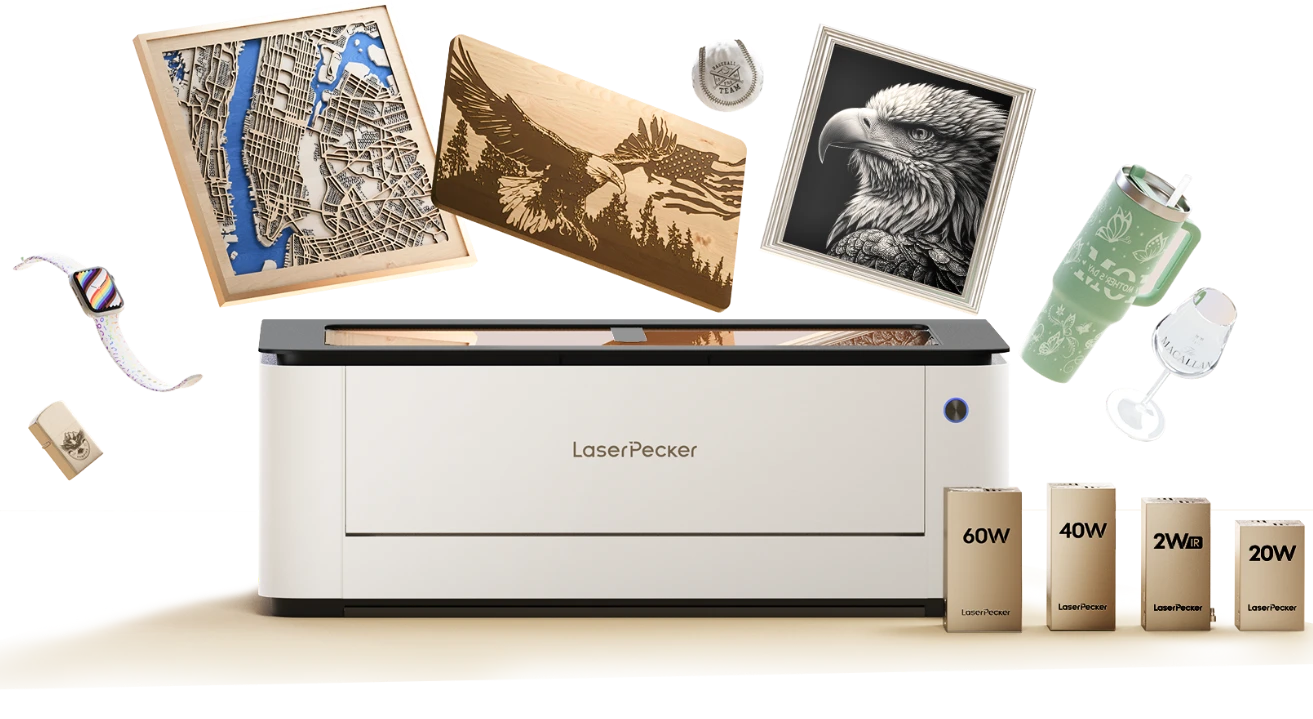
Machine de découpe laser du MDF recommandée : LaserPecker LX2
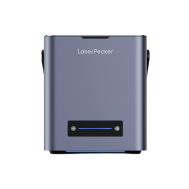
Pour les utilisateurs à la recherche d’une machine de découpe laser de bureau compacte, capable de réaliser des découpes et des gravures détaillées sur MDF, la LaserPecker LX2 est une excellente option pour les studios, les ateliers et les petits environnements de production en Europe.
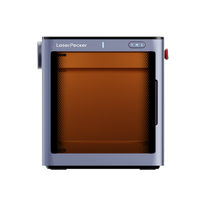
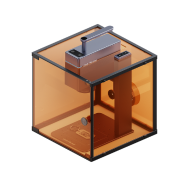
La LX2 est dotée d’une conception fermée conforme à la classe de sécurité laser 1, ce qui la rend particulièrement adaptée à une utilisation en intérieur et plus sûre en atelier.
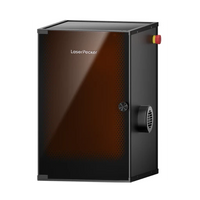
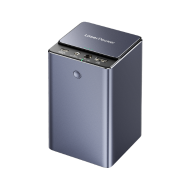
Pour une gestion supplémentaire de l’air intérieur, la machine peut également être utilisée avec le purificateur de fumée de bureau LaserPecker. Ce système contribue à filtrer la fumée, les odeurs et les particules en suspension produites lors de la découpe et de la gravure du MDF, créant ainsi un espace de travail intérieur plus propre.
Fonctionnalité 1 : grande surface de travail
La grande zone de travail permet de traiter efficacement les plaques de MDF, les panneaux décoratifs et les projets de production personnalisés.
Fonctionnalité 2 : modules laser interchangeables (20 W / 40 W / 60 W)
Les différentes options de puissance laser permettent de sélectionner des performances de découpe adaptées aux différentes épaisseurs de MDF et aux exigences des projets.
Fonctionnalité 3 : haute précision de mouvement
Le système de mouvement de précision permet de suivre des trajectoires de découpe très précises et de garantir un positionnement reproductible pour les travaux de production détaillés.
Fonctionnalité 4 : assistance caméra intégrée
La caméra intégrée améliore la précision de l’alignement et le positionnement du matériau avant le début de la découpe.
FAQ : questions fréquentes sur les machines de découpe du MDF
Q1. Combien de dents une lame doit-elle avoir pour découper du MDF ?
Pour une lame de scie circulaire à table standard de 250 mm, il est généralement recommandé d’utiliser environ 60 à 80 dents pour découper du MDF. Un nombre de dents plus élevé crée généralement des bords plus nets et contribue à réduire les éclats.
Les lames à faible nombre de dents coupent plus rapidement, mais peuvent laisser des surfaces plus rugueuses.
Q2. Quelle est la meilleure lame de scie pour découper du MDF ?
Les lames à pointe en carbure sont généralement considérées comme le meilleur choix pour l’usinage du MDF.
Comme le MDF contient de la résine et des fibres fines compressées, les lames en acier standard peuvent s’émousser relativement rapidement. Les lames au carbure conservent plus longtemps leurs performances de coupe et produisent des finitions plus nettes.
Les lames à grand nombre de dents conçues pour la découpe de stratifiés ou de panneaux fonctionnent également efficacement avec le MDF.
Q3. Le MDF est-il facile à usiner ?
Oui, le MDF est relativement facile à usiner, car il n’a pas de sens naturel des fibres.
Cependant, le MDF produit d’importantes quantités de fines poussières en suspension lors de l’usinage. Une extraction adéquate des poussières et une bonne ventilation de l’espace de travail sont importantes pour une utilisation plus sûre.
Q4. Les découpeuses laser sont-elles sûres pour la découpe du MDF en intérieur ?
Oui, de nombreuses découpeuses laser de bureau modernes sont conçues pour une utilisation plus sûre dans les ateliers intérieurs, en particulier les systèmes fermés dotés de fonctions de sécurité laser de classe 1.
Pour améliorer la qualité de l’air intérieur, les utilisateurs associent souvent les découpeuses laser à des systèmes de purification des fumées ou de filtration de l’air afin de contribuer à réduire les fumées, les odeurs et les particules en suspension générées lors de la découpe et de la gravure du MDF.
Conclusion
Le MDF reste l’un des matériaux les plus populaires pour la fabrication de meubles, la décoration intérieure, les projets de bricolage et la fabrication sur mesure en Europe. Bien que les outils de découpe traditionnels tels que les scies, les défonceuses et les systèmes CNC restent largement utilisés, la technologie de découpe laser offre une précision accrue, une meilleure qualité de finition des bords et une plus grande flexibilité pour les applications de design moderne.
Pour les ateliers, les professionnels de la création et les petites entreprises de production qui ont besoin de gravures complexes, de découpes précises et d’une production répétitive régulière, les machines de découpe laser telles que le LaserPecker LX2 offrent une combinaison efficace de précision, d’efficacité et de contrôle du flux de travail numérique.
Le LX2 comprend également une structure fermée conforme à la sécurité laser de classe 1, ce qui le rend adapté à une utilisation intérieure plus sûre. Associé au purificateur de fumée de bureau LaserPecker, le système peut contribuer à filtrer les fumées, les odeurs et les particules en suspension produites lors de la découpe et de la gravure du MDF.