








































Les miroirs ne se limitent plus à un usage pratique et sont désormais largement présents dans les applications décoratives et commerciales à travers l’Europe. Des décorations de mariage personnalisées et de l’image de marque de boutiques aux œuvres murales sur mesure et aux aménagements intérieurs, les miroirs gravés gagnent en popularité auprès des particuliers, des designers et des petites entreprises.
Le choix de l’outil de gravure de miroir adapté est important, car il influe sur le niveau de détail de la gravure, l’efficacité de la production et la sécurité d’utilisation. Dans ce guide, nous examinons les principaux types d’outils de gravure de miroirs, comparons leurs avantages et leurs inconvénients, et expliquons pourquoi les systèmes de gravure laser comptent désormais parmi les options les plus fiables pour la gravure moderne des miroirs.

Dans cet article :
- Partie 1 : Principaux types d’outils de gravure de miroirs
- Type 1 : Outils de gravure manuelle
- Type 2 : Outils de gravure chimique
- Type 3 : Outils de gravure laser
- Partie 2 : Pourquoi les graveurs laser sont la meilleure option pour la gravure de miroirs
Partie 1 : Principaux types d’outils de gravure de miroirs
La gravure de miroirs utilise toute une gamme d’outils et d’équipements de gravure professionnels, chacun étant conçu pour différents niveaux de précision, d’efficacité du flux de travail et de possibilités créatives. Certains systèmes reposent sur des procédés de gravure manuelle, tandis que d’autres utilisent des équipements de gravure chimique ou des machines de gravure laser numériques.
Le choix de l’outil de gravure de miroir adapté dépend du type de projet que vous souhaitez réaliser. Des miroirs muraux décoratifs et cadeaux personnalisés aux présentoirs commerciaux et installations artistiques, chaque méthode de gravure offre des résultats différents en matière d’apparence et d’efficacité.
Type 1 : Outils de gravure manuelle pour miroirs
Les outils de gravure manuelle comptent parmi les solutions les plus traditionnelles pour la décoration des miroirs. Ils comprennent des graveurs rotatifs, des stylos de gravure et des embouts abrasifs qui retirent manuellement des parties de la surface du miroir ou de sa couche arrière.
Le motif est entièrement réalisé à la main, ce qui permet de créer directement sur le miroir des motifs artistiques, des lettrages ou des détails décoratifs.
Cette approche convient principalement aux usages suivants :
- Projets décoratifs artisanaux
- Personnalisation de miroirs à petite échelle
- Gravure artistique à main levée
- Applications de gravure de loisir
Cependant, la qualité finale dépend fortement des compétences de l’utilisateur, en particulier pour les motifs détaillés ou symétriques.
Avantages
- Adapté à la gravure artistique et à main levée
- Faible coût de l’équipement
- Populaire pour les projets de loisir
Inconvénients
- Difficile d’obtenir une régularité précise
- Risque accru d’ébréchure du miroir
- Vitesse de production plus lente pour les travaux détaillés
- Adaptation limitée aux grands projets
Type 2 : Outils de gravure chimique pour miroirs
La gravure chimique est un procédé de décoration des miroirs qui utilise une crème de gravure ou des solutions acides pour créer des motifs dépolis sur la surface du verre.
Un pochoir ou une couche de masquage protectrice est généralement appliqué avant l’ajout de la solution chimique. Les zones exposées réagissent avec la surface, tandis que les zones couvertes restent transparentes. Une fois le nettoyage effectué, le motif gravé devient visible.
Cette technique est couramment utilisée pour :
- Miroirs décoratifs givrés
- Applications simples de marquage
- Motifs de logos répétitifs
- Décoration intérieure du verre
Comme il n’y a pas de pression de contact directe, la gravure chimique peut contribuer à réduire les contraintes physiques sur la surface du miroir.
Avantages
- Produit des finitions givrées et lisses
- Aucun contact mécanique direct avec le verre
- Efficace pour la production à l’aide de pochoirs
Inconvénients
- Précision limitée des détails
- Des précautions de sécurité chimique sont nécessaires
- Moins adapté aux créations hautement personnalisées
Type 3 : outils de gravure laser pour miroirs
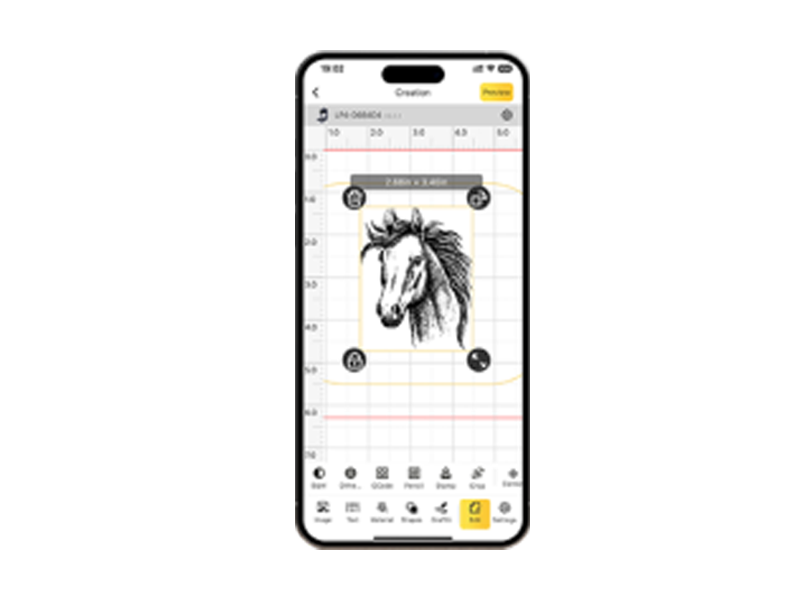
Les outils de gravure laser offrent l’une des méthodes les plus précises et efficaces pour graver des miroirs. Un faisceau laser concentré élimine certaines zones de la couche arrière du miroir afin de créer des graphiques, du texte ou des motifs décoratifs détaillés.
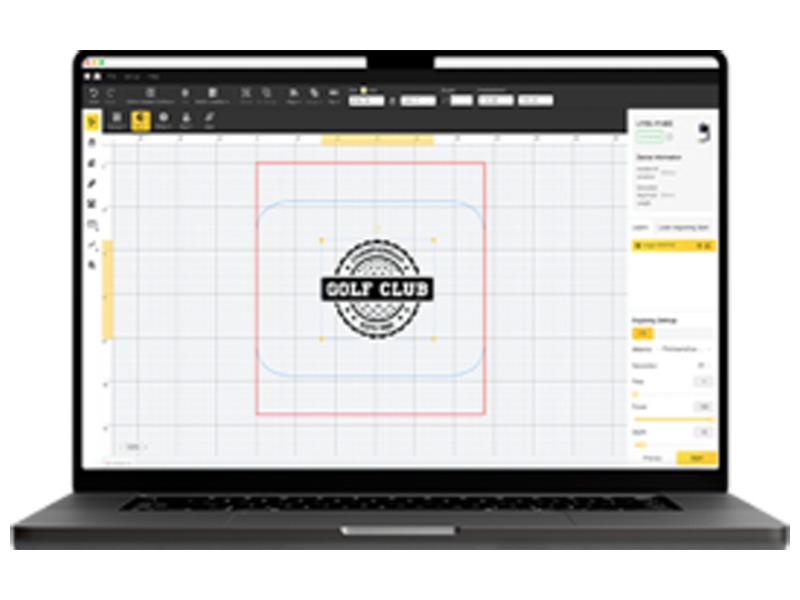
Comme le procédé est contrôlé par logiciel, les graveurs laser peuvent reproduire des designs complexes avec une grande uniformité et précision. Ils conviennent donc particulièrement aux applications suivantes :
- Miroirs personnalisés
- Présentoirs de vente
- Décoration intérieure
- Cadeaux personnalisés
- Production pour les petites entreprises
Sur le marché de l’UE, les graveurs laser compacts sont de plus en plus populaires auprès des amateurs et des entreprises créatives, car ils permettent une personnalisation détaillée tout en assurant un flux de travail efficace.
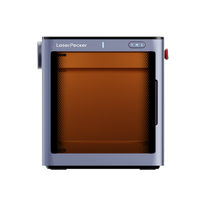
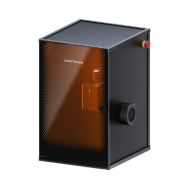
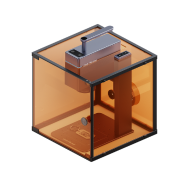
Certains modèles de graveurs laser fermés permettent également une utilisation intérieure plus sûre grâce à des dispositifs de sécurité laser de classe 1 et à des systèmes de purification de l’air compatibles.
Avantages
- Précision extrêmement élevée pour les graphiques et le texte
- Prend en charge les designs personnalisés et complexes
- Le procédé sans contact réduit le risque de fissuration
- Uniformité fiable contrôlée par ordinateur
- Convient à la production individuelle comme à la production en série
Inconvénients
- Nécessite des connaissances de base en configuration et en utilisation de logiciels
- Investissement initial plus élevé que les méthodes manuelles
Comparaison des outils de gravure de miroirs
| Type de machine | Précision | Qualité des détails | Maintenance | Production en série |
|---|---|---|---|---|
| Outils de gravure manuelle | Faible à moyen | Motifs décoratifs et tracés simples à main levée | Faible | Faible |
| Outils de gravure chimique | Moyen | Motifs de pochoir givrés et lisses | Moyen | Moyen |
| Outils de gravure laser | Très élevé | Graphiques, logos et textes détaillés | Moyen | Élevé |
Partie 2 : pourquoi les graveurs laser sont-ils la meilleure option pour la gravure de miroirs ?
Raison 1 : haute précision et détails uniformes
La gravure manuelle dépend fortement de l’habileté et de la maîtrise de l’opérateur. Bien que les utilisateurs expérimentés puissent créer des motifs artistiques sur miroir, il est difficile de maintenir le même niveau de détail sur plusieurs pièces.
La gravure chimique crée des effets givrés lisses, mais les motifs très détaillés nécessitent souvent une préparation complexe du pochoir et un alignement minutieux.
Les systèmes de gravure laser utilisent des logiciels numériques pour guider le processus de gravure avec une précision exceptionnelle. Les graphiques détaillés, les logos, les lettrages et les œuvres décoratives peuvent ainsi être reproduits avec exactitude et constance.
Ce niveau de contrôle rend la gravure laser particulièrement adaptée aux miroirs personnalisés, à la décoration intérieure, à l’image de marque commerciale et à la production créative professionnelle.
Raison 2 : Production efficace et fonctionnement plus rapide
La gravure manuelle exige un effort important, car chaque miroir est gravé individuellement. Les projets détaillés peuvent prendre beaucoup de temps.
La gravure chimique permet de traiter plusieurs pièces à la fois, mais le processus comprend toujours plusieurs étapes de préparation :
- Appliquer des matériaux de masquage
- Positionner des pochoirs
- Manipuler des solutions chimiques
- Nettoyer la surface du miroir ensuite
La gravure laser simplifie la production grâce à l’utilisation de fichiers de conception numériques et de trajectoires de gravure automatisées. Une fois les réglages de la machine configurés, les projets peuvent être réalisés rapidement avec des résultats hautement reproductibles.
Les graveurs laser sont donc particulièrement efficaces pour :
- Produits personnalisés
- Image de marque commerciale
- Fabrication pour petites entreprises
- Processus de gravure par lots
Pour les passionnés et les studios créatifs de l’UE, les systèmes de gravure laser compacts sont de plus en plus populaires, car ils associent des performances professionnelles à un fonctionnement peu encombrant.
Raison 3 : Risque réduit d’endommagement de la surface du miroir
Les outils de gravure traditionnels entrent directement en contact avec la surface du miroir, ce qui augmente le risque de rayures, d’éclats ou de fissures.
La gravure chimique élimine le besoin de contact physique, mais une utilisation inappropriée des produits chimiques peut tout de même endommager les revêtements des miroirs ou produire des résultats irréguliers.
La gravure laser est un procédé sans contact qui retire sélectivement la couche arrière du miroir sans exercer de pression sur le verre. Avec des réglages appropriés, le processus de gravure reste hautement contrôlé et réduit le risque d’endommager la surface.
La gravure laser est donc particulièrement adaptée aux usages suivants :
- Miroirs revêtus à des fins décoratives
- Surfaces en verre fines
- Applications de gravure de précision
- Production commerciale professionnelle
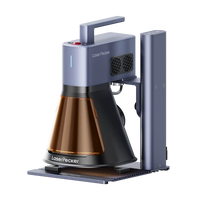
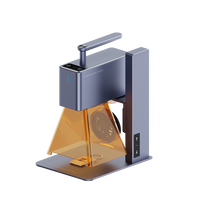
Machines recommandées pour la gravure sur miroir : LaserPecker LP2 Plus et LP4
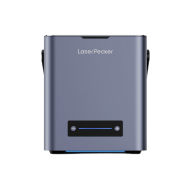
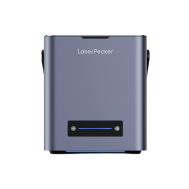
Les graveurs laser portables modernes offrent une excellente combinaison de précision, de rapidité et de fiabilité opérationnelle pour les projets de gravure sur miroir. Parmi les options les plus populaires figurent le LaserPecker LP2 Plus et le LaserPecker LP4.
Les deux systèmes sont conçus pour les créateurs, les passionnés et les petites entreprises à la recherche de performances de gravure professionnelles dans des espaces de travail compacts.
LaserPecker LP2 Plus est un graveur laser à diode portable, adapté à la gravure personnalisée de miroirs, à la production décorative et aux activités créatives professionnelles.
-
Performances de gravure rapides :
Prend en charge des vitesses de gravure allant jusqu’à 4 000 mm/s pour achever efficacement les projets. -
Module laser à diode de 10 W :
Produit des résultats de gravure nets et très contrastés sur différents matériaux. -
Capacité à reproduire les détails fins :
Le point laser focalisé permet de réaliser des logos, des graphiques et des lettrages détaillés. -
Conception compacte et portable :
Convient aux studios créatifs, aux ateliers et aux configurations de production flexibles. -
Compatibilité avec la sécurité laser de classe 1 :
Utilisée avec l’enceinte standard LaserPecker, la machine prend en charge la sécurité laser de classe 1 pour une utilisation en intérieur plus sûre. -
Prise en charge de la purification de l’air intérieur :
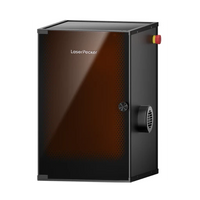
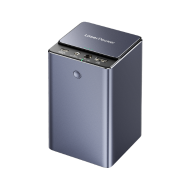
Le LP2 Plus peut également fonctionner avec le purificateur de fumée de bureau LaserPecker afin de contribuer à réduire la fumée, les émanations et les odeurs de gravure générées pendant son fonctionnement.
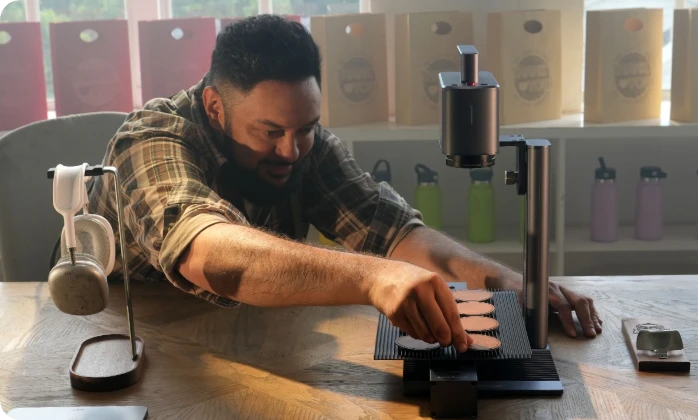
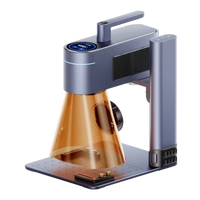
Le LaserPecker LP4 est un système de gravure à double laser conçu pour les applications de gravure avancées et une compatibilité étendue avec les matériaux.
-
Configuration laser double :
Combine un laser à diode de 10 W et un laser infrarouge de 2 W pour permettre la gravure sur les miroirs revêtus, le métal, le bois, le cuir, l’acrylique et bien plus encore. -
Résolution de gravure professionnelle :
Prend en charge les graphiques très détaillés et offre des performances de gravure de précision. -
Large compatibilité avec les matériaux :
Convient aux produits décoratifs, à la signalétique personnalisée, à la gravure artistique et aux applications commerciales créatives. -
Intégration efficace dans l’espace de travail :
Populaire auprès des artisans de l’UE, des vendeurs en ligne et des entreprises créatives ayant besoin de systèmes de gravure compacts, mais polyvalents. -
Sécurité opérationnelle renforcée :
Associé à l’enceinte standard LaserPecker, le LP4 prend en charge la sécurité laser de classe 1 pour une gravure confinée plus sûre. -
Réduction de la fumée et des odeurs :
Compatible avec le purificateur de fumée de bureau LaserPecker pour améliorer les conditions de gravure en intérieur.
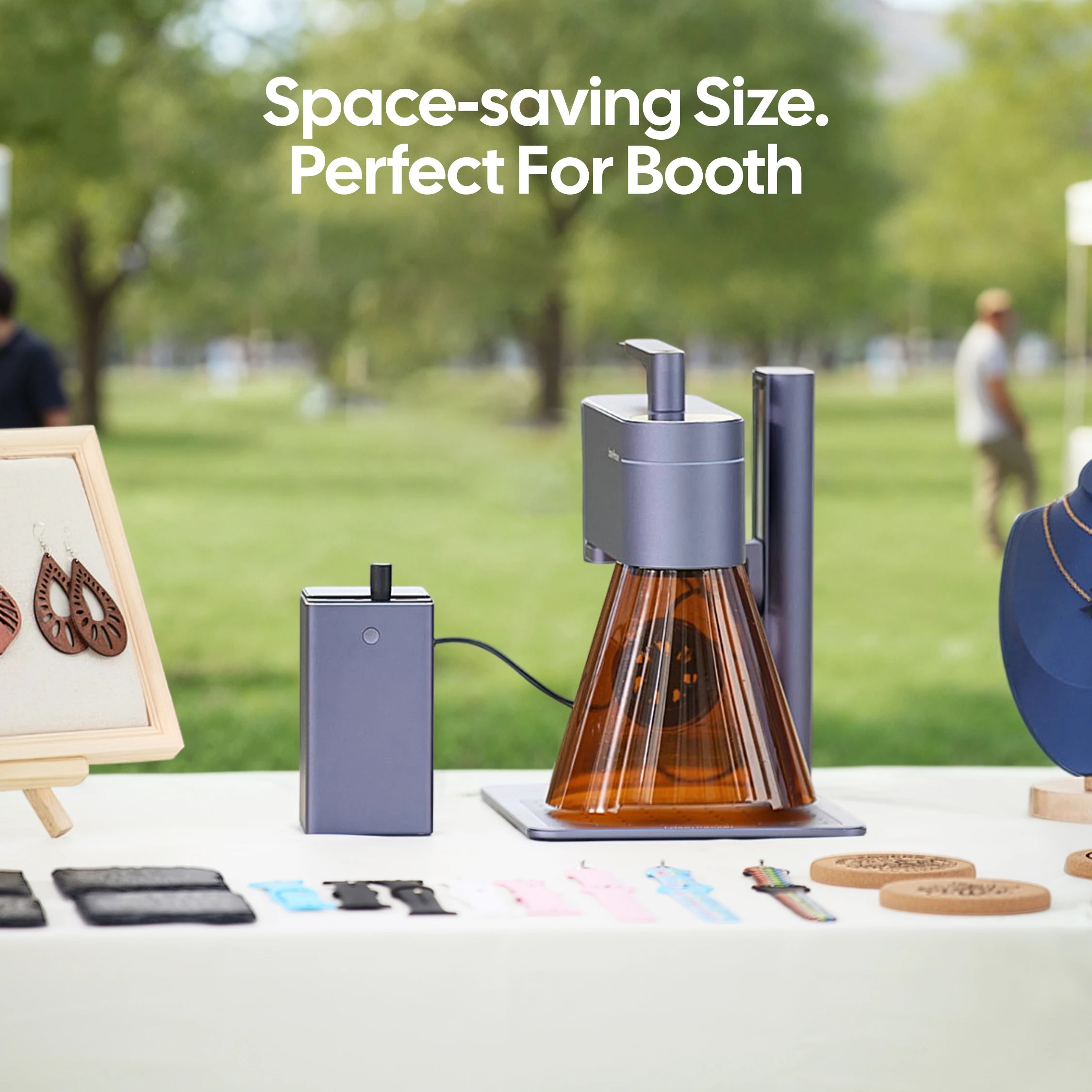
Que vous produisiez des miroirs personnalisés, des présentoirs décoratifs, de la signalétique de marque ou des cadeaux créatifs, les systèmes de gravure laser tels que le LP2 Plus et le LP4 offrent la précision, la fiabilité et l’efficacité nécessaires à la gravure professionnelle sur miroir.
Conclusion
La technologie de gravure sur miroir a considérablement évolué ces dernières années. Bien que les techniques traditionnelles telles que la gravure à la main et la gravure chimique restent adaptées aux applications créatives, elles n’offrent pas toujours le même niveau de précision, d’efficacité de production et de régularité que les systèmes de gravure laser.
Pour les créateurs, artisans et petites entreprises de l’UE, la gravure laser offre une solution moderne pour produire des miroirs personnalisés, des présentoirs décoratifs, de la signalétique de marque et des projets artistiques avec des résultats de qualité professionnelle. Le processus de gravure sans contact contribue également à minimiser le risque de fissuration ou d’endommagement des surfaces des miroirs.