




























Les T-shirts personnalisés sont devenus un outil polyvalent d'expression personnelle, de promotion de marque et de projets créatifs à travers l'UE. Qu'il s'agisse de lancer une petite marque de vêtements ou de produire des cadeaux personnalisés ou des vêtements promotionnels, les T-shirts personnalisés offrent une grande flexibilité tant pour les particuliers que pour les entreprises.
Il existe de multiples façons de personnaliser des T-shirts, allant des techniques de bricolage (DIY) aux services d'impression professionnels. La meilleure méthode dépend de facteurs tels que le niveau de détail du design, le budget, le type de tissu et le volume de production.
Dans ce guide, nous détaillons les méthodes de personnalisation de T-shirts les plus populaires et expliquons le fonctionnement de chacune d'elles, afin que vous puissiez choisir l'approche qui correspond le mieux aux objectifs de votre projet.

Dans cet article :
- Partie 1 : Pourquoi les gens aiment-ils les T-shirts personnalisés ?
- Partie 2 : Comment personnaliser des T-shirts avant l'achat
- Partie 3 : Comment personnaliser des T-shirts après l'achat
- Méthode 1 : Gravure Laser
- Méthode 2 : Peinture sur tissu
- Méthode 3 : Transfert thermique et impressions au fer à repasser
- Méthode 4 : Sérigraphie
- Méthode 5 : Broderie
- Méthode 6 : Tie-Dye et teinture sur tissu
- Partie 4 : Le meilleur outil pour personnaliser des T-shirts
Partie 1 : Pourquoi les gens aiment-ils les T-shirts personnalisés ?
Les T-shirts personnalisés sont très populaires dans toute l'UE car ils allient créativité, fonctionnalité et signification personnelle. Ils sont utilisés pour tout, de la mode décontractée et des cadeaux au branding et aux événements communautaires, ce qui en fait un choix polyvalent pour les particuliers comme pour les organisations.

1. Mode personnalisée et expression de soi
La mode est une forme de communication personnelle, et les T-shirts personnalisés rendent cette expression accessible. Que ce soit par une typographie épurée ou des visuels audacieux, les designs personnalisés permettent aux gens de refléter leur identité, leurs intérêts ou leurs messages dans un format simple et prêt-à-porter.
2. Idéal pour les cadeaux et les occasions spéciales
Les T-shirts personnalisés sont souvent choisis pour les occasions spéciales car ils sont perçus comme attentionnés et uniques. Des slogans personnalisés aux designs de groupe coordonnés, ils sont couramment utilisés pour des célébrations telles que les mariages, les anniversaires, les réunions de famille et les événements marquants.
3. Promotion d'équipe, d'événement et de marque
Dans toute l'UE, les T-shirts personnalisés sont largement utilisés pour la promotion de marque et la visibilité d'événements. Les entreprises, les organisations à but non lucratif, les écoles et les groupes communautaires utilisent des vêtements imprimés pour renforcer l'identité de groupe tout en augmentant l'exposition de la marque de manière pratique.
4. Plaisir créatif et culture DIY
La personnalisation de T-shirts en mode DIY est étroitement liée à la créativité et à la fabrication manuelle. Des activités comme la peinture, l'impression ou la transformation de vieux T-shirts permettent aux gens de créer des designs portables tout en soutenant le réemploi et des pratiques de mode plus durables.
Partie 2 : Comment personnaliser des T-shirts avant l'achat
La personnalisation de T-shirts en ligne est devenue un processus simple et fiable dans toute l'UE. De nombreuses plateformes de personnalisation de T-shirts DIY, notamment Printify ou Vistaprint, vous permettent de télécharger vos propres illustrations, de saisir un texte personnalisé ou de choisir parmi des modèles préconçus pour prévisualiser votre design sur un T-shirt virtuel avant de commander.
Ces plateformes offrent un haut niveau de flexibilité. Vous pouvez ajuster les couleurs, les polices, le positionnement et la taille pour répondre aux exigences de votre design. Certains services proposent également des aperçus en 3D, vous permettant de voir votre création sous plusieurs angles avant de passer commande.

Un autre avantage clé de la personnalisation en ligne est l'accessibilité. Le processus est rapide et facile à utiliser, même pour les débutants sans formation en design. Que vous ayez besoin d'un seul T-shirt personnalisé ou d'une commande plus importante pour un usage promotionnel ou événementiel, la conception en ligne aide à réduire les erreurs et garantit des résultats constants.
Partie 3 : Comment personnaliser des T-shirts après l'achat
Personnaliser des T-shirts après l'achat vous donne une liberté créative totale. Que vous souhaitiez une finition professionnelle ou un projet DIY amusant, il existe plusieurs façons efficaces de personnaliser des T-shirts vierges à la maison ou dans un petit atelier.
Méthode 1 : Gravure Laser
La gravure laser crée des motifs en gravant de manière permanente la surface du tissu, ce qui donne une finition moderne et texturée. Les technologies laser récentes permettent d'obtenir des motifs très détaillés, rendant cette méthode adaptée au coton, au faux daim et à d'autres tissus compatibles. Les T-shirts gravés au laser sont de plus en plus populaires pour les designs premium et minimalistes qui se démarquent sans encre ni peinture.
Méthode 2 : Peinture sur tissu
La peinture sur tissu est une méthode peu coûteuse et hautement créative pour personnaliser des T-shirts. Les motifs peuvent être appliqués à main levée, avec des pochoirs ou en utilisant des techniques d'éclaboussures. Pour garantir la durabilité, la peinture doit être fixée à chaud à l'aide d'un fer à repasser ou d'une presse thermique. Des peintures ou des marqueurs pour tissu de haute qualité aident à maintenir l'éclat des couleurs et la longévité. Cette méthode est idéale pour les cadeaux créatifs et les projets DIY.
Méthode 3 : Transfert thermique et impressions au fer à repasser
Le transfert thermique et les impressions au fer sont rapides à appliquer et adaptés aux débutants. Les motifs sont imprimés sur du papier transfert et appliqués à l'aide d'un fer à repasser ou d'une presse thermique. Alors que les fers conviennent aux petits projets, les presses thermiques offrent des résultats plus constants et une adhérence plus durable. Cette méthode est appropriée pour tester des designs ou produire de petites séries.
Méthode 4 : Sérigraphie
La sérigraphie est une méthode professionnelle largement utilisée pour produire des T-shirts durables et éclatants. L'encre est pressée à travers un écran sur le tissu, créant des motifs audacieux et résistants. Bien que la configuration puisse prendre du temps, la sérigraphie est très rentable pour la production en gros et est couramment utilisée pour les événements, les équipes et les entreprises.
Méthode 5 : Broderie
La broderie ajoute de la texture et une sensation premium aux T-shirts. Bien qu'elle fonctionne mieux sur des tissus plus épais, de petits motifs brodés peuvent également être appliqués sur des T-shirts standard. Les motifs peuvent être cousus à la main ou avec des machines à broder, et des fils de haute qualité ajoutent de la durabilité et de la profondeur visuelle. La broderie est réputée pour ses résultats durables.
Méthode 6 : Tie-Dye et teinture sur tissu
Le tie-dye et la teinture sur tissu sont des techniques ludiques et créatives qui transforment des T-shirts unis en vêtements colorés et uniques. En pliant, tordant ou attachant le tissu, une large gamme de motifs peut être obtenue. D'autres styles de teinture, tels que les effets dégradés (ombré) ou les teintures naturelles, offrent des possibilités créatives supplémentaires. Deux T-shirts ne seront jamais exactement identiques.
Tableau comparatif pour la personnalisation de T-shirts
| Méthode | Difficulté | Coût | Résultat | Durabilité |
|---|---|---|---|---|
| Peinture sur tissu | Facile | Bas | Dessins peints à la main, pochoirs ou effets d'éclaboussures | Moyenne – fixation thermique requise |
| Transfert thermique et fer à repasser | Très facile | Bas–Moyen | Images nettes et textes ou motifs superposés | Moyenne – risque de décollement après lavages répétés |
| Sérigraphie | Moyenne–Difficile | Moyen–Élevé | Couleurs vives avec une finition professionnelle | Élevée – idéale pour les grandes séries |
| Broderie | Moyenne | Moyen–Élevé | Apparence texturée et haut de gamme | Très élevée – longue durée |
| Gravure Laser | Moyenne | Moyen–Élevé | Motifs brûlés avec précision et détails ultra-fins | Extrêmement élevée – résultat permanent |
| Tie-Dye et teinture | Facile et amusant | Bas | Motifs colorés aléatoires, effets ombrés ou styles naturels | Moyenne |
À retenir : La gravure laser est idéale pour la personnalisation de T-shirts moderne et haut de gamme où la durabilité et la précision comptent. Pour des projets créatifs, décontractés ou à petit budget, des méthodes comme la peinture sur tissu, le transfert thermique ou le tie-dye peuvent être plus appropriées.
Partie 4 : Le meilleur outil pour personnaliser des T-shirts
Pour les créateurs qui cherchent à obtenir des T-shirts personnalisés de haute qualité et durables, la gravure laser s'impose comme une alternative moderne à la peinture et aux méthodes d'impression traditionnelles. En gravant directement dans la surface du tissu, elle offre des résultats précis et distinctifs qu'il est difficile de reproduire avec d'autres techniques.
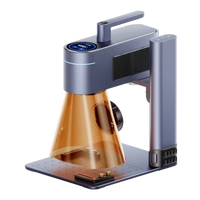
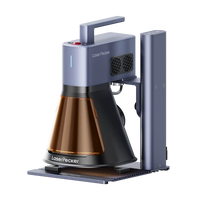
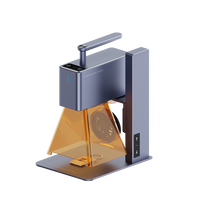
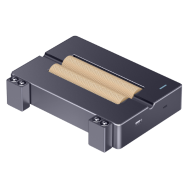
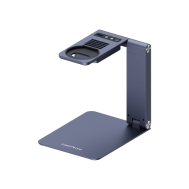
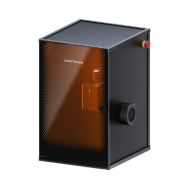
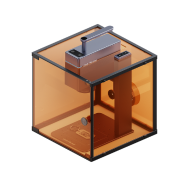
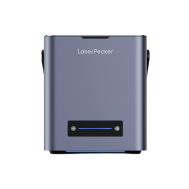
Le LaserPecker LP4 est une solution flexible conçue pour les utilisateurs DIY et les petites entreprises à travers l'UE. Il permet aux utilisateurs de personnaliser efficacement des T-shirts en coton uni, ce qui le rend adapté aussi bien aux projets personnels qu'à la production commerciale à petite échelle.
Équipé d'un système à double laser — un laser bleu de 10W et un laser infrarouge de 2W — le LP4 prend en charge la gravure sur plus de 300 matériaux. Cela inclut des textiles tels que le coton et le denim, ainsi que des écussons en cuir et des accessoires, permettant aux utilisateurs de s'étendre au-delà des T-shirts vers une personnalisation plus large de vêtements et de produits.
Le LP4 est particulièrement bien adapté aux créateurs qui souhaitent transformer la personnalisation en une opportunité commerciale. Ses commandes tactiles intuitives et ses fonctions de gravure répétée aident à maintenir la cohérence sur plusieurs articles. De plus, les angles de gravure réglables facilitent la personnalisation des manches, des étiquettes et d'autres zones difficiles d'accès des vêtements.

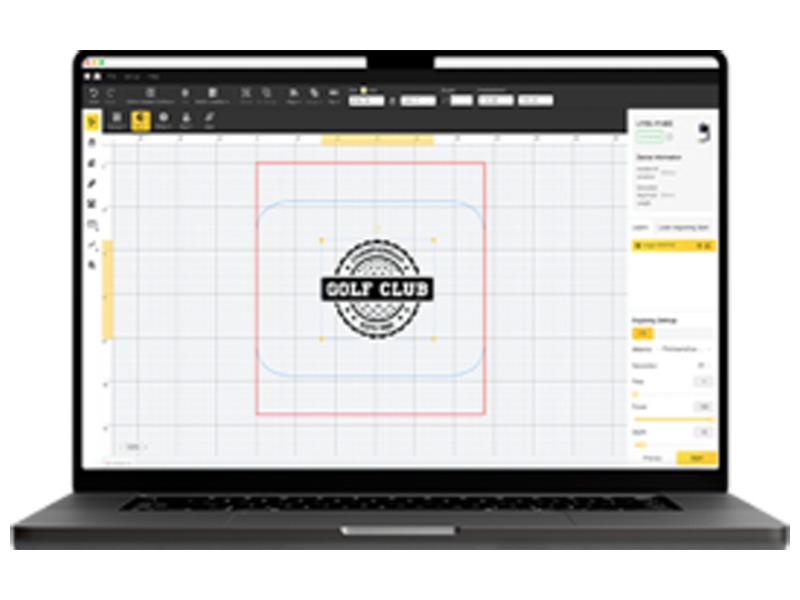
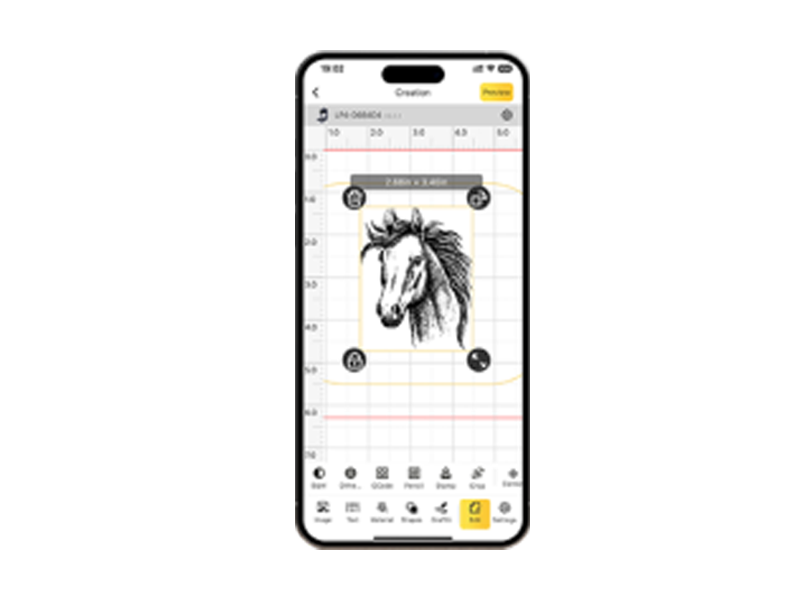
Le point fort ? C'est rapide et exact, vous obtenez donc des résultats pros rapidement. Et le logiciel / l'application est simple, vous pouvez donc être créatif sans stresser sur les problèmes techniques.
Questions fréquentes sur la personnalisation de T-shirts
Q1. Quelle méthode de personnalisation de T-shirt est la meilleure pour les débutants ?
Pour les débutants, le transfert thermique, les impressions au fer à repasser et la peinture sur tissu sont les méthodes les plus faciles pour commencer. Ces techniques nécessitent un équipement minimal et sont simples à apprendre.
Q2. La gravure laser est-elle adaptée à la production à petite échelle dans l'UE ?
Oui, la gravure laser convient à la production à petite échelle. Elle offre des résultats constants et reproductibles, et elle est souvent utilisée par les petites entreprises et les créateurs produisant des séries limitées ou des designs premium.
Q3. La gravure laser est-elle meilleure que l'impression pour les T-shirts personnalisés ?
La gravure laser offre une durabilité et un niveau de détail plus élevés que de nombreuses méthodes d'impression, car le motif ne s'écaillera pas et ne s'effacera pas. Cependant, l'impression peut être plus adaptée aux designs très colorés ou aux graphismes de grande taille.
Q4. Les méthodes de personnalisation de T-shirts DIY conviennent-elles aux petites entreprises ?
Oui, de nombreuses petites entreprises utilisent des méthodes accessibles comme le transfert thermique, la broderie ou la gravure laser pour produire de petits lots de T-shirts personnalisés sans externaliser la production.
Q5. Quelle est la méthode de personnalisation la plus durable pour les T-shirts ?
La broderie et la gravure laser comptent parmi les méthodes les plus durables. Elles résistent mieux aux lavages fréquents que la peinture ou les transferts au fer lorsqu'elles sont réalisées correctement.
Q6. Ai-je besoin d'une expérience en design pour personnaliser des T-shirts ?
Aucune expérience en design n'est requise pour de nombreuses méthodes. Les outils de conception en ligne, les pochoirs et l'équipement facile à utiliser permettent à n'importe qui de créer des T-shirts personnalisés.
Conclusion
Les T-shirts personnalisés offrent un moyen pratique et créatif d'exprimer son style personnel à travers les vêtements. Que vous choisissiez un service d'impression professionnel ou une approche DIY, la meilleure option dépend de la finition souhaitée, de votre budget et de vos exigences en matière de durabilité.
L'utilisation de matériaux de qualité et un entretien approprié peuvent considérablement améliorer la durabilité, tandis que les outils modernes tels que les graveurs laser pour T-shirts permettent d'obtenir des résultats détaillés et durables à la maison ou dans de petits studios.
En fin de compte, le facteur le plus important est la créativité. Prenez le temps d'expérimenter, profitez du processus et concevez des T-shirts qui représentent vos idées et votre identité.