




























Les porte-clés photo offrent un moyen pratique de transformer des images personnelles en accessoires durables du quotidien. Ils sont couramment utilisés pour des cadeaux, des souvenirs, des produits dérivés personnalisés et des créations artisanales en petites séries.
Ce guide présente les différents types de porte-clés photo, compare quatre méthodes de fabrication et explique comment les techniques basées sur le laser peuvent améliorer la précision et la répétabilité. Que vous fassiez de la création pour le loisir ou que vous produisiez des articles en atelier, cet aperçu vous aidera à choisir l'approche la plus adaptée.

Dans cet article :
- Partie 1 : Qu'est-ce qu'un porte-clés photo ?
- Partie 2 : Quatre méthodes pour fabriquer un porte-clés photo personnalisé
- Méthode 1 : Insert imprimé
- Méthode 2 : Porte-clés photo plastifié
- Méthode 3 : Moulage en résine
- Méthode 4 : Gravure laser
- Partie 3 : Comment fabriquer des porte-clés photo avec un graveur/découpeur laser
- Partie 4 : Conseils pour les porte-clés photo personnalisés
- Partie 5 : FAQ sur la fabrication d'un porte-clés photo
Partie 1 : Qu'est-ce qu'un porte-clés photo ?
Un porte-clés photo est un accessoire compact qui intègre une image imprimée ou gravée dans un format de porte-clés durable. Partout en Europe, il est couramment utilisé pour conserver des photographies personnelles, des visuels de marque ou des graphismes commémoratifs sous une forme portable et protectrice.
Dans de nombreux pays de l'UE, les porte-clés photo sont populaires en tant que cadeaux personnalisés pour des occasions telles que les anniversaires, les mariages, les remises de diplômes et les fêtes saisonnières. Ils sont également fréquemment utilisés par les petites entreprises et les organisateurs d'événements comme articles promotionnels ou souvenirs de marque lors de foires commerciales, d'expositions et de marchés locaux.
L'image est généralement fixée à l'aide de matériaux tels que l'acrylique, l'acier inoxydable, l'aluminium, le bois, la résine ou le cuir. Les méthodes de production vont des techniques artisanales manuelles aux processus de fabrication numérique, y compris la gravure laser réalisée avec des machines de gravure laser. Avec la disponibilité croissante de systèmes de gravure laser compacts au sein de la communauté des "makers" de l'UE, les petits ateliers et les créateurs indépendants sont désormais en mesure de produire efficacement des gravures photo détaillées et durables.
Les porte-clés photo sont largement distribués via les places de marché en ligne européennes, les plateformes artisanales indépendantes et les détaillants de cadeaux locaux. Leur combinaison d'accessibilité, de portabilité et de signification personnelle en fait un choix constant dans le secteur européen du cadeau personnalisé et de la vente au détail à petite échelle.
5 types de porte-clés photo
Type 1 : Porte-clés photo en acrylique
L'acrylique offre de la transparence, un poids faible et une bonne durabilité. Les images peuvent être imprimées directement sur la surface ou gravées à l'aide de la technologie laser.
Le matériau permet une découpe personnalisée des contours, autorisant des formes complexes et des designs multicouches. L'acrylique est fréquemment choisi pour les produits dérivés de style moderne et les articles sur mesure.

Type 2 : Porte-clés photo en métal
Les porte-clés en métal sont appréciés pour leur solidité structurelle et leur longévité. L'aluminium et l'acier inoxydable sont les supports les plus couramment utilisés.
Les images peuvent être imprimées à l'aide de techniques de revêtement spécialisées ou gravées pour une finition permanente. Les porte-clés photo en métal sont souvent choisis pour des applications d'entreprise ou commémoratives.

Type 3 : Porte-clés photo en bois
Le bois offre une surface naturelle adaptée à la gravure laser. Le processus de gravure brûle l'image dans le matériau, créant un effet de contraste permanent.
Les variations du grain du bois entraînent de subtiles différences visuelles entre les pièces. Les porte-clés en bois sont couramment associés à une esthétique éco-inspirée ou artisanale.

Type 4 : Porte-clés photo en résine / époxy
Le moulage en résine consiste à emprisonner une image imprimée dans une couche de polymère transparent. Cette méthode améliore la protection de l'image et crée une surface brillante et dimensionnelle.
Des éléments décoratifs supplémentaires peuvent être incorporés lors du moulage pour personnaliser l'aspect final.

Type 5 : Porte-clés photo en cuir
Les porte-clés en cuir sont généralement gravés ou marqués par transfert thermique avec une image. Le matériau offre de la flexibilité et un fini de surface texturé.
Le cuir est souvent utilisé pour des designs minimalistes ou de marque, particulièrement dans des formats monochromes.

Partie 2 : Quatre méthodes pour fabriquer un porte-clés photo personnalisé
Les porte-clés photo peuvent être produits à l'aide de différentes méthodes de fabrication, en fonction des exigences de durabilité, de la disponibilité de l'équipement et de l'application prévue. Les quatre approches principales vont de l'assemblage simple par insert à la gravure permanente du matériau.
Méthode 1 : Insert imprimé
Cette méthode consiste à imprimer une image, à la découper aux bonnes dimensions et à l'insérer dans un boîtier transparent en acrylique ou en plastique.
Elle est adaptée à une production rapide, à des designs temporaires ou à des inserts photo interchangeables.
Méthode 2 : Porte-clés photo plastifié
La photographie est scellée entre des feuilles de plastique à l'aide d'une plastification thermique ou d'un film adhésif. Cela crée une structure résistante à l'eau et renforcée.
Cette méthode est économique et appropriée pour une manipulation régulière sans nécessiter de machines spécialisées.
Méthode 3 : Moulage en résine
Le moulage en résine consiste à emprisonner une image imprimée à l'intérieur d'un moule rempli d'époxy transparent. Après durcissement, la résine forme une surface rigide et brillante.
Cette technique permet une profondeur visuelle accrue et autorise des inclusions décoratives lors du processus de moulage.
Méthode 4 : Gravure laser
La gravure laser transfère une image directement sur des matériaux solides tels que le bois, l'acrylique, le cuir ou le métal.
Contrairement aux méthodes imprimées ou scellées, la gravure modifie la surface du matériau elle-même, produisant un résultat permanent et résistant à l'usure.
Tableau comparatif
| Méthode | Utilisation idéale | Durabilité | Outils nécessaires | Matériaux adaptés |
|---|---|---|---|---|
| Insert imprimé | Cadeaux DIY rapides | Moyenne | Imprimante, ciseaux, boîtier de porte-clés | Papier, support acrylique |
| Plastifié | Manipulation quotidienne | Élevée | Plastifieuse, papier, film de plastification | Papier, film plastique |
| Moulage en résine | Pièces artistiques ou décoratives | Très élevée | Résine époxy, moules | Papier, résine |
| Gravure laser | Résultats professionnels et durables | Extrêmement élevée | Graveur Laser LP4 (ou similaire) | Métal, bois, cuir, acrylique |
D'un point de vue de la durabilité et de la production, la gravure laser offre le plus haut niveau de permanence et de flexibilité des matériaux. La section suivante explique le processus étape par étape pour produire des porte-clés photo à l'aide d'un graveur ou d'un découpeur laser.
Partie 3 : Comment fabriquer des porte-clés photo avec un graveur/découpeur laser ?
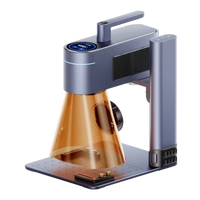
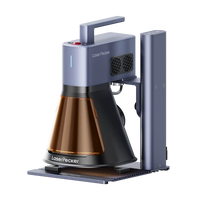
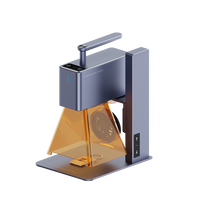
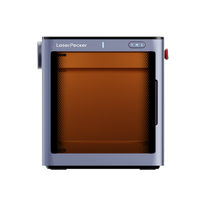
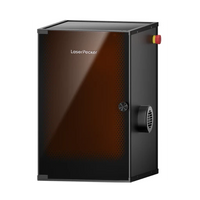
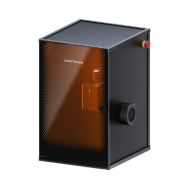
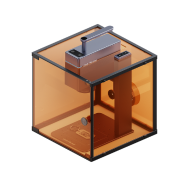
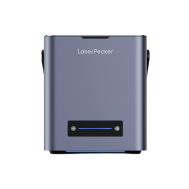
La gravure laser est l'un des moyens les plus précis et les plus durables pour créer des porte-clés photo personnalisés. Le LaserPecker LP4 est un graveur et découpeur à double laser équipé d'un laser à diode bleue de 10W (450 nm) et d'un laser infrarouge de 2W (1064 nm), ce qui lui permet de travailler sur différents matériaux avec une grande flexibilité.
Étape 1 : Préparez votre photo
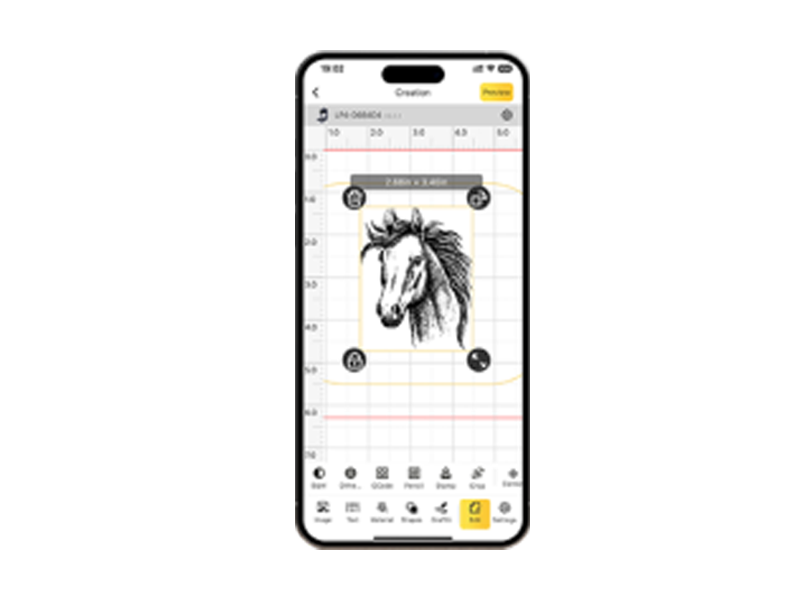
Choisissez une image à fort contraste pour obtenir les meilleurs résultats. Convertissez-la en noir et blanc à l'aide d'un logiciel de retouche et ajustez la luminosité et le contraste afin que le laser puisse interpréter les détails clairement.
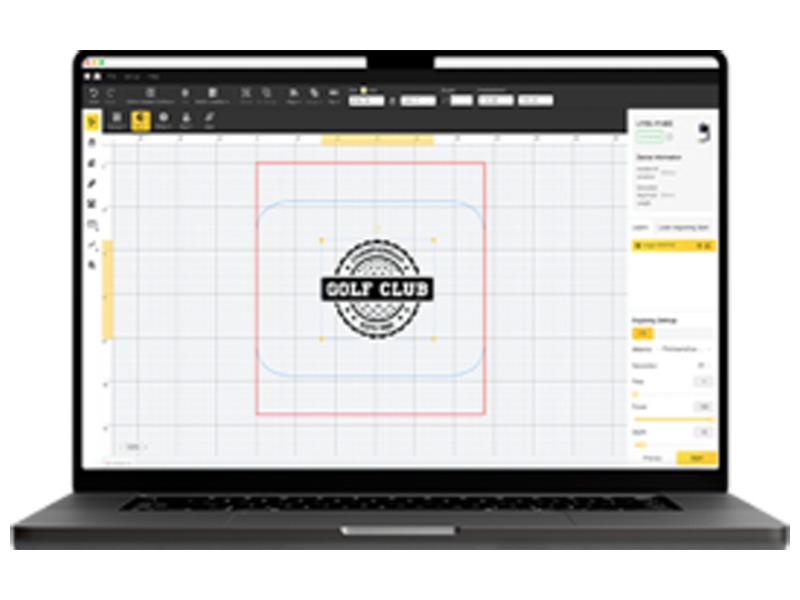
Importez le fichier dans LightBurn ou LaserPecker Design Space, tous deux compatibles avec le LP4.
Étape 2 : Choisissez votre matériau
Cela dépend du rendu que vous recherchez :
- Le bois offre un aspect naturel.
- Le cuir donne une apparence raffinée et texturée.
- Le métal ou l'acrylique créent un style moderne.
Le LaserPecker LP4 permet de basculer facilement entre le mode diode (pour le bois et l'acrylique) et le mode infrarouge (pour le métal et les matériaux enduits), garantissant des résultats de gravure plus nets sur toutes les surfaces.
Étape 3 : Ajustez les réglages
Utilisez l'interface tactile du LP4 pour sélectionner le type de laser approprié. Ajustez la puissance et la vitesse en fonction de votre matériau.
La machine prend en charge des vitesses de gravure allant jusqu'à 4000 mm/s et offre un rendu détaillé jusqu'à une résolution 8K. La gravure multi-angle peut aider à aligner les designs sur des surfaces courbes ou irrégulières.
Étape 4 : Gravez et découpez
Commencez par graver la photo. Une fois l'image terminée, ajoutez du texte, des noms ou des éléments décoratifs si vous le souhaitez.
Une fois la gravure finie, utilisez le laser à diode pour découper la forme du porte-clés. Le LP4 peut découper des matériaux tels que du bois de balsa de 8 mm ou de l'acrylique de 5 mm avec des bords nets.
Étape 5 : Assemblez le porte-clés
Fixez un anneau fendu, une lanière ou un pompon pour terminer la pièce. Vous pouvez également appliquer une couche protectrice comme de la résine ou de la cire pour améliorer la durabilité.
Votre porte-clés photo personnalisé est maintenant prêt pour un usage quotidien ou pour être offert.
Partie 4 : Conseils pour les porte-clés photo personnalisés
Les recommandations suivantes aident à améliorer la qualité de la gravure, la durabilité et la finition globale du produit :
1. Utilisez des images à fort contraste
Les graveurs laser interprètent les zones sombres et claires comme de la profondeur. Des photos nettes et contrastées permettent d'obtenir des gravures plus propres et plus détaillées. Avant de graver, retouchez votre photo pour augmenter légèrement le contraste. Cela fera ressortir les visages ou les objets.
2. Testez d'abord vos réglages
Effectuez toujours un test de gravure sur une chute de matériau avant de commencer votre pièce finale.
Différents matériaux réagissent différemment aux réglages de puissance et de vitesse. Un test rapide vous évite de gaspiller de la matière et garantit un résultat final net et équilibré.
3. Choisissez des matériaux de qualité
Des matériaux de haute qualité améliorent à la fois l'aspect et la durabilité.
- L'acier inoxydable ou les anneaux avec revêtement durent plus longtemps
- Un acrylique de bonne qualité offre des résultats plus clairs
- Le cuir véritable offre une finition plus professionnelle
De meilleurs matériaux réduisent également le risque de déformation, de décoloration ou de jaunissement avec le temps.
4. Scellez ou polissez une fois terminé
L'application d'une fine couche de vernis transparent, de cire ou de polish peut rehausser l'apparence et protéger la surface.
Ceci est particulièrement utile pour les porte-clés en bois ou en résine, car cela améliore la résistance à l'humidité et protège contre les rayures et l'exposition au soleil.
5. Personnalisez-le
Les éléments personnalisés rendent votre porte-clés plus significatif.
Vous pouvez graver des noms, des initiales, des dates, de petites icônes ou de courtes citations. Même des ajouts subtils peuvent transformer un design simple en un souvenir mémorable.
Partie 5 : FAQ sur la fabrication d'un porte-clés photo
Q1. Comment protéger un porte-clés photo de l'usure et des dommages environnementaux ?
Utilisez du papier photo imperméable ou enduit pour les inserts imprimés et appliquez un scellant transparent si nécessaire.
Pour les produits gravés, l'acier inoxydable, l'aluminium anodisé ou le bois verni offrent une meilleure résistance à l'humidité et à l'abrasion. Évitez l'exposition prolongée à la chaleur et aux rayons UV.
Q2. Quels matériaux permettent de fabriquer les porte-clés photo les plus durables ?
Le métal et l'acrylique figurent parmi les options les plus durables. Ils résistent aux rayures, à l'humidité et aux manipulations quotidiennes.
Le cuir est élégant mais peut nécessiter un entretien au fil du temps pour éviter les craquelures. Les modèles scellés à la résine et le bois gravé au laser offrent également un bon équilibre entre esthétique et durabilité.
Q3. Un débutant peut-il facilement fabriquer un porte-clés photo ?
Oui, absolument. Des méthodes comme les inserts imprimés ou les photos plastifiées ne nécessitent que des outils de base et sont idéales pour les débutants.
Pour des résultats plus détaillés et permanents, les graveurs laser conviviaux comme le LP4 simplifient le processus avec des commandes tactiles et des modes prédéfinis.
Q4. Quelle doit être la taille d'un porte-clés photo ?
La plupart des porte-clés photo mesurent entre 3 et 6 cm de largeur ou de hauteur. Les petites tailles sont plus pratiques pour un usage quotidien, tandis que les designs légèrement plus grands permettent d'afficher de meilleurs détails photo.
Choisissez une taille qui garde l'image claire sans rendre le porte-clés encombrant.
Q5. Puis-je utiliser des photos en couleur pour la gravure laser ?
La gravure laser fonctionne traditionnellement mieux avec des images en noir et blanc ou en niveaux de gris à fort contraste, en particulier avec les lasers à diode standard. Les photos en couleur sont généralement converties en niveaux de gris et ajustées au niveau du contraste avant la gravure pour garantir la clarté des détails et de la profondeur. Augmenter le contraste et simplifier les éléments d'arrière-plan améliorera considérablement le résultat final.
Cependant, la gravure laser en couleur est également possible sous certaines conditions. Certains systèmes laser — en particulier les lasers à fibre — peuvent produire des effets de marquage couleur sur l'acier inoxydable par oxydation contrôlée. Cela signifie que des photos en couleur peuvent être gravées, à condition que le matériau du porte-clés soit de l'acier inoxydable et que la machine prenne en charge le marquage couleur. Le processus nécessite un contrôle précis des paramètres, mais lorsqu'il est bien fait, il permet de créer des gravures en couleur vibrantes et durables sans encres ni revêtements.
Conclusion
La fabrication d'un porte-clés photo allie expression personnelle et techniques de fabrication pratiques. La méthode et le matériau choisis influencent directement la durabilité, la qualité visuelle et l'efficacité de la production.
Les options DIY simples sont parfaites pour des projets rapides, tandis que les techniques plus avancées offrent une plus grande durabilité et des détails plus nets. Pour des résultats durables et précis, la gravure laser avec le graveur à double laser LP4 offre une grande flexibilité sur divers matériaux et une qualité constante.
Avec les bons outils et une bonne préparation, vous pouvez transformer n'importe quelle photo préférée en un souvenir personnalisé qui durera des années.