




























Les marque-pages remplissent des fonctions à la fois pratiques et décoratives. En plus de marquer la progression de la lecture, ils peuvent être personnalisés pour refléter un style individuel, commémorer des événements ou soutenir des projets commerciaux à petite échelle, tels que des boutiques d'artisanat en ligne.
La création de marque-pages personnalisés à domicile est accessible grâce à une large gamme de matériaux et de techniques de fabrication. Les options varient de l'artisanat manuel et de l'impression numérique à la gravure et à la découpe laser de précision. L'approche appropriée dépend de la complexité du design, du volume de production et de la préférence des matériaux.
Ce guide passe en revue les matériaux adaptés, compare les différentes méthodes de fabrication de marque-pages et fournit des conseils structurés pour produire des marque-pages personnalisés de haute qualité, avec un accent particulier sur les solutions de fabrication laser.

Dans cet article :
- Partie 1 : Matériaux adaptés pour les marque-pages personnalisés
- Partie 2 : Quatre méthodes pour créer des marque-pages personnalisés
- Méthode 1 : Marque-pages faits main
- Méthode 2 : Marque-pages imprimés
- Méthode 3 : Marque-page gravé ou découpé au laser
- Méthode 4 : Commander des marque-pages en ligne
- Partie 3 : Comment fabriquer un marque-page personnalisé avec un graveur ou un découpeur laser
- Partie 4 : Erreurs courantes à éviter lors de la fabrication de marque-pages personnalisés
- Partie 5 : FAQ sur la fabrication de marque-pages personnalisés
Partie 1 : Matériaux adaptés pour les marque-pages personnalisés
Le choix du matériau influence considérablement la durabilité, l'esthétique et la méthode de production. Les matériaux suivants sont couramment utilisés dans la fabrication de marque-pages personnalisés.
Type 1 : Marque-pages en papier
Le papier est économique et largement disponible, ce qui le rend adapté à la production en série et aux applications éducatives. Le papier cartonné et les papiers à grammage élevé offrent une meilleure stabilité structurelle. La plastification renforce la résistance à l'humidité et à l'usure.
Avantages : Léger, économique, facilement personnalisable.
Inconvénients : Peut se plier, se déchirer ou être endommagé par l'eau.
Type 2 : Marque-pages en cuir
Le cuir offre une solution raffinée et durable. Le cuir véritable confère une esthétique traditionnelle, tandis que les alternatives synthétiques offrent un aspect similaire sans matériaux d'origine animale. Les méthodes de décoration incluent le marquage à chaud, l'embossage et la gravure laser.

Avantages : Durable, finition premium, qualité tactile.
Inconvénients : Coût plus élevé, gamme de couleurs limitée, nécessite des outils spécialisés.
Type 3 : Marque-pages en métal
Les métaux courants incluent l'acier inoxydable, le laiton et l'aluminium. Ces matériaux offrent une solidité structurelle et un style visuel contemporain. La gravure laser permet d'ajouter des détails décoratifs précis.
Avantages : Robuste, sensation premium, idéal pour la gravure.
Inconvénients : Plus lourd, plus cher, flexibilité limitée.
Type 4 : Marque-pages en bois
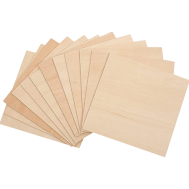
Les bois tels que le bambou, l'érable ou le noyer offrent une texture naturelle et une chaleur esthétique. La gravure et la découpe laser sont fréquemment utilisées pour personnaliser les marque-pages en bois. La variation du grain garantit que chaque pièce est unique.
Avantages : Écologique, personnalisable par découpe laser, texture unique.
Inconvénients : Rigide, peut se voiler s'il est exposé à l'humidité.
Type 5 : Marque-page en feuille naturelle
Les feuilles pressées ou séchées, scellées avec du laminé, de la résine ou de l'acrylique, créent des marque-pages décoratifs légers. Cette option met l'accent sur les variations naturelles et l'aspect artisanal.
Avantages : Beauté naturelle, léger, biodégradable.
Inconvénients : Fragile, disponibilité limitée, long à fabriquer.
Type 6 : Marque-pages en acrylique et magnétiques
L'acrylique offre une durabilité structurelle et une finition nette des bords lorsqu'il est traité par des systèmes laser. Il permet des formes complexes et une gravure détaillée. Les marque-pages magnétiques intègrent de fins aimants pour fixer les pages sans les endommager.
Avantages : Durable, apparence moderne, réutilisable.
Inconvénients : Légèrement plus lourd, nécessite des outils de précision.
Partie 2 : Quatre méthodes pour créer des marque-pages personnalisés
Les marque-pages personnalisés peuvent être produits à l'aide de diverses techniques, en fonction de l'échelle de production, de la précision requise et de l'équipement disponible. Les quatre approches suivantes couvrent à la fois les méthodes de fabrication manuelles et numériques.
Méthode 1 : Marque-pages faits main
Les marque-pages faits main sont créés à partir de papier ou de papier cartonné combinés à des éléments décoratifs tels que des rubans, du lettrage, de la peinture ou des embellissements. Une plastification peut être appliquée pour améliorer la longévité et la résistance à l'humidité.
Idéal pour : Les passionnés de loisirs créatifs, les projets scolaires et les petits cadeaux personnalisés.
Méthode 2 : Marque-pages imprimés
Les marque-pages conçus numériquement peuvent être imprimés professionnellement en plus grandes quantités. Des logiciels graphiques tels que Canva, Adobe Illustrator ou Procreate permettent une conception de mise en page cohérente. Des processus de finition supplémentaires tels que la plastification ou le vernis UV renforcent la durabilité de la surface.
Idéal pour : Les auteurs, les entreprises, les objets publicitaires.
Méthode 3 : Marque-page gravé ou découpé au laser
Un graveur/découpeur laser permet une gravure et une découpe précises sur divers matériaux, notamment le bois, le cuir, l'acrylique et le métal. Cette méthode garantit des détails constants, des bords nets et une durabilité à long terme. Elle est particulièrement appropriée pour le branding, le texte personnalisé et les motifs décoratifs ajourés.
Idéal pour : Les créateurs professionnels, les vendeurs en ligne, les projets de branding.
Méthode 4 : Commander des marque-pages personnalisés en ligne
Les services de production personnalisée en ligne permettent aux clients de télécharger des designs et de sélectionner des matériaux pour une fabrication professionnelle. Les options peuvent inclure l'impression numérique ou la fabrication laser, selon les capacités du fournisseur.
Idéal pour : Les entreprises, les cadeaux, ou lorsque vous avez besoin de résultats professionnels sans posséder l'équipement.
Tableau comparatif
| Méthode | Description | Meilleurs matériaux | Durabilité | Précision | Recommandé pour |
|---|---|---|---|---|---|
| Fait main (DIY) | Créé manuellement à l'aide de matériaux décoratifs et d'outils de base | Papier, feuille, papier cartonné léger | ★★☆☆☆ | ★★☆☆☆ | Amateurs, enfants, projets DIY |
| Marque-pages imprimés | Conçu numériquement et imprimé professionnellement | Papier, papier cartonné, acrylique fin | ★★★☆☆ | ★★★☆☆ | Auteurs, événements, promotions |
| Gravé / Découpé au laser | Produit à l'aide d'un système laser pour la découpe ou la gravure | Bois, cuir, métal, acrylique | ★★★★★ | ★★★★★ | Artisans professionnels, designers |
| Commandé en ligne | Fabriqué via des services de personnalisation en ligne | Papier, bois, cuir, acrylique | ★★★★☆ | ★★★★☆ | Cadeaux, produits promotionnels, revente |
Partie 3 : Comment fabriquer un marque-page personnalisé avec un graveur/découpeur
La gravure et la découpe laser offrent une solution précise et évolutive pour la production de marque-pages personnalisés.
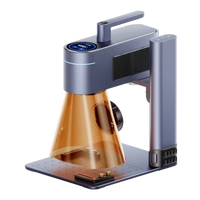
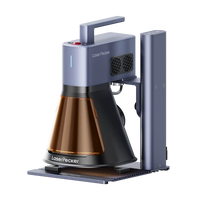
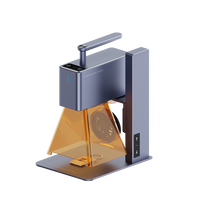
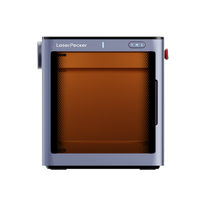
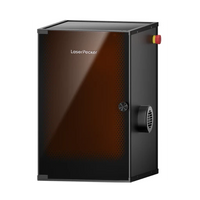
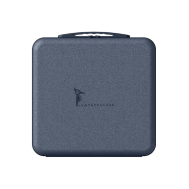
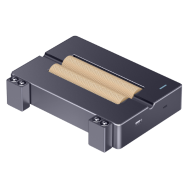
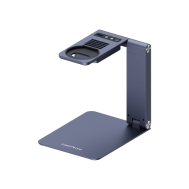
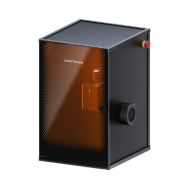
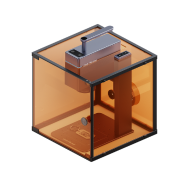
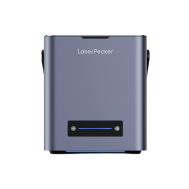
Le LaserPecker LP4, connu comme le premier graveur à double laser, convient aussi bien aux débutants qu'aux créateurs expérimentés. Il combine un laser à diode bleue de 10W (450 nm) avec un laser infrarouge de 2W (1064 nm), permettant la gravure et la découpe sur plus de 300 matériaux, dont le bois, le cuir, l'acrylique, le métal et les plastiques enduits.
Voici un guide étape par étape pour créer un marque-page personnalisé à l'aide du LP4.
Étape 1 : Choisissez votre matériau
Sélectionnez un matériau qui reflète l'esthétique et l'usage souhaités.
- Bois (ex : bambou ou noyer) – Apparence chaleureuse et naturelle
- Cuir – Élégant et traditionnel
- Acrylique – Finition propre et moderne
- Métal ou matériaux enduits – Haut de gamme et très durable
Étape 2 : Préparez votre design
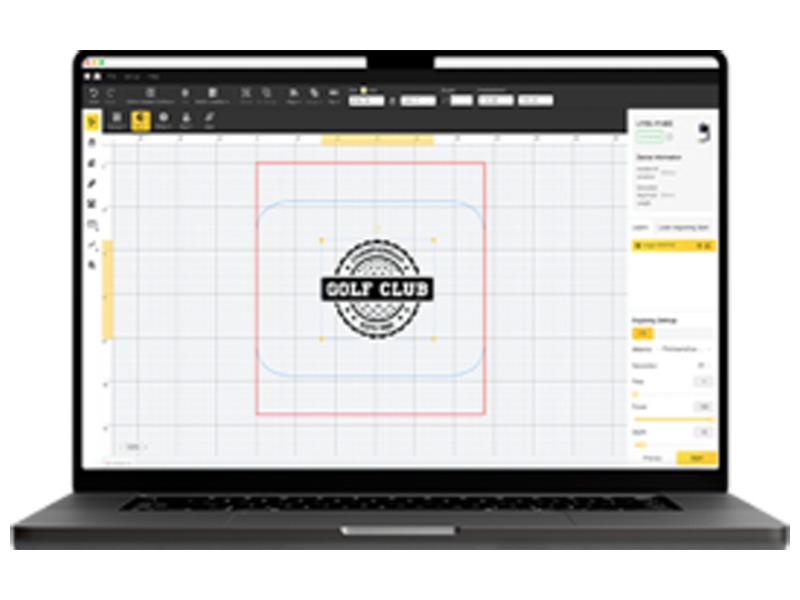
Créez votre design en utilisant des logiciels tels que LightBurn, Adobe Illustrator ou LaserPecker Design Space.
La taille standard d'un marque-page est d'environ 5 × 15 cm (2 × 6 pouces), bien que les dimensions puissent être personnalisées. Ajoutez des noms, des citations, des découpes décoratives ou des logos selon vos besoins.
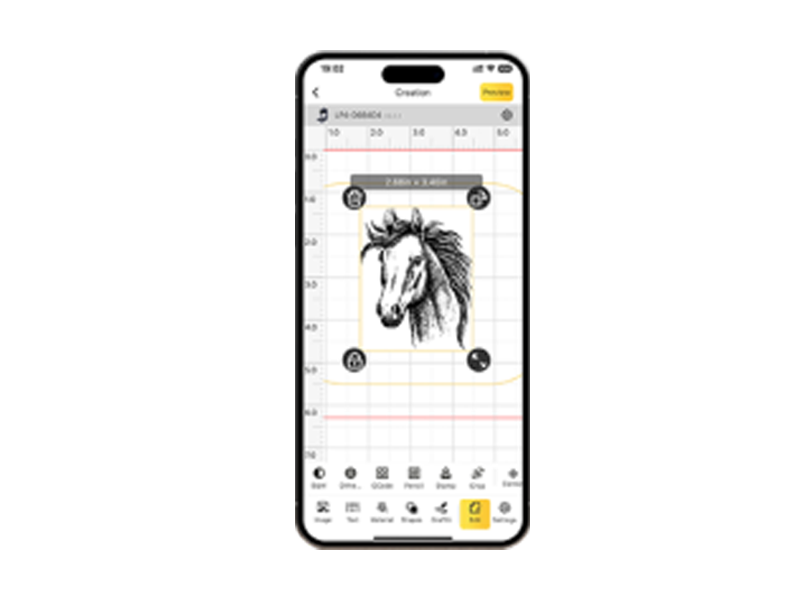
Le LP4 prend en charge l'importation de fichiers SVG ou DXF par glisser-déposer et propose une fonction de prévisualisation avant la gravure. Cela permet de garantir un alignement correct et de réduire le gaspillage de matière.
Étape 3 : Configurez le laser
Branchez votre LP4 et fixez votre matériau. L'écran tactile vous permet de basculer facilement entre les modes laser pour différents matériaux. Voici comment : Pairs
- Utilisez le Laser à Diode pour couper le bois de balsa épais ou l'acrylique foncé.
- Utilisez le Laser IR (Infrarouge) pour graver les métaux, les plastiques ou le cuir enduit.
- Ajustez la puissance, la vitesse et la mise au point en fonction de l'épaisseur de votre matériau. Le LP4 peut graver rapidement avec une grande finesse de détails.
Vous pouvez enregistrer vos réglages pour plus tard et utiliser le bouton "Graver à nouveau" pour reproduire rapidement vos designs.
Étape 4 : Gravure et découpe
Commencez par graver le texte ou les éléments décoratifs avant de découper le contour final du marque-page. Ensuite, passez le LaserPecker LP4 en mode découpe et découpez le contour avec un minimum de traces de brûlure.
Étape 5 : Nettoyage et finition
Après la découpe, nettoyez les éventuels résidus. Poncez les bords du bois, essuyez l'acrylique et polissez le cuir. Comme le LP4 est très précis, vous n'aurez pas beaucoup de nettoyage à faire. L'ajout de pompons, de rubans ou d'une couche de vernis protecteur peut encore améliorer le résultat final pour un aspect professionnel et durable.
Étape 6 : Production en série
Pour de plus grandes quantités — comme des cadeaux, des faveurs d'événements ou des produits destinés à la vente — le LP4 permet une production en série efficace. Plusieurs designs peuvent être disposés en séquence, et les réglages enregistrés garantissent des résultats constants. La fonction de répétition de gravure améliore l'efficacité du flux de travail tout en maintenant la qualité sur chaque pièce.
Partie 4 : Erreurs courantes à éviter lors de la fabrication de marque-pages personnalisés
Même de petites erreurs peuvent réduire la qualité, la durabilité ou l'apparence générale d'un marque-page personnalisé. Voici quelques problèmes courants et des moyens pratiques de les éviter.
Erreur 1 : Choisir le mauvais matériau pour le design
Certains designs détaillés ou délicats peuvent fragiliser des matériaux moins résistants. Des motifs de découpe complexes peuvent réduire l'intégrité structurelle du papier fin ou du cuir souple, et peuvent entraîner des marques de brûlure lors du traitement laser. Des supports plus rigides tels que l'acrylique ou le bois dur sont souvent mieux adaptés aux motifs complexes.
Approche recommandée :
Effectuez un test de matériau avant la production finale. Évaluez la résistance structurelle, la réaction à la chaleur et la qualité des bords.
Erreur 2 : Ignorer la durabilité et l'ergonomie
Un marque-page doit être fonctionnel autant qu'esthétique. Des matériaux trop fins peuvent se plier ou se déchirer facilement, tandis que des bords tranchants — particulièrement sur l'acrylique ou le métal — peuvent endommager les pages des livres. Une épaisseur excessive peut également forcer sur la reliure du livre.
Approche recommandée :
- Assurez-vous que les bords sont correctement finis
- Sélectionnez des matériaux avec une flexibilité appropriée
- Maintenez une épaisseur pratique pour un usage quotidien
Erreur 3 : Ne pas tenir compte du public ou de l'usage
Le design doit correspondre à son destinataire ou à son application. Des couleurs vives et des formes ludiques peuvent convenir aux enfants, tandis que les cadeaux d'entreprise ou les produits dérivés nécessitent souvent une esthétique plus minimaliste et raffinée.
Approche recommandée :
Définissez le public cible et l'objectif fonctionnel avant de finaliser le concept du design.
Partie 5 : FAQ sur la fabrication de marque-pages personnalisés
Q1. Quelle est la taille standard d'un marque-page ?
La taille la plus courante pour un marque-page est de 2 × 6 pouces (environ 5 × 15 cm). Cependant, des formats tels que 2,5 × 7 pouces ou 1,5 × 5 pouces sont également populaires.
Les marque-pages plus grands sont idéaux pour mettre en valeur des illustrations ou des citations plus longues, tandis que les formats plus petits conviennent aux livres de poche ou aux ouvrages compacts. Pour les marque-pages imprimés ou découpés au laser, le maintien d'une taille cohérente garantit des proportions équilibrées. Des formes uniques, telles que des designs carrés ou découpés à la forme (die-cut), peuvent également ajouter une touche moderne.
Q2. Peut-on fabriquer des marque-pages avec une Cricut ou un découpeur laser ?
Oui, les deux machines peuvent être utilisées, mais elles répondent à des besoins différents.
Une machine Cricut est bien adaptée à la découpe du papier, du vinyle et du similicuir fin, ce qui la rend idéale pour les projets d'artisanat décoratifs.
Un découpeur laser offre une plus grande précision et une plus grande flexibilité de matériaux, en particulier pour le bois, l'acrylique, le cuir et le métal. Pour les designs complexes et les finitions professionnelles, un système laser tel que le LP4 offre un niveau de détail et une durabilité accrus.
Q3. Quel type de papier est le meilleur pour les marque-pages ?
Pour les marque-pages en papier, un papier cartonné de 300 à 400 g/m² offre un excellent équilibre entre durabilité et flexibilité.
- Le papier mat offre un aspect sobre et épuré
- Le papier glacé fait ressortir l'éclat des couleurs
- Le papier texturé ou recyclé ajoute du caractère et une dimension écologique
La plastification améliore la longévité et protège contre l'usure. Le papier sans acide est recommandé pour une utilisation à long terme, car il empêche le jaunissement.
Q4. La gravure laser est-elle sûre pour les marque-pages en bois ou en acrylique ?
Oui, la gravure laser est sûre lorsque les réglages appropriés et une ventilation adéquate sont utilisés. Le bois et l'acrylique réagissent bien à une puissance laser contrôlée.
Évitez les matériaux tels que le PVC, qui peuvent dégager des fumées toxiques lors du traitement. Assurez-vous toujours d'avoir une ventilation adéquate et suivez les consignes de sécurité du fabricant.
Conclusion
Les marque-pages ne servent pas seulement de supports fonctionnels pour les pages, mais aussi de pièces de design personnalisées. Les méthodes de production vont des options simples en papier fait main aux modèles en bois, acrylique ou métal fabriqués avec précision à l'aide d'un équipement avancé.
Pour une durabilité à long terme et une présentation professionnelle, les marque-pages découpés et gravés au laser offrent une grande précision, des détails raffinés et une qualité reproductible. Cela les rend adaptés aussi bien à l'artisanat personnel qu'à la production commerciale à petite échelle.
Qu'ils soient conçus pour le loisir, la revente ou pour offrir, les marque-pages personnalisés démontrent comment un produit compact peut offrir une valeur créative et pratique significative.