




























La découpe au laser est devenue une méthode de plus en plus adoptée dans la production de bijoux contemporains, en particulier pour les boucles d'oreilles en acrylique. Elle permet une fabrication de haute précision avec une précision dimensionnelle constante, ce qui la rend adaptée aussi bien au travail de conception créative qu'à la fabrication commerciale à petite échelle.
Par rapport aux méthodes de découpe manuelles, le traitement au laser permet des géométries complexes, une gravure fine et des résultats reproductibles avec un post-traitement minimal. Cela en fait une solution efficace pour les créateurs de bijoux à la recherche de qualité, d'évolutivité et de polyvalence des matériaux.
Ce guide fournit un aperçu structuré des matériaux et des outils nécessaires, détaille le flux de production des boucles d'oreilles en acrylique et explique les avantages techniques de la découpe au laser dans la fabrication de bijoux.

Dans cet article :
- Partie 1 : Matériaux et équipements nécessaires pour la découpe laser de boucles d'oreilles en acrylique
- Partie 2 : Guide étape par étape pour découper des boucles d'oreilles en acrylique au laser
- Partie 3 : Pourquoi la découpe laser est idéale pour les boucles d'oreilles en acrylique
- Partie 4 : Le meilleur découpeur laser pour les boucles d'oreilles en acrylique
- Partie 5 : FAQ sur la découpe laser de boucles d'oreilles en acrylique
Partie 1 : Matériaux et équipements nécessaires pour la découpe laser de boucles d'oreilles en acrylique
La réussite de la production de boucles d'oreilles en acrylique découpées au laser nécessite un équipement approprié et une préparation rigoureuse des matériaux. Le choix d'outils et de composants adaptés garantit la précision, la durabilité et une qualité de finition constante.
Découpeur laser :
Un système laser doté d'une puissance de sortie stable et d'une grande précision de positionnement est nécessaire pour traiter les fines feuilles d'acrylique. La machine doit permettre un réglage précis des paramètres afin d'obtenir des bords nets et d'éviter la surchauffe ou la déformation du matériau.
Acrylique :
Un système laser doté d'une puissance de sortie stable et d'une grande précision de positionnement est nécessaire pour traiter les fines feuilles d'acrylique. La machine doit permettre un réglage précis des paramètres afin d'obtenir des bords nets et d'éviter la surchauffe ou la déformation du matériau.
Outil de conception :
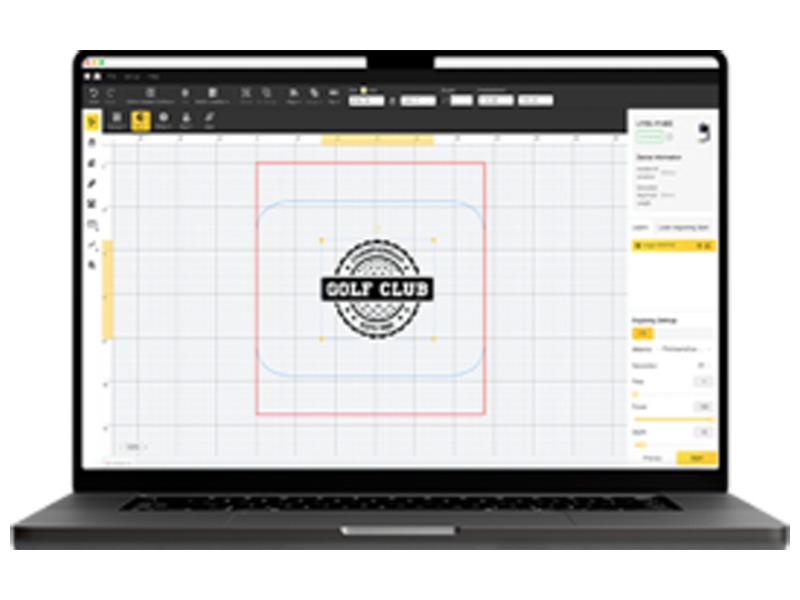
Un logiciel de conception vectorielle est indispensable pour créer des tracés de découpe nets. Des programmes tels que LightBurn, Adobe Illustrator ou LaserPecker Design Space permettent un contrôle précis des lignes, des courbes et des petits détails. Les motifs doivent être préparés dans des formats compatibles (par exemple, SVG ou DXF) pour un traitement laser précis.
Composants de boucles d'oreilles :
Pour finaliser les boucles d'oreilles, vous aurez besoin de composants tels que des crochets, des anneaux de jonction et de petites pinces pour l'assemblage. Pour les personnes ayant la peau sensible, il est recommandé d'utiliser des apprêts en acier inoxydable ou hypoallergéniques afin d'améliorer le confort et la portabilité.
Avoir ces matériaux à disposition garantit un flux de travail fluide et des résultats de qualité professionnelle lors de la fabrication de boucles d'oreilles en acrylique découpées au laser.
Partie 2 : Guide étape par étape pour découper des boucles d'oreilles en acrylique au laser
Les boucles d'oreilles en acrylique découpées au laser peuvent être produites efficacement en suivant un processus contrôlé et systématique. Une configuration appropriée des paramètres et la préparation du matériau sont essentielles pour obtenir des résultats constants.
Étape 1 : Préparer le design vectoriel
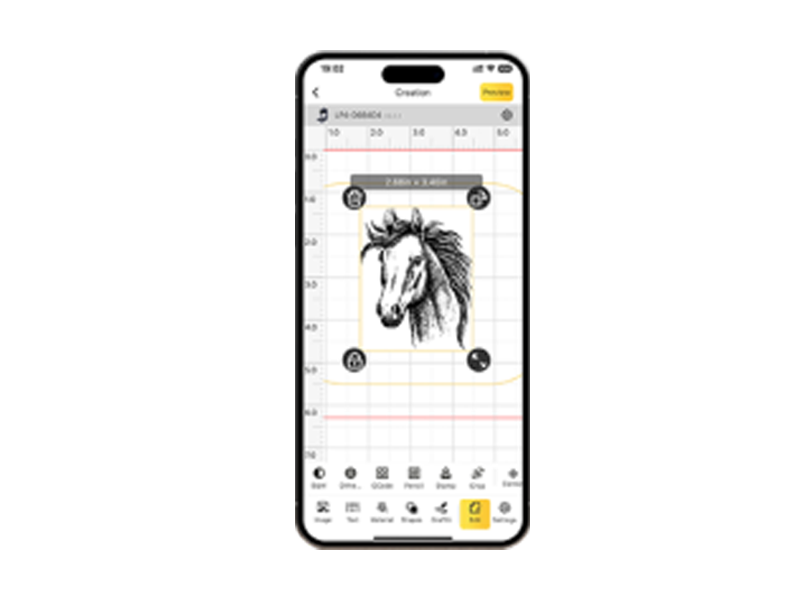
Créez un fichier de conception vectoriel contenant le contour de la boucle d'oreille et les trous de fixation. Les motifs peuvent inclure des formes géométriques, des motifs décoratifs ou des détails gravés.
Les éléments de gravure tels que le texte ou les textures doivent être affectés à des couches séparées pour le contrôle du processus. Importez le fichier terminé dans un logiciel laser compatible. LightBurn est couramment utilisé sur divers systèmes, tandis que les utilisateurs de LaserPecker peuvent utiliser LaserPecker Design Space pour la gestion du flux de travail.
Étape 2 : Sélectionner et préparer l'acrylique
Choisissez une feuille d'acrylique avec une finition et une épaisseur appropriées (généralement 2 à 4 mm). Les acryliques transparents, givrés, miroirs et décoratifs sont couramment utilisés dans la fabrication de bijoux.
Assurez-vous que la surface du matériau est propre et positionnée à plat sur le lit du laser. Retirez le film protecteur si nécessaire, selon vos préférences de découpe.
Étape 3 : Ajuster les paramètres laser et tester
Ajustez la puissance du laser, la vitesse et la hauteur de mise au point en fonction de l'épaisseur du matériau et des spécifications de la machine. Effectuez une découpe de test sur une chute d'acrylique pour vérifier la qualité des bords et la profondeur de coupe avant de passer à la production finale.
Étape 4 : Découper et graver le motif
Lancez le processus de découpe et de gravure selon votre fichier préparé. Pour des motifs détaillés et une qualité de bord constante, des systèmes tels que le LP5 offrent des performances stables et une grande précision lors du travail avec des matériaux acryliques.
Surveillez les premières passes pour garantir une séparation nette et une profondeur de gravure précise.
Étape 5 : Nettoyer, finir et assembler
Après la découpe, retirez les couches protectrices restantes et essuyez délicatement la surface avec un chiffon doux. Un léger polissage peut être appliqué si une finition de bord plus lisse est souhaitée.
Fixez les anneaux de jonction et les crochets à l'aide de pinces, en veillant à ce que les composants soient solidement fixés. Effectuez une inspection finale pour confirmer le confort, l'équilibre et l'apparence générale.
Une fois vos réglages optimisés, le processus peut être répété efficacement pour de petites séries ou des cycles de production.
Partie 3 : Pourquoi la découpe laser est idéale pour les boucles d'oreilles en acrylique
La découpe laser présente plusieurs avantages pratiques par rapport aux outils manuels, aux perceuses ou aux méthodes basées sur des moules lors de la fabrication de boucles d'oreilles en acrylique. Sa précision et son efficacité la rendent particulièrement adaptée aux travaux de bijouterie détaillés.
Précision et détails fins
Les découpeurs laser peuvent reproduire des motifs complexes, des contours précis et des éléments décoratifs délicats avec une grande exactitude. Des designs qui seraient difficiles ou très longs à réaliser à la main peuvent être produits de manière cohérente à partir de fichiers numériques.
Résultats constants
Chaque pièce produite à partir du même fichier est identique. Cela est particulièrement important lors de la création de paires de boucles d'oreilles assorties ou de la production de plusieurs articles destinés à la vente. Cette régularité contribue au contrôle de la qualité et à une présentation professionnelle.
Vitesse et efficacité
Une fois le fichier de conception et les paramètres de la machine préparés, un découpeur laser peut produire rapidement des copies répétées. Cela réduit considérablement le temps de mise en forme manuelle et améliore la productivité pour les petites séries comme pour les productions plus importantes.
Bords nets et lisses
Pendant le processus de découpe, le laser fait légèrement fondre les bords de l'acrylique, ce qui permet d'obtenir des finitions lisses et polies. Dans de nombreux cas, peu ou pas de finition supplémentaire des bords n'est nécessaire.
Flexibilité des matériaux et du design
Les systèmes laser permettent à la fois la découpe et la gravure dans le même flux de travail. Des textures de surface, des initiales et des motifs décoratifs peuvent être ajoutés sans outils supplémentaires. Plusieurs couleurs d'acrylique peuvent également être superposées ou combinées pour créer des designs plus complexes.
En résumé, la découpe laser offre précision, reproductibilité et efficacité de production, ce qui la rend parfaitement adaptée aux projets créatifs ainsi qu'à la fabrication de bijoux à petite échelle.
Partie 4 : Le meilleur découpeur laser pour les boucles d'oreilles en acrylique
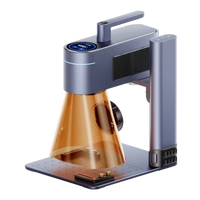
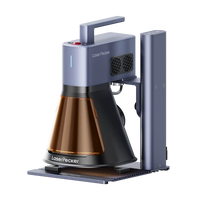
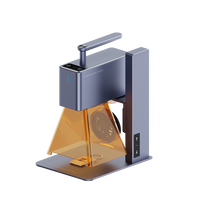
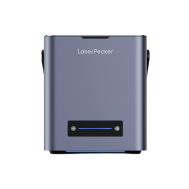
Une fois que tout est prêt, vous aurez besoin d'une machine à la fois robuste et précise. La LaserPecker LP5 pourrait être un excellent choix. Voici pourquoi elle constitue une option solide pour les créateurs de bijoux :
Fonctionnalité 1 : Capacité double laser
La LaserPecker LP5 intègre un laser à diode de 20 W et un laser fibre de 20 W dans un seul système. Pour les boucles d'oreilles en acrylique, le laser à diode est l'outil principal, car il est particulièrement adapté à la découpe et à la gravure des matériaux en acrylique.
Elle peut découper de l'acrylique jusqu'à 15 mm d'épaisseur, ce qui offre une capacité largement suffisante pour les applications de bijouterie utilisant généralement des plaques de 2 à 4 mm. Cela garantit des bords nets et une séparation fiable.
Fonctionnalité 2 : Vitesse de traitement élevée
Avec des vitesses de gravure pouvant atteindre 10 000 mm/s, la LP5 permet un flux de travail efficace lors de la production de plusieurs pièces. Les textures détaillées, les motifs gravés ou les lettrages fins peuvent être réalisés rapidement une fois les paramètres optimisés, ce qui réduit le temps de production global.
Fonctionnalité 3 : Précision et flexibilité de conception
La gravure haute résolution permet d'obtenir des détails complexes, notamment du texte de petite taille, des textures décoratives et des motifs géométriques élaborés. En plus de la découpe, la machine prend également en charge la gravure sur acrylique, permettant de créer des effets en couches et des détails personnalisés sur la surface dans le même flux de travail.
Fonctionnalité 4 : Zone de travail extensible
Des accessoires optionnels tels qu'une extension coulissante permettent d'augmenter la zone de travail jusqu'à environ 160 × 300 mm, ce qui permet de traiter plusieurs paires de boucles d'oreilles simultanément. Un module rotatif peut également être utilisé pour graver des composants de bijoux cylindriques tels que des perles ou des pendentifs.
Fonctionnalité 5 : Compacte, sûre et performante
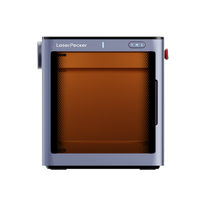
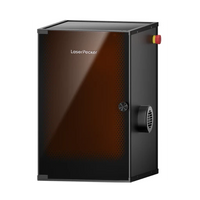
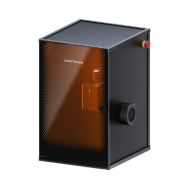
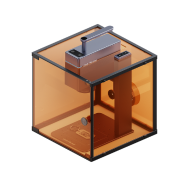
Comparée aux systèmes industriels plus volumineux, la LP5 est compacte et portable, ce qui la rend adaptée aux studios à domicile, aux salles de classe ou aux petits ateliers. Lorsqu'elle est utilisée avec le Safety Enclosure, elle peut être utilisée en intérieur avec une meilleure protection et un fonctionnement plus contrôlé.
Vous pouvez également choisir la LaserPecker LX2. Avec des options de laser à diode puissantes de 20W / 40W / 60W, elle est conçue pour découper facilement des matériaux plus grands — ce qui en fait le choix idéal pour les projets de découpe de boucles d'oreilles en acrylique à plus grande échelle.
Partie 5 : FAQ sur la découpe laser des boucles d'oreilles en acrylique
Q1. Quel matériau acrylique est le plus adapté à la fabrication de boucles d'oreilles ?
L'acrylique coulé opaque est généralement privilégié en raison de ses performances de découpe constantes et de l'intensité de ses couleurs. Il se grave efficacement et permet des détails fins. Une épaisseur comprise entre 2 et 4 mm offre une stabilité structurelle suffisante tout en conservant un poids léger pour un port confortable. Différentes finitions de surface permettent également une grande flexibilité esthétique.
Q2. La découpe laser provoque-t-elle une décoloration des bords ou des traces de brûlure ?
Lorsque les paramètres sont correctement configurés, les bords de l'acrylique doivent apparaître lisses et polis. Une décoloration ou un voile de surface indique généralement une puissance excessive ou une vitesse insuffisante. Tester les paramètres sur des chutes de matériau avant la production permet d'obtenir des résultats optimaux.
Q3. Les boucles d'oreilles en acrylique peuvent-elles intégrer d'autres matériaux ?
Oui. L'acrylique peut être superposé ou combiné avec des matériaux légers tels que de fines feuilles de bois ou de petits éléments métalliques. Une construction multi-matériaux permet d'obtenir un contraste visuel plus marqué. La répartition du poids doit toutefois être soigneusement étudiée afin de garantir un port confortable.
Q4. Est-il commercialement viable de vendre des boucles d'oreilles en acrylique découpées au laser ?
Oui. La découpe laser permet une production répétable avec une qualité constante, ce qui est avantageux pour les petites entreprises de bijouterie artisanale. La gravure personnalisée, les éditions limitées et un emballage soigné peuvent renforcer le positionnement du produit sur les marchés en ligne et locaux.
Q5. Quelle épaisseur d'acrylique convient pour des applications de bijouterie ?
Pour les boucles d'oreilles, des plaques d'acrylique d'une épaisseur comprise entre 2 et 4 mm sont généralement recommandées. Les plaques plus fines peuvent manquer de rigidité, tandis que les plaques plus épaisses peuvent augmenter le poids total.
Q6. Qu'est-ce qui provoque des bords troubles après la découpe laser de l'acrylique ?
Un aspect trouble peut résulter d'une distance de mise au point incorrecte, d'une puissance excessive ou d'une assistance d'air insuffisante. Une calibration correcte et l'optimisation des paramètres permettent généralement de résoudre ce problème.
Q7. Ai-je besoin d'une ventilation spéciale lors de la découpe laser de l'acrylique ?
Oui. Le traitement de l'acrylique génère des fumées qui nécessitent une ventilation ou un système de filtration approprié. L'utilisation d'un boîtier de protection et une circulation d'air suffisante contribuent à garantir un environnement de travail sûr.
Conclusion
La découpe laser constitue une méthode techniquement fiable pour produire des boucles d'oreilles en acrylique avec des détails précis et des bords nets. Lorsque les matériaux et les paramètres appropriés sont sélectionnés, ce procédé permet d'obtenir une production constante adaptée aussi bien aux projets créatifs qu'à une production commerciale à petite échelle.
L'utilisation d'un découpeur laser LP5 peut améliorer l'efficacité du flux de travail tout en maintenant un haut niveau de détail et de précision. Des bords nets, une gravure fine et une reproduction fiable facilitent la transformation de concepts numériques en pièces finies. Que les boucles d'oreilles soient destinées à la vente, à des cadeaux ou à un usage personnel, la découpe laser offre flexibilité et contrôle tout au long du processus de conception et de fabrication.
Pour des formats plus grands ou une production en série, le LaserPecker LX2 mérite également d'être envisagé. Grâce à sa zone de travail plus large et à ses options de puissance plus élevées, il est particulièrement adapté à la découpe simultanée de plusieurs boucles d'oreilles en acrylique ou à la gestion de designs de plus grande taille, ce qui en fait une solution pratique pour augmenter la production.