










































La découpe de cercles en bois précis est souvent nécessaire dans la fabrication de meubles, l’aménagement intérieur, l’ébénisterie et la production créative. Les applications vont des ouvertures structurelles aux éléments décoratifs et aux pièces ajustées avec précision.
La méthode choisie influe sur la précision dimensionnelle, la finition de surface, le gaspillage de matériau et l’efficacité de la production. Certaines techniques conviennent aux projets de bricolage de base, tandis que d’autres nécessitent des machines calibrées et une expertise professionnelle.
Ce guide présente huit méthodes éprouvées pour découper des formes circulaires dans le bois — des outils manuels à l’usinage laser. Chaque approche offre des avantages opérationnels spécifiques, vous permettant de déterminer la solution la plus adaptée à l’épaisseur de votre matériau, à l’outillage disponible et à vos besoins de production.

Dans cet article :
- Partie 1 : Huit méthodes pour découper un cercle dans le bois
- Méthode 1 : Découpe laser
- Méthode 2 : Défonceuse CNC
- Méthode 3 : Défonceuse + gabarit circulaire
- Méthode 4 : Scie-cloche
- Méthode 5 : Scie sauteuse
- Méthode 6 : Scie à ruban
- Méthode 7 : Scie à chantourner
- Méthode 8 : Tournage au tour
- Partie 2 : Pourquoi la découpe laser est la méthode la plus recommandée
- Partie 3 : Comment découper un cercle dans le bois avec la LX2
- Partie 4 : FAQ sur la découpe d’un cercle dans le bois
Partie 1 : Huit méthodes pour découper un cercle dans le bois
Les différentes méthodes de découpe de cercles varient en matière de précision dimensionnelle, de coût de l’équipement, de compétences requises de l’opérateur et de compatibilité avec les matériaux. Comprendre ces différences aide à déterminer l’approche la mieux adaptée à vos besoins de production.
Méthode 1 : Découpe laser
La découpe laser offre une précision contrôlée numériquement. Une découpeuse laser suit exactement un fichier vectoriel, permettant d’obtenir des formes circulaires très précises et reproductibles.
Comme le processus s’effectue sans contact, les vibrations mécaniques sont minimes, ce qui permet d’obtenir des bords lisses et une géométrie uniforme sur plusieurs pièces.
Méthode 2 : Défonceuse CNC
Une défonceuse CNC utilise des trajectoires d’outil programmées pour usiner des formes circulaires. Elle offre une excellente répétabilité et peut découper des panneaux en bois dur plus épais.
Cependant, elle nécessite des connaissances techniques en programmation logicielle, en choix des outils et en paramétrage de l’usinage.
Méthode 3 : Défonceuse + gabarit circulaire
Une défonceuse portative combinée à un gabarit circulaire permet une rotation contrôlée autour d’un point de pivot fixe. Cette méthode offre une bonne régularité dimensionnelle pour les panneaux circulaires et les ouvertures de plus grande taille.
Méthode 4 : Scie cloche
Une scie cloche montée sur une perceuse convient aux cercles de petit diamètre. Elle est économique et efficace pour les applications répétitives, bien qu’une légère finition des bords puisse être nécessaire.
Méthode 5 : Scie sauteuse
Une scie sauteuse permet de suivre manuellement le contour circulaire tracé. Bien que moins précise, elle est largement accessible et convient aux découpes circulaires grossières ou non critiques.
Méthode 6 : Scie à ruban
Une scie à ruban peut réaliser des découpes circulaires à main levée ou à l’aide d’un système de gabarit. Elle est efficace pour les bois plus épais, mais nécessite un contrôle régulier pour maintenir une courbure uniforme.
Méthode 7 : Scie à chantourner
Les scies à chantourner sont optimisées pour les travaux circulaires de grande précision. Leur lame étroite permet de réaliser des courbes à faible rayon et de découper avec contrôle des éléments décoratifs.
Méthode 8 : Tournage sur tour
Le tournage sur tour crée des formes circulaires en faisant tourner le bois tout en le façonnant avec des outils de coupe. Cette méthode offre une excellente symétrie et une surface homogène, mais elle nécessite une grande expertise et un équipement d’atelier adapté.
| Méthode | Précision | Difficulté | Idéal pour | Avantage principal |
|---|---|---|---|---|
| Découpe laser | ★★★★★ | Facile | Bricoleurs et petites entreprises | Précision numérique et bords nets |
| Défonceuse CNC | ★★★★★ | Difficile | Ateliers professionnels | Découpe le bois épais avec précision |
| Défonceuse + gabarit | ★★★★☆ | Moyenne | Menuisiers | Découpes lisses avec une installation abordable |
| Scie cloche | ★★★☆☆ | Facile | Particuliers | Rapide et peu coûteuse pour les petits diamètres |
| Scie sauteuse | ★★☆☆☆ | Facile | Débutants | La plus accessible et polyvalente |
| Scie à ruban | ★★★☆☆ | Moyenne | Ateliers de menuiserie | Convient aux matériaux plus épais |
| Scie à chantourner | ★★★★☆ | Moyenne | Artisans | Excellent pour les petits cercles détaillés |
| Tournage sur tour | ★★★★☆ | Difficile | Ébénistes expérimentés | Symétrie parfaite pour les disques massifs |
Partie 2 : Pourquoi la découpe laser est-elle la méthode la plus recommandée ?
Pour les applications nécessitant une précision dimensionnelle, une répétabilité et une qualité de bord nette, la découpe laser est généralement la solution privilégiée pour produire des composants circulaires en bois.
En tant que procédé sans contact, la découpe laser élimine la pression mécanique exercée sur le matériau. Cela réduit considérablement les éclats, les imprécisions liées aux vibrations et les besoins de post-traitement.
Les principaux avantages sont les suivants :
- Produire des cercles parfaitement ronds avec une précision numérique
- Découper de petits cercles ou des cercles complexes sans fissurer ni casser le bois fin
- Conservez des dimensions identiques sur plusieurs pièces
- Travaillez avec du bois tendre, du bois massif, du contreplaqué, du MDF et du bambou
- Évitez les marques de lame, les éclats et les bords rugueux
Comme les designs sont gérés par logiciel, la régularité de la production est garantie sur plusieurs séries. La découpe laser convient donc parfaitement à la fabrication en petite série, aux boutiques en ligne, au prototypage et à la fabrication personnalisée.
Pourquoi le LX2 est le meilleur choix pour découper des cercles dans le bois
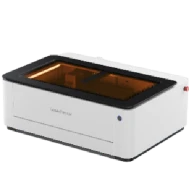
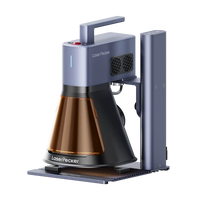
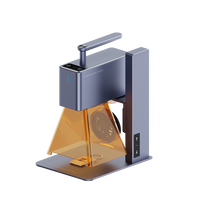
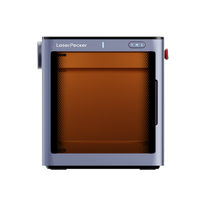
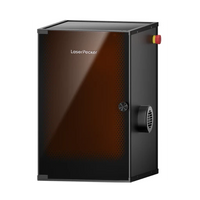
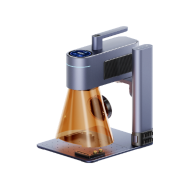
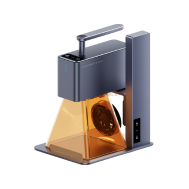
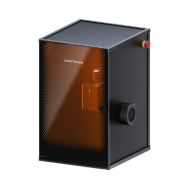
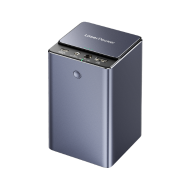
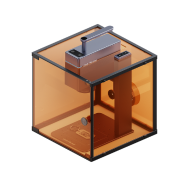
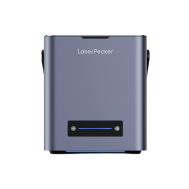
Le LaserPecker LX2 associe performances, flexibilité et contrôle précis dans un système compact optimisé pour le travail du bois.
1. Haute vitesse
Avec des vitesses de découpe pouvant atteindre 1 000 mm/s et une accélération rapide, les projets peuvent être réalisés efficacement sans compromettre la précision.
2. Modules laser flexibles
Le LX2 vous permet de passer entre des modules laser à diode de 20 W, 40 W et 60 W, ainsi qu’un module infrarouge de 2 W. Cette flexibilité le rend adapté à différentes épaisseurs de bois et à d’autres matériaux que le bois.
3. Positionnement précis
L’alignement par caméra intégré et les outils de positionnement intelligents garantissent que chaque cercle est placé exactement à l’endroit souhaité.
4. Grande zone de travail
Son design à ouverture latérale permet d’accueillir des panneaux plus grands et de réaliser facilement des découpes circulaires de taille maximale.
Grâce à ces fonctionnalités, le LaserPecker LX2 vous aide à découper de beaux cercles sans nécessiter une configuration complexe. Il convient aussi bien aux débutants qu’aux professionnels.
Partie 3 : Comment découper un cercle dans du bois avec le LX2 ?
Voici comment obtenir des cercles parfaits avec votre LX2 :

Étape 1 : Créer le design de votre cercle
Commencez par dessiner votre cercle dans LightBurn, Illustrator ou un programme similaire. Vérifiez que vos mesures sont correctes, puis enregistrez le fichier au format approprié.
Étape 2 : Choisir et préparer le bois
Choisissez le type de bois que vous souhaitez utiliser. Le contreplaqué, le bois massif et le MDF conviennent tous au LaserPecker LX2.
Veillez à ce que le panneau soit plat et solidement fixé. La stabilité du matériau est essentielle pour maintenir une mise au point laser constante et une grande précision dimensionnelle.
Étape 3 : Importer le design dans le logiciel LX2
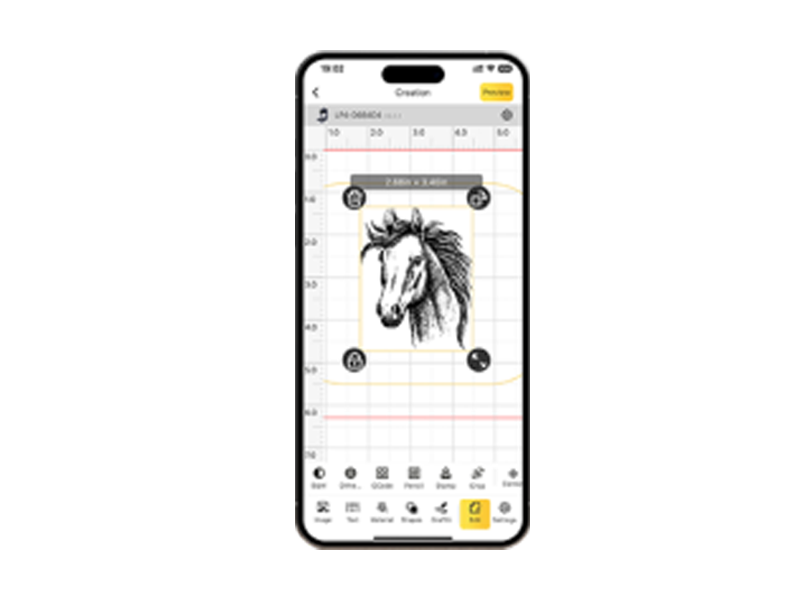
Téléchargez votre design dans le logiciel laser. Utilisez le système d’alignement par caméra intégré pour positionner précisément le cercle sur la surface en bois. Cette étape est particulièrement importante lorsque l’espace disponible sur le matériau est limité ou que vous travaillez avec des panneaux prédécoupés.
Étape 4 : Configurer le laser
Réglez la vitesse du laser, le niveau de puissance et le nombre de passages en fonction du type et de l’épaisseur du bois.
Si vous n’êtes pas sûr des paramètres appropriés, effectuez une petite découpe d’essai dans un coin inutilisé du matériau. Cela permet d’affiner les réglages et de réduire les marques de brûlure.
Étape 5 : Commencer la découpe
Commencez l’opération après avoir vérifié l’alignement et les réglages.
Le faisceau concentré et le système de déplacement stable du LX2 permettent de découper des cercles lisses et précis, avec un minimum de noircissement des bords.
Étape 6 : Vérifier et poncer
Après la découpe, retirez soigneusement la pièce et éliminez tout résidu.
Un léger ponçage peut être effectué si nécessaire, bien que la plupart des bords découpés au laser nécessitent très peu de post-traitement.
Partie 4 : FAQ sur la découpe d’un cercle dans le bois
Q1. Comment découper de petits cercles dans le bois sans outils spéciaux
Si vous ne disposez pas d’un équipement avancé, une scie-cloche fixée à une perceuse à main est l’une des solutions les plus simples pour découper de petits cercles. Pour les dimensions non standard, tracez soigneusement le cercle, découpez le long de la ligne avec une scie sauteuse, puis lissez les bords à l’aide de papier abrasif ou d’une lime.
Ces méthodes conviennent aux petits travaux de bricolage. Toutefois, si vous souhaitez des bords plus nets et une précision supérieure, une découpeuse laser fournira des résultats plus précis et réguliers.
Q2. Puis-je découper un cercle dans du bois épais ?
Oui, mais la meilleure méthode dépend de l’épaisseur. Les défonceuses CNC ou les défonceuses équipées de gabarits circulaires permettent d’obtenir des résultats précis dans le bois épais. Une scie à ruban est également efficace pour découper de grands cercles dans du bois massif.
Les systèmes laser tels que le LaserPecker LX2 peuvent découper du bois jusqu’à 22 mm en un seul passage dans des conditions optimales. Comparés aux outils mécaniques, les lasers produisent des bords plus nets et offrent une meilleure répétabilité.
Q3. Comment éviter les éclats lors de la découpe de cercles ?
Les éclats apparaissent lorsque les lames de découpe arrachent les fibres du bois à la sortie. Pour les réduire :
- Utilisez une lame bien affûtée à denture fine.
- Appliquez du ruban de masquage le long de la ligne de découpe.
- Soutenez la face inférieure du bois.
- Maintenez une vitesse de découpe constante.
- Marquez la ligne de découpe avant de commencer.
La découpe laser évite entièrement les éclats, car elle utilise un faisceau concentré plutôt qu’un contact physique, ce qui produit des bords lisses et nets.
Q4. Quelle est la manière la plus simple de découper un cercle parfait dans le bois ?
Une découpeuse laser est l’option la plus simple et la plus précise. Elle suit exactement votre conception numérique, éliminant le besoin de mesures manuelles ou de réglages avec pivot.
Pour ceux qui n’ont pas accès à un laser, une défonceuse équipée d’un gabarit circulaire constitue une alternative fiable. Bien que les scies sauteuses et les scies cloches soient accessibles, elles sont davantage sujettes aux imprécisions.
Q5. Une graveuse laser peut-elle découper du bois épais de 10 ou 20 mm ?
Oui. Les systèmes à diode haute puissance tels que la LaserPecker LX2 peuvent découper du bois de 10 à 22 mm d’épaisseur, selon le type de matériau et les réglages. Les matériaux plus épais peuvent nécessiter des vitesses plus faibles ou plusieurs passes afin de préserver la qualité des bords.
Bien que les scies mécaniques puissent découper plus rapidement les bois très épais, les lasers offrent une précision et une reproductibilité supérieures pour les projets détaillés.
Q6. Quels types de bois conviennent le mieux à la découpe de cercles parfaits ?
Le contreplaqué, le MDF, le tilleul et le bouleau sont couramment utilisés pour réaliser des découpes circulaires nettes. Ces matériaux ont une densité homogène, ce qui améliore la précision de découpe.
Les bois durs comme le chêne ou l’érable peuvent également être utilisés, mais ils peuvent nécessiter des vitesses de découpe plus faibles ou des réglages de puissance plus élevés.
Q7. La découpe laser est-elle plus sûre que l’utilisation d’outils de menuiserie traditionnels ?
La découpe laser réduit le contact physique avec la lame, ce qui diminue le risque de retour de lame ou de blessures liées à la lame. Toutefois, une ventilation adéquate et une protection oculaire sont indispensables.
Lorsqu’ils sont utilisés correctement, les systèmes laser offrent un processus de découpe contrôlé et prévisible par rapport aux scies manuelles.
Conclusion
Découper des cercles dans le bois est possible avec une large gamme d’outils, des options manuelles simples comme les scies cloches et les scies sauteuses aux équipements plus avancés tels que les défonceuses CNC et les tours à bois. La méthode appropriée dépend de la précision requise, de l’épaisseur du matériau, des outils disponibles et de votre niveau d’expérience.
Cependant, pour obtenir des bords nets, des dimensions précises et des résultats parfaitement reproductibles, la découpe laser s’impose comme la solution la plus précise et polyvalente. Son procédé sans contact élimine les éclats et réduit le besoin de post-traitement, tandis que le contrôle numérique garantit une régularité sur chaque découpe.
L’utilisation d’une découpeuse laser telle que la LaserPecker LX2 permet de réaliser facilement même des motifs circulaires complexes, avec une configuration minimale. Que vous soyez amateur, passionné de bricolage, vendeur de créations artisanales ou propriétaire d’un petit atelier, la découpe laser offre des résultats de qualité professionnelle, avec efficacité et fiabilité.