




























Fabriquer des touches de clavier personnalisées est un moyen créatif de personnaliser votre clavier et de le transformer en bien plus qu'un simple appareil fonctionnel. Que vous soyez un gamer, un passionné de claviers mécaniques ou quelqu'un qui écrit quotidiennement, concevoir vos propres touches vous permet d'allier créativité et aspect pratique.
Dans ce guide, nous aborderons les méthodes, les matériaux et les outils les plus courants pour créer des touches personnalisées — des solutions DIY simples aux techniques plus avancées — afin de vous aider à choisir la meilleure approche selon vos besoins.

Dans cet article :
- Partie 1 : Introduction aux touches de clavier personnalisées
- Partie 2 : Aperçu des méthodes de personnalisation
- Méthode 1 : Gravure Laser
- Méthode 2 : Peinture
- Méthode 3 : Moulage en résine
- Méthode 4 : Impression 3D
- Méthode 5 : Sublimation thermique
- Partie 3 : Étape par étape : Graver des touches au laser
- Partie 4 : Conseils de pro pour des touches personnalisées superbes
- Partie 5 : FAQ sur les touches de clavier personnalisées
Partie 1 : Introduction aux touches de clavier personnalisées (Keycaps)
Les touches de clavier personnalisées ont gagné une forte popularité auprès des utilisateurs et des passionnés de claviers. Que vous soyez un dactylographe occasionnel, un gamer dévoué ou quelqu'un qui apprécie les claviers mécaniques, remplacer les touches standard par des touches personnalisées peut améliorer notablement l'apparence et l'ergonomie.
Les touches personnalisées allient attrait visuel et avantages fonctionnels, ce qui en fait un élément important de la personnalisation d'un clavier.
Que sont les keycaps ?
Les keycaps sont les composants sur lesquels vous appuyez lorsque vous tapez sur un clavier. Ils sont disponibles dans de nombreuses formes, profils et matériaux différents. Alors que la plupart des claviers sont livrés avec des touches en plastique basiques, les touches personnalisées sont souvent fabriquées à partir de plastiques de qualité supérieure ou de résine, permettant des designs et des finitions plus détaillés.
En plus de l'aspect visuel, le matériau et la forme de la touche influencent le ressenti de la frappe, la stabilité de la touche et le son, autant d'éléments qui affectent l'expérience globale de frappe.

Pourquoi personnaliser ses touches ?
Il existe plusieurs raisons pour lesquelles les utilisateurs choisissent des touches personnalisées :
- Style personnel : Les touches personnalisées vous permettent de personnaliser votre clavier et d'exprimer vos préférences.
- Meilleure expérience de frappe : Les formes ergonomiques et les matériaux de qualité supérieure peuvent améliorer le confort lors de longues sessions de frappe.
- Attrait visuel : Avec d'innombrables couleurs, dispositions et thèmes disponibles, les touches personnalisées peuvent transformer un clavier en une configuration distinctive.
Personnaliser ses touches va au-delà du simple remplacement de composants — il s'agit de créer un clavier qui semble personnel, confortable et agréable à utiliser.
Partie 2 : Aperçu des méthodes de personnalisation des touches
Il existe plusieurs méthodes établies pour personnaliser les touches, chacune offrant des possibilités créatives différentes. Ces méthodes varient en complexité, en coût, en durabilité et selon les matériaux qu'elles supportent, permettant aux utilisateurs de choisir l'approche qui correspond le mieux à leurs objectifs.
Méthode 1 : Gravure Laser
La gravure laser utilise un faisceau laser concentré pour marquer de façon permanente des motifs sur la surface des touches. Cette technique offre des détails propres et précis qui restent visibles au fil du temps sans s'effacer ni se décoller.
En retirant une fine couche de surface, la gravure laser crée des textes et des graphiques nets qui sont difficiles à obtenir avec de la peinture seule. Elle fonctionne sur des matériaux tels que le plastique, le métal et le bois, ce qui en fait une option polyvalente pour des touches personnalisées durables.

Méthode 2 : Peinture
La peinture est une méthode flexible et créative pour la conception de touches personnalisées. Les peintures acryliques, les peintures émaillées et les marqueurs permettent une large gamme de couleurs, de motifs et de styles artistiques.
L'application d'une couche de protection transparente après la peinture aide à prolonger la durée de vie du design. La peinture est particulièrement bien adaptée aux ensembles de touches thématiques, aux designs décoratifs et aux détails personnalisés.
Méthode 3 : Moulage en résine
Le moulage en résine permet des designs de touches hautement créatifs avec de la profondeur et de la transparence. De la résine colorée ou transparente est versée dans des moules, souvent combinée avec des objets incorporés, des pigments ou des effets de couches.
Bien que le processus nécessite de l'expérience et une manipulation minutieuse, les touches moulées en résine sont durables et visuellement frappantes, ce qui les rend populaires pour les touches artisanales et de fantaisie (artisan keycaps).
Méthode 4 : Impression 3D
L'impression 3D permet aux utilisateurs de concevoir et de produire des touches avec des formes et des profils personnalisés. Les imprimantes FDM sont plus accessibles pour les projets de base, tandis que les imprimantes à résine offrent une résolution plus élevée et des finitions plus lisses.
L'impression 3D permet aux utilisateurs de concevoir et de produire des touches avec des formes et des profils personnalisés. Les imprimantes FDM sont plus accessibles pour les projets de base, tandis que les imprimantes à résine offrent une résolution plus élevée et des finitions plus lisses.
Méthode 5 : Sublimation thermique
La sublimation thermique transfère l'encre dans le matériau de la touche à l'aide de la chaleur, ce qui donne des motifs extrêmement résistants à l'usure. Elle est le plus couramment utilisée avec les touches en PBT.
Cette méthode produit des caractères (legends) et des graphismes nets et durables, ce qui la rend adaptée aux jeux de touches complets ou aux designs d'aspect professionnel. La sublimation thermique peut également être combinée avec d'autres techniques pour une personnalisation avancée.
Méthodes de personnalisation des touches – Tableau comparatif
| Méthode | Difficulté | Coût | Durabilité | Meilleur cas d'utilisation |
|---|---|---|---|---|
| Gravure Laser | Moyenne | Moyen–Élevé | Très élevée | Gravure précise de texte ou de logo sur des touches en métal ou en plastique |
| Peinture | Facile | Bas | Moyenne | Designs colorés et personnalisation artistique |
| Moulage en résine | Élevée | Moyen–Élevé | Élevée | Effets visuels 3D et éléments décoratifs incorporés |
| Impression 3D | Moyenne | Moyen | Moyenne | Création de formes personnalisées et de touches sculptées |
| Sublimation thermique | Moyenne | Élevé | Très élevée | Caractères et designs colorés de longue durée |
Partie 3 : Étape par étape : Graver des touches au laser
La gravure laser est une méthode extrêmement précise et durable pour personnaliser des touches de clavier. Le motif gravé devient une partie permanente de la surface, assurant une excellente longévité même en cas d'utilisation fréquente. Les étapes suivantes décrivent comment obtenir des résultats professionnels.
Outils et matériaux pour la gravure laser
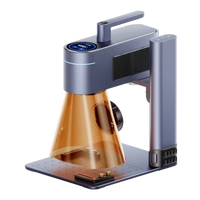
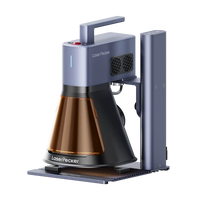
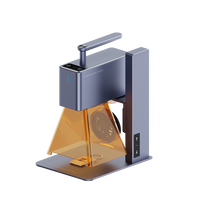
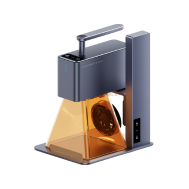
La gravure laser fonctionne en utilisant un faisceau laser focalisé pour marquer de façon permanente la surface d'une touche. Une machine de bureau telle que le LaserPecker LP4, qui dispose à la fois d'un laser à diode bleue de 10W et d'un laser infrarouge de 2W, permet aux utilisateurs de graver avec précision une large gamme de matériaux de touches.

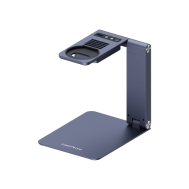
Cette configuration à double laser la rend adaptée aux matériaux couramment utilisés pour les touches, notamment les plastiques ABS et PBT, les surfaces à revêtement métallique, l'acrylique et le bois fin. L'interface tactile du LP4 permet de basculer rapidement entre les types de laser, tandis que le support de gravure multi-angle aide à obtenir des résultats constants sur des touches sculptées ou profilées. Avec des vitesses de gravure allant jusqu'à 4000 mm/s, elle offre à la fois efficacité et finesse de détail.
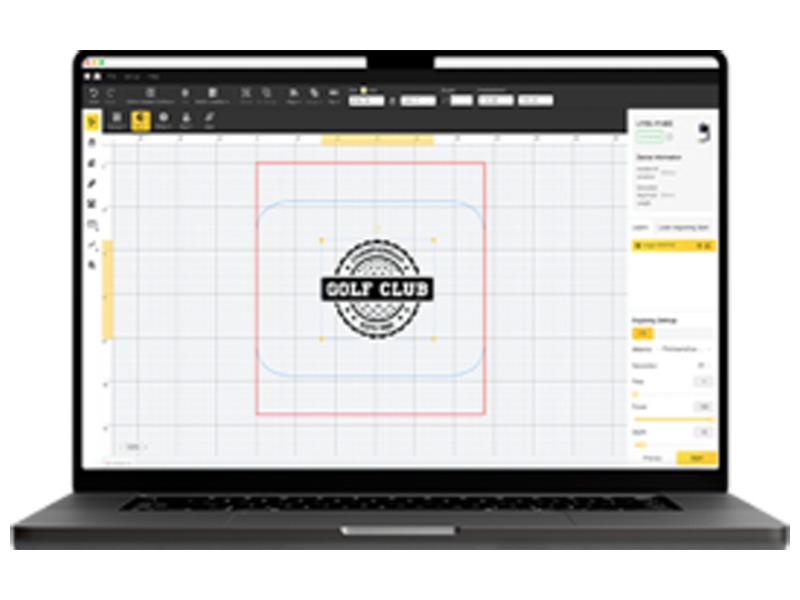
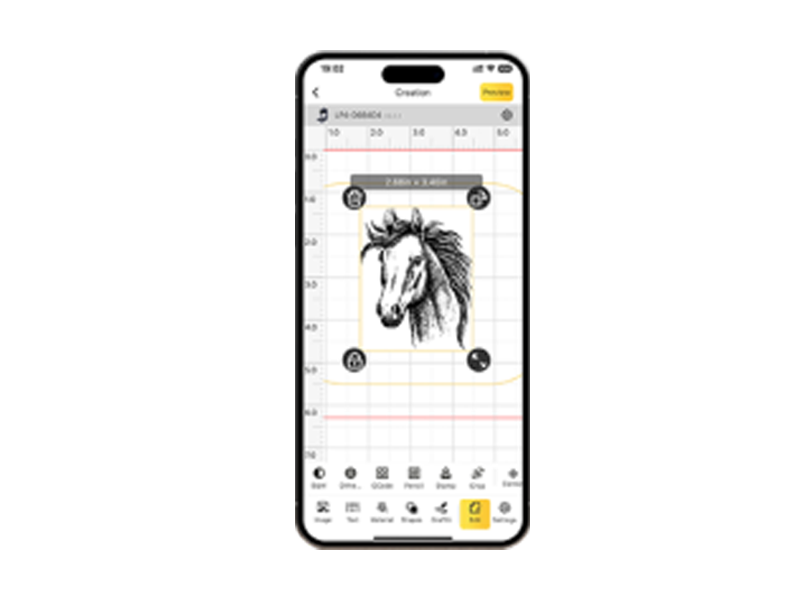
Si vous l'utilisez avec un logiciel comme LightBurn ou LaserPecker Design Space, en ajoutant des lunettes de sécurité et une bonne circulation d'air, n'importe qui, du débutant au pro, peut obtenir de très bons résultats. De plus, sa fonction "Engrave Again" (Graver à nouveau) permet de reproduire les mêmes designs en un clin d'œil, ce qui est idéal si vous souhaitez créer des jeux de touches assortis.
En plus du graveur laser, quelques accessoires de base peuvent considérablement améliorer les résultats :
- Des lingettes nettoyantes pour préparer la surface des touches
- Du ruban de masquage pour protéger les zones que vous ne souhaitez pas marquer
- De petits serre-joints pour maintenir les touches stables pendant la gravure
- Un bon éclairage et un espace de travail propre pour le travail de précision
- Des gants de protection pour une manipulation sûre des matériaux
Processus de gravure laser étape par étape pour des touches personnalisées
- Étape 1 : Commencez par des designs simples
Débutez avec des formes basiques, des icônes ou du lettrage. Les designs vectoriels de haute qualité produisent généralement les meilleurs résultats de gravure. - Étape 2 : Nettoyez et préparez les touches
Assurez-vous que chaque touche est propre et sèche. Masquez toutes les zones que vous ne voulez pas que le laser marque. - Étape 3 : Ajustez les réglages du laser
Réglez la puissance et la vitesse appropriées en fonction du matériau de la touche. Les systèmes à double laser permettent de basculer rapidement entre les plastiques et les surfaces à revêtement métallique. - Étape 4 : Gravez la touche
Placez la touche solidement dans le graveur et lancez le processus. La gravure sous plusieurs angles peut aider à maintenir la précision sur les profils sculptés. - Étape 5 : Nettoyage et finition
Retirez le ruban de masquage, nettoyez les résidus et appliquez un vernis protecteur transparent si une durabilité supplémentaire est requise.
Partie 4 : Conseils de pro pour des touches personnalisées superbes
Créer des touches personnalisées de haute qualité demande plus que de la créativité — la compréhension des matériaux, des techniques et des étapes de finition est essentielle. Les conseils suivants vous aideront à obtenir des résultats durables et visuellement frappants, que vous graviez des touches individuelles ou des jeux complets.
1. Comprendre la réaction des matériaux
Les matériaux des touches réagissent différemment à la gravure, à la peinture et au remplissage de résine. Le plastique ABS se grave facilement mais peut devenir brillant à l'usage, tandis que le PBT offre une meilleure résistance à la chaleur et conserve sa finition texturée au fil du temps.
Tester votre processus sur des touches de rechange avant de graver votre ensemble final vous permet d'optimiser les réglages et d'éviter des erreurs inutiles.
2. Ajouter de la couleur pour un impact visuel supplémentaire
La gravure laser seule peut avoir un aspect propre et professionnel, mais la combiner avec de la couleur peut considérablement améliorer le résultat final. Envisagez de remplir les zones gravées avec de la résine pour créer de la profondeur, ou de peindre soigneusement les caractères pour un contraste plus élevé.
En combinant la gravure avec de la peinture, de la résine ou de la teinture, vous pouvez créer des touches qui semblent véritablement uniques plutôt que purement fonctionnelles.
3. La forme de la touche est importante
Toutes les touches n'ont pas des surfaces planes. Les profils sculptés et les côtés incurvés peuvent affecter la régularité de la gravure. L'utilisation de la gravure multi-angle garantit que vos designs restent uniformes et lisibles sur toute la touche.
C'est particulièrement important pour les touches artisanales, les grands caractères ou les designs gravés sur les côtés où une profondeur inégale serait flagrante.
4. Sceller pour la durabilité
Si vous peignez ou remplissez les gravures avec de la résine, il est essentiel de sceller la surface. Une couche protectrice transparente aide à protéger votre travail contre les huiles des doigts, la friction et l'usure quotidienne.
Un scellage approprié garantit que vos touches conservent leur apparence au fil du temps, même en cas d'utilisation quotidienne intensive.
5. Commencer petit et monter en puissance
Bien que les designs complexes puissent être tentants, il est préférable de commencer par des formes simples, des icônes ou des caractères uniques. Une fois que vous maîtrisez vos réglages et votre technique, vous pouvez passer à des jeux de touches complets, des motifs complexes ou des effets 3D multicouches avec beaucoup moins de risques.
Partie 5 : FAQ sur les touches de clavier personnalisées
Q1. La gravure laser endommage-t-elle les touches ?
Lorsqu'elle est utilisée correctement, la gravure laser n'endommage pas les touches. La clé est d'ajuster la puissance et la vitesse en fonction du matériau. Tester sur des touches de rechange aide à prévenir la fonte ou les dommages de surface, en particulier avec des plastiques comme l'ABS ou le PBT.
Q2. Les touches gravées au laser peuvent-elles avoir de la couleur ?
La gravure laser elle-même produit du contraste plutôt que de la couleur. Pour ajouter de la couleur, les zones gravées peuvent être remplies de peinture, de résine ou combinées avec des techniques de sublimation thermique. Cette approche est couramment utilisée pour les logos et les designs décoratifs.
Q3. Quelle est la durabilité des touches gravées au laser ?
Les gravures laser sont permanentes et résistantes à l'usure. Contrairement aux autocollants ou aux revêtements de surface, elles ne pèleront pas et ne s'effaceront pas. Avec un entretien approprié, les touches gravées au laser peuvent durer de nombreuses années, même avec une utilisation fréquente.
Q4. Quel matériau de touche est le meilleur pour les débutants ?
L'ABS et le PBT sont les matériaux les plus accessibles pour les débutants. L'ABS est plus souple et se grave facilement, tandis que le PBT offre une meilleure résistance à la chaleur et une durabilité à long terme. Identifier le matériau avant de graver aide à optimiser les réglages du laser.
Q5. Puis-je acheter des touches individuelles ou des jeux complets dans l'UE ?
Oui. De nombreux fournisseurs de l'UE proposent à la fois des touches de remplacement à l'unité et des jeux de touches complets. Les touches individuelles sont utiles pour tester des designs, tandis que les jeux complets permettent une personnalisation cohérente sur tout le clavier.
Q6. La gravure laser est-elle sûre pour fabriquer des bijoux de téléphone à la maison ?
Pour les utilisateurs en Europe, la sécurité doit toujours être une priorité absolue lors de la gravure laser de bijoux de téléphone, de pendentifs de collier ou d'autres petits accessoires en métal, bois, acrylique ou cuir.
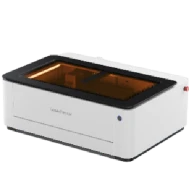
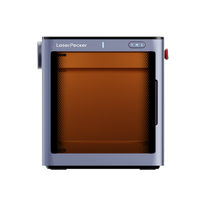
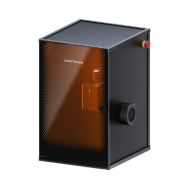
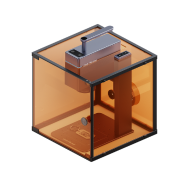
- Utilisateurs LP2 Plus, LP2, et LP4 : Nous recommandons de coupler votre machine avec le Boîtier Standard LaserPecker lors d'une utilisation à domicile ou en atelier en Europe. Cet accessoire renforce la protection, complétant la conformité de sécurité laser de Classe 4 des machines selon les directives.
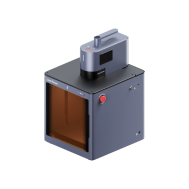
- Utilisateurs LP5 : Le boîtier de sécurité LP5 est requis pour une protection adéquate pendant le fonctionnement. Il garantit le respect des réglementations de sécurité de l'UE, protégeant contre toute exposition accidentelle dans des environnements résidentiels ou de petites entreprises.
- Utilisateurs LX2 : Aucun boîtier supplémentaire n'est nécessaire. Le LX2 est un système laser de Classe 1, ce qui signifie qu'il est sûr à utiliser sans équipement de protection supplémentaire dans des conditions de fonctionnement normales.
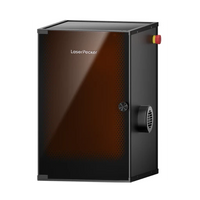
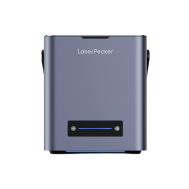
Au-delà de la sécurité laser, la qualité de l'air est une considération clé pour les ateliers en intérieur. Le traitement au laser génère des fumées et des particules fines qui peuvent affecter la santé respiratoire. Pour respecter les directives sur la qualité de l'air intérieur et maintenir un espace de travail propre et sûr, nous recommandons vivement d'utiliser le Purificateur d'air de bureau LaserPecker, particulièrement pour les maisons et studios fermés ou bien isolés.
Avec une installation de sécurité appropriée, la gravure laser de bijoux de téléphone à la maison peut être à la fois créative et sûre.
Conclusion
Les touches de clavier personnalisées allient créativité et fonctionnalité, transformant un clavier quotidien en un objet qui vous ressemble. Avec des techniques telles que la gravure laser, la peinture, l'impression 3D et la sublimation thermique, il existe une méthode de personnalisation pour chaque niveau d'expérience et chaque idée de design.
Que vous mettiez à jour quelques touches ou que vous créiez un ensemble complet personnalisé, la personnalisation des touches vous donne un contrôle total sur l'apparence, le ressenti et la durabilité de votre clavier. En choisissant les bons matériaux et les bonnes méthodes, vous pouvez créer des touches qui non seulement se démarquent visuellement, mais résistent également à l'usage quotidien.