
























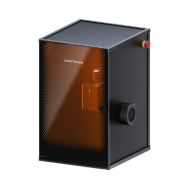


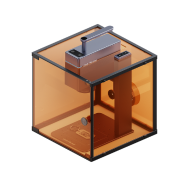
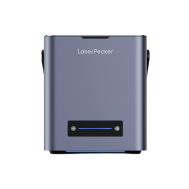


Les flasques gravées sont largement associées à l'artisanat, aux occasions spéciales et aux cadeaux personnalisés. Des flasques à alcool en acier inoxydable aux modèles recouverts de cuir, la gravure améliore à la fois la présentation et la valeur sentimentale.
Les appareils de gravure compacts modernes permettent désormais aux amateurs et aux petites entreprises de produire des designs précis et reproductibles depuis leur domicile ou leur atelier.
Ce guide présente les types de flasques les plus courants, compare différentes techniques de gravure et propose des étapes pratiques pour graver une flasque de manière sûre et efficace.

Dans cet article :
- Partie 1 : Quels sont les types de flasques
- Partie 2 : Cinq méthodes pour graver des flasques
- Méthode 1 : Gravure laser
- Méthode 2 : Sablage avec pochoir
- Méthode 3 : Gravure électrochimique
- Méthode 4 : Gravure mécanique
- Méthode 5 : Gaufrage à chaud du cuir
- Partie 3 : Comment graver une flasque avec le LaserPecker LP4
- Partie 4 : Conseils pour graver des flasques
- Partie 5 : FAQ sur la gravure d'une flasque
Partie 1 : Quels sont les types de flasques ?
Comprendre le matériau de votre flasque est essentiel avant de choisir une méthode de gravure. Les différents matériaux réagissent différemment aux procédés laser, mécaniques ou chimiques.

Flasques en acier inoxydable
Les flasques en acier inoxydable sont largement utilisées en Europe pour leur solidité et leur résistance à la corrosion.
Elles offrent :
- Une surface propre et uniforme
- Une excellente compatibilité avec la gravure laser
- Des marquages durables et permanents
La gravure laser sur l'acier inoxydable produit des résultats à fort contraste, ce qui la rend idéale pour les textes personnalisés, le marquage de marque et les graphiques détaillés.
Flasques en cuivre et en laiton
Les flasques en cuivre et en laiton offrent une esthétique classique et décorative.
Ces métaux sont :
- Plus tendres que l'acier inoxydable
- Plus faciles à graver par des méthodes mécaniques ou chimiques
- Adaptés aux motifs décoratifs
Cependant, ces deux matériaux peuvent s'oxyder avec le temps s'ils ne sont pas correctement protégés.
Flasques en titane
Les flasques en titane sont légères, résistantes à la corrosion et souvent utilisées pour des applications haut de gamme ou en extérieur.
La gravure du titane nécessite :
- Un équipement de haute précision
- Généralement des systèmes laser à fibre pour des résultats optimaux
Ce matériau est très durable mais exige une configuration de gravure plus avancée.
Flasques recouvertes de cuir
Les flasques recouvertes de cuir sont composées d'un noyau métallique avec un revêtement extérieur en cuir.
Les options de personnalisation incluent :
- La gravure laser
- Le gaufrage à chaud
La gravure laser crée une finition texturée subtile, souvent utilisée pour les cadeaux personnalisés et le marquage de petites entreprises.
Flasques en verre
Les flasques en verre sont moins courantes mais utilisées pour des cadeaux décoratifs.
Les méthodes de gravure incluent :
- La gravure laser
- Le sablage
Ces techniques produisent un effet givré qui améliore l'aspect visuel et la présentation.
Partie 2 : Cinq méthodes pour graver des flasques
Il existe plusieurs techniques de gravure pour personnaliser des flasques. La méthode optimale dépend du type de matériau, du volume de production, des considérations de sécurité et du rendu souhaité.
Méthode 1 : Gravure laser
La gravure laser est l'une des méthodes les plus précises et polyvalentes pour personnaliser des flasques en acier inoxydable, titane, cuir et surfaces revêtues. Un faisceau laser concentré marque la surface de manière permanente, produisant des designs nets et durables.
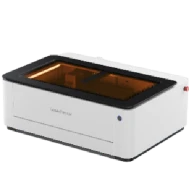
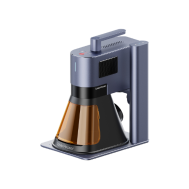
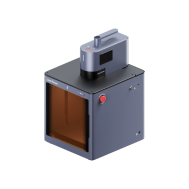
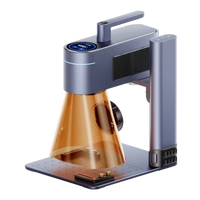
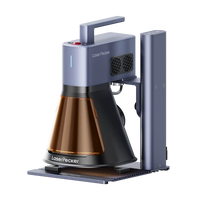
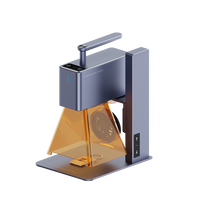
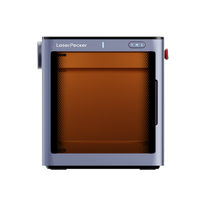
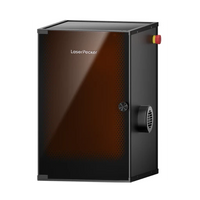
Les machines de gravure pour flasques telles que la LaserPecker LP4 intègrent une technologie à double laser. Le laser infrarouge est conçu pour les métaux, tandis que le laser à diode prend en charge le cuir et les surfaces revêtues.
Principaux avantages de la gravure laser :
- Haute précision et bords nets
- Résultats constants pour les logos, initiales et textes fins
- Processus sans contact — aucune rayure de surface
- Vitesse de production élevée
- Faible coût d'exploitation à long terme (aucun consommable requis)
La gravure laser est particulièrement adaptée aux flasques personnalisées pour spiritueux, au marquage d'entreprise et à la production commerciale en Europe.
Méthode 2 : Sablage avec pochoir
Le sablage projette un matériau abrasif à travers un pochoir à l'aide d'air comprimé. Les zones exposées sont gravées pour créer un effet givré ou mat.
Cette méthode convient bien pour :
- Les flasques en verre
- Les surfaces en acier inoxydable
Avantages :
- Aspect doux et texturé
- Adapté aux grands motifs
- Fonctionne bien sur les surfaces courbes
Limitations :
- Chaque design nécessite un pochoir distinct
- La préparation et le masquage augmentent le temps de mise en place
- Moins adapté à la production en grande série
Le sablage est souvent choisi pour des pièces décoratives artisanales plutôt que pour une production commerciale en série.
Méthode 3 : Gravure électrochimique
La gravure électrochimique utilise un courant électrique et une solution électrolytique pour retirer sélectivement du métal.
Cette méthode fonctionne bien pour :
- Acier inoxydable
- Titane
- Métaux conducteurs
Avantages :
- Marquage propre et contrôlé
- Adapté aux logos, numéros de série et applications industrielles
- Coût par unité relativement faible
Limitations :
- Nécessite une manipulation sécurisée des produits chimiques
- Moins de flexibilité artistique que la gravure laser
Souvent utilisé pour le marquage de conformité ou technique plutôt que pour des designs artistiques.
Méthode 4 : Gravure mécanique
La gravure mécanique utilise un outil de coupe pour creuser des rainures dans la flasque.
Avantages :
- Rainures profondes et perceptibles au toucher
- Aspect traditionnel de gravure
- Adapté aux lettres épaisses
Limitations :
- Nécessite un serrage sécurisé
- Plus difficile sur les surfaces courbes
- L'usure des outils et les vibrations peuvent réduire la qualité des détails fins
- Plus lent pour les productions en série
Convient aux monogrammes traditionnels ou aux lettrages épais.
Méthode 5 : Gaufrage à chaud du cuir
Le gaufrage à chaud est utilisé pour les flasques recouvertes de cuir. Un outil chauffé ou un laser crée une empreinte texturée.
Le gaufrage traditionnel repose sur des tampons spéciaux, tandis que les systèmes laser modernes tels que le LaserPecker LP4 peuvent obtenir des effets similaires sans outil physique.
Avantages :
- Finition texturée élégante
- Adapté aux initiales et aux motifs décoratifs
- Aspect durable et raffiné
Le gaufrage à chaud est populaire pour les cadeaux personnalisés et les souvenirs de mariage.
Résumé comparatif pour les flasques gravées
| Méthode | Précision | Vitesse (Efficacité) | Coût & Temps de cycle | Matériaux adaptés | Reproduction en série |
|---|---|---|---|---|---|
| Gravure laser | ★★★★★ | ★★★★★ | Faible coût à long terme | Métal, cuir, surfaces revêtues | Excellent |
| Sablage | ★★★ | ★★ | Moyen | Métal, verre | Limité |
| Gravure électrochimique | ★★★ | ★★★ | Faible par unité | Acier inoxydable, titane | Bon |
| Gravure mécanique | ★★★★ | ★★ | Coût de configuration élevé | Métal (principalement plat ou courbé) | Correct |
| Gaufrage à chaud du cuir | ★★★★ | ★★★★★ | Faible | Flasques recouvertes de cuir | Très bon |
La gravure laser se distingue par sa précision, sa polyvalence et sa capacité de production à grande échelle. Elle est particulièrement efficace pour la fabrication de flasques personnalisées ou de marque, offrant une efficacité à long terme avec un minimum de coûts en consommables.
Partie 3 : Comment graver une flasque avec le LaserPecker LP4
Graver une flasque avec le LaserPecker LP4 est un processus simple et efficace. Grâce à son système à double laser (infrarouge + diode), la machine prend en charge à la fois les surfaces métalliques et en cuir sans avoir besoin de changer d'équipement.
Étape 1 : Préparer votre design
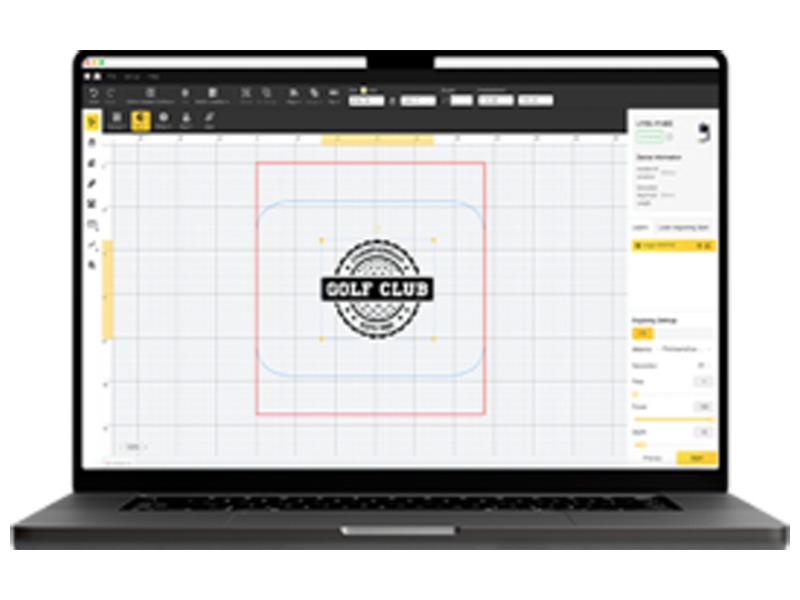
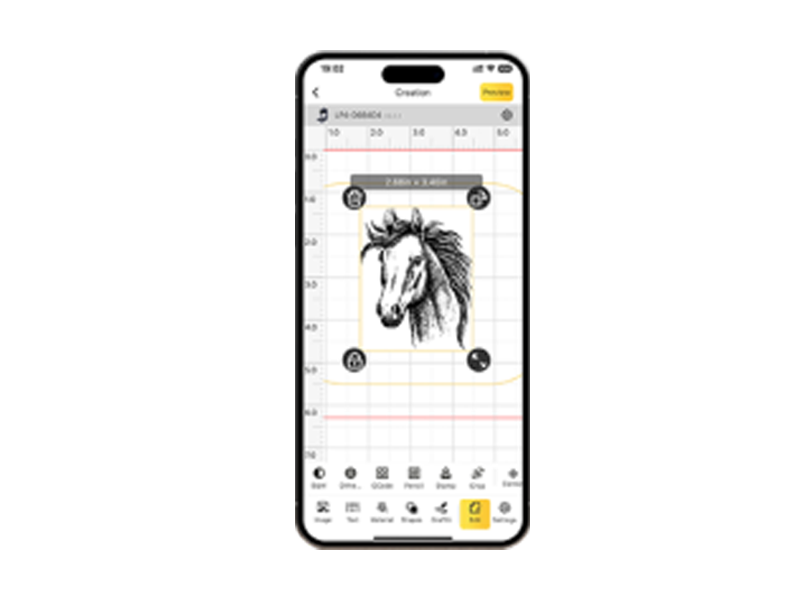
Créez votre visuel à l'aide de LaserPecker Design Space, Adobe Illustrator ou Canva.
Formats recommandés :
- SVG (vectoriel pour une précision optimale)
- PNG (haute résolution)
Pour les flasques personnalisées, les monogrammes et les logos aux lignes simples produisent généralement les résultats de gravure les plus nets.
Étape 2 : Positionner la flasque de manière sécurisée
Placez la flasque sur une surface stable et plane.
Pour les flasques courbes, utilisez l'accessoire rotatif optionnel afin de :
- Maintenir une distance focale constante
- Éviter les distorsions
- Assurer une gravure uniforme sur toute la surface courbe
Un positionnement correct influence directement la précision de la gravure.
Étape 3 : Sélectionner le module laser et les paramètres appropriés
Le LaserPecker LP4 comprend :
- Un laser infrarouge (IR) – idéal pour l'acier inoxydable et le titane
- Un laser à diode – adapté au cuir et aux surfaces revêtues
Pour les flasques en acier inoxydable :
- Utilisez une puissance moyenne
- Réduisez la vitesse pour obtenir un contraste plus sombre
- Évitez une puissance excessive afin de prévenir la surchauffe de la surface
Ajustez toujours les paramètres en fonction de l'épaisseur et du revêtement du matériau.
Étape 4 : Effectuer un test de gravure
Avant de graver la pièce finale :
- Testez sur un matériau similaire
- Ou utilisez une zone discrète de la flasque
Cela permet de vérifier la profondeur, la clarté et le contraste.
Les tests réduisent le gaspillage de matériau et améliorent la cohérence du résultat final.
Étape 5 : Lancer le processus de gravure
Une fois les paramètres confirmés, lancez la gravure via l'application LaserPecker.
Le faisceau concentré du LP4 produit :
- Des bords nets
- Une reproduction précise des détails
- Des marquages permanents
Le processus sans contact évite les rayures ou les contraintes mécaniques sur la surface.
Étape 6 : Nettoyage après la gravure
Après la gravure :
- Essuyez la surface avec un chiffon doux
- Retirez les résidus ou l'oxydation légère
Le résultat est une flasque personnalisée propre, idéale pour les cadeaux, les événements ou la vente au détail.
Pourquoi le LaserPecker LP4 fonctionne bien pour la gravure de flasques
La configuration à double laser (IR + diode) fait du LaserPecker LP4 une solution tout-en-un pour les créateurs qui travaillent avec :
- Des flasques en acier inoxydable
- Du titane
- Des modèles recouverts de cuir
Il n'est pas nécessaire de changer de machine, ce qui réduit le temps de configuration et améliore l'efficacité du flux de travail.
Partie 4 : Conseils pour la gravure des flasques à alcool
Une préparation appropriée et des réglages contrôlés sont essentiels pour obtenir des résultats nets et professionnels lors de la gravure de flasques à alcool.
1. Préparation de la surface
Nettoyez la flasque avec de l'alcool isopropylique avant la gravure. Cela permet d'éliminer :
- Les résidus d'huile
- Les contaminants de surface
- Les traces de manipulation
Un nettoyage adéquat améliore le contraste du marquage et garantit une interaction laser cohérente avec le matériau.
2. Maintenir une distance focale précise
Pour les flasques courbes ou cylindriques :
- Utilisez un accessoire rotatif
- Fixez la flasque fermement
- Évitez les micro-mouvements pendant l'opération
Un alignement focal précis est essentiel pour obtenir une profondeur de gravure uniforme et une bonne répétabilité.
3. Ajustement progressif des paramètres
Commencez avec une puissance laser plus faible et augmentez-la progressivement. Cette approche :
- Réduit la surchauffe de la surface
- Préserve l'intégrité du revêtement
- Améliore le contrôle du contraste
Les tests progressifs sont particulièrement importants dans la production commerciale en série.
4. Vérification de l'alignement avant gravure
Du ruban de masquage ou des guides de positionnement peuvent être utilisés pour vérifier :
- Le placement du design
- Le centrage
- La précision de l'échelle
Cette étape réduit les erreurs de production et le gaspillage de matériaux.
5. Stratégie de design sur deux surfaces
Pour les flasques à alcool recouvertes de cuir, combiner la gravure sur métal et sur cuir peut augmenter la valeur perçue. Par exemple :
- Le marquage sur le métal
- La personnalisation sur le cuir
Cette approche augmente la profondeur visuelle et crée un produit fini haut de gamme.
Partie 5 : FAQ sur la gravure d'une flasque
Q1. Fibre vs CO₂ : Quelle technologie laser est la plus adaptée ?
Pour la gravure de flasques en acier inoxydable ou en titane, la technologie laser à fibre offre des performances optimales. Elle produit des marques d'oxydation permanentes en surface sans nécessiter de consommables supplémentaires. Les lasers CO₂ sont principalement utilisés pour les matériaux organiques tels que le cuir et le bois. Un laser diode de 450 nm peut également traiter des surfaces revêtues et en cuir.
Pour une flexibilité maximale des matériaux, le LaserPecker LP5 intègre à la fois un laser à fibre de 20 W et un laser diode de 20 W dans un seul système. Cela permet une production multi-matériaux au sein d'un flux de travail unique.
Q2. Un spray de marquage est-il nécessaire pour l'acier inoxydable ?
Le spray de marquage est généralement utilisé avec les lasers CO₂ lors de la gravure d'acier inoxydable non traité. Les systèmes à fibre infrarouge tels que le LaserPecker LP4 peuvent graver directement l'acier inoxydable sans spray. Cela améliore l'efficacité et réduit la dépendance aux consommables dans la production commerciale.
Q3. Quelle est la méthode la plus fiable pour graver l'acier inoxydable ?
Le marquage au laser fibre est considéré comme l'approche la plus cohérente et évolutive. Les avantages incluent :
- Marquage par oxydation permanent
- Contraste élevé
- Résistance à la corrosion
- Traitement sans contact
Il est particulièrement efficace pour :
- Numéros de série
- Marquage industriel
- Logos et codes de données
Q4. Les bouteilles de whisky en verre peuvent-elles être gravées ?
Oui. Les bouteilles en verre peuvent être gravées à l'aide d'un laser diode avec une préparation de surface. Les bonnes pratiques incluent :
- Appliquer une couche sombre absorbante
- Utiliser des supports stables
- Ajuster soigneusement la puissance pour éviter les contraintes thermiques
Le résultat est un effet dépoli contrôlé, adapté à un usage décoratif ou promotionnel.
Q5. Quelle puissance laser est requise pour la gravure d'une flasque en acier inoxydable ?
Les lasers à fibre entre 10 W et 20 W sont généralement suffisants pour le marquage de surface des flasques en acier inoxydable.
Q6. Peut-on graver des flasques revêtues ou peintes ?
Oui. Un laser diode peut retirer les revêtements de surface afin de révéler le métal de base contrasté en dessous.
Q7. La gravure laser est-elle adaptée à une production commerciale en petites séries ?
Oui. Les systèmes à fibre et à diode offrent une grande répétabilité et une variation minimale de configuration, ce qui les rend adaptés à une production personnalisée évolutive.
Conclusion
La gravure d'une flasque combine artisanat et précision technique. Elle permet aux fabricants, créateurs et petits ateliers de transformer un objet fonctionnel en un produit durable et personnalisé.
Les procédés traditionnels tels que le sablage et la gravure électrochimique continuent d'offrir des options décoratives fiables. Cependant, la gravure laser offre une supériorité en matière de :
- Précision
- Contrôle du processus
- Polyvalence des matériaux
- Capacité de production évolutive
Les systèmes modernes tels que le LaserPecker LP4 permettent une gravure efficace sur l'acier inoxydable, le titane et le cuir au sein d'un flux de travail unique.
En sélectionnant la technique appropriée, en optimisant les paramètres et en réalisant des tests sur les matériaux, les flasques gravées peuvent atteindre à la fois une qualité esthétique élevée et une durabilité à long terme.
Une flasque gravée de manière professionnelle n'est pas seulement décorative — elle représente également la précision de la fabrication et un design réfléchi.