
















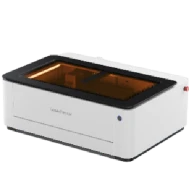
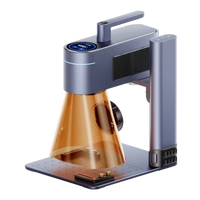












Les tôles d'aluminium sont couramment utilisées à travers l'Europe dans le bricolage (DIY), le prototypage et la fabrication à petite échelle. Reconnues pour leur structure légère, leur résistance à la corrosion et leur durabilité, elles conviennent à une grande variété d'applications. Pour obtenir des coupes nettes et précises, il est important de choisir la bonne méthode de découpe.
Ce guide présente les méthodes les plus courantes pour découper une tôle d'aluminium à la maison, en mettant l'accent sur la précision, l'efficacité et la répétabilité. Il souligne également pourquoi la découpe laser est souvent considérée comme l'une des méthodes les plus fiables pour obtenir des résultats constants.

Dans cet article :
- Partie 1 : Pourquoi la découpe de tôles d'aluminium est un défi
- Partie 2 : Aperçu des méthodes de découpe de tôles d'aluminium
- Partie 3 : Comment découper une tôle d'aluminium avec une machine laser
- Partie 4 : Conseils pour une découpe laser parfaite de l'aluminium
- Partie 5 : Machines de découpe laser recommandées pour l'aluminium
- Partie 6 : FAQ sur la découpe de tôles d'aluminium au laser
Partie 1 : Pourquoi la découpe de tôles d'aluminium est un défi
Bien que l'aluminium soit plus tendre et plus léger que l'acier, sa découpe n'est pas toujours simple. Plusieurs caractéristiques du matériau peuvent avoir un impact sur la précision, la qualité de surface et la stabilité du processus :
1. Conductivité thermique
L'aluminium possède une conductivité thermique élevée. Pendant la découpe, la chaleur générée par la friction se propage rapidement dans le matériau, ce qui peut entraîner des déformations — particulièrement sur les tôles fines. Un excès de chaleur peut également réduire la durée de vie des outils.
2. Malléabilité du matériau
Bien que l'aluminium offre un excellent rapport résistance/poids, il est relativement tendre. Cela peut provoquer l'adhérence du matériau (également appelée « gommage ») sur les outils de coupe, augmentant la friction et produisant des bords rugueux ou irréguliers qui nécessitent souvent des finitions supplémentaires.
3. Écrouissage
Les contraintes mécaniques et la chaleur générée pendant la découpe peuvent provoquer un écrouissage localisé. Cela rend le matériau près du bord de coupe plus dur mais plus fragile, ce qui peut affecter la régularité et rendre les traitements ultérieurs plus difficiles.
4. Variation des épaisseurs et des alliages
Les tôles d'aluminium sont disponibles dans une large gamme d'épaisseurs et de types d'alliages. Une méthode adaptée aux tôles fines peut ne pas être performante sur des matériaux plus épais. Les différences de composition des alliages influencent également le comportement de coupe et la sélection des paramètres.

Pour obtenir des résultats constants et de haute qualité, il est essentiel d'adapter la méthode de découpe et les réglages au matériau spécifique. Des techniques inappropriées peuvent entraîner un mauvais état de surface, des déformations ou l'endommagement des outils.
Partie 2 : Aperçu des méthodes de découpe de tôles d'aluminium
La tôle d'aluminium peut être transformée à l'aide de diverses méthodes de découpe, allant des outils manuels aux systèmes automatisés avancés. Chaque option varie en termes de précision, d'efficacité, de coût et d'adéquation à l'application.
Comparaison des méthodes de découpe de l'aluminium
| Méthode de découpe | Avantages | Limites | Idéal pour |
|---|---|---|---|
| Outils manuels (Cisailles, Scies) | Faible coût, très accessible, pas d'électricité requise | Lent, laborieux, bords rugueux | Projets DIY, tôles fines (<2mm) |
| Cisaillement | Rapide, propre, coupes droites, pas de déformation thermique | Limité aux coupes droites, faible flexibilité | Découpe industrielle en ligne droite |
| Scie sauteuse / Scie à ruban | Adapté aux courbes, relativement abordable | Finition rugueuse, risque d'encrassement de la lame | Petits ateliers, tôles d'épaisseur moyenne |
| Fraisage CNC | Haute précision, résultats répétables | Coût élevé, installation plus lente, nécessite une expertise | Prototypes, formes complexes |
| Découpe Plasma | Efficace pour l'aluminium épais, relativement rapide | Précision moindre, bords rugueux, zones affectées thermiquement | Fabrication métallique lourde |
| Découpe au jet d'eau | Extrêmement précis, pas de déformation thermique | Très coûteux, encombrement important de l'équipement | Aéronautique, applications industrielles haut de gamme |
| Découpe Laser | Ultra-précis, bords propres, très polyvalent | Investissement initial requis, plage d'épaisseur limitée | Découpe détaillée de haute qualité |
Parmi ces méthodes, la découpe laser se distingue par sa combinaison de précision, de constance et de polyvalence. Elle est largement utilisée aussi bien dans la production à petite échelle que dans les applications industrielles où des résultats propres et répétables sont essentiels.
Partie 3 : Comment découper une tôle d'aluminium avec une machine laser
La découpe laser de l'aluminium peut donner des résultats extrêmement précis et répétables lorsque la configuration et les paramètres appropriés sont appliqués. Les étapes suivantes décrivent un flux de travail fiable :
Étape 1 : Préparez votre conception
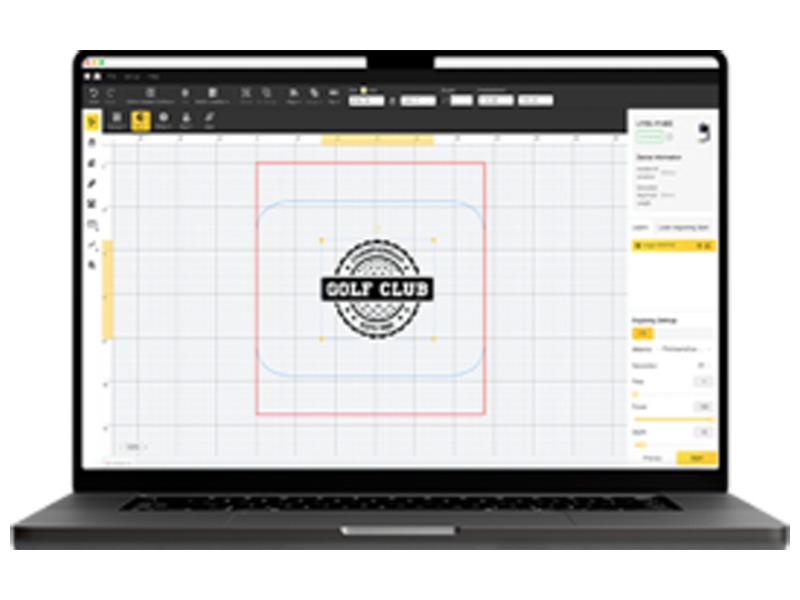
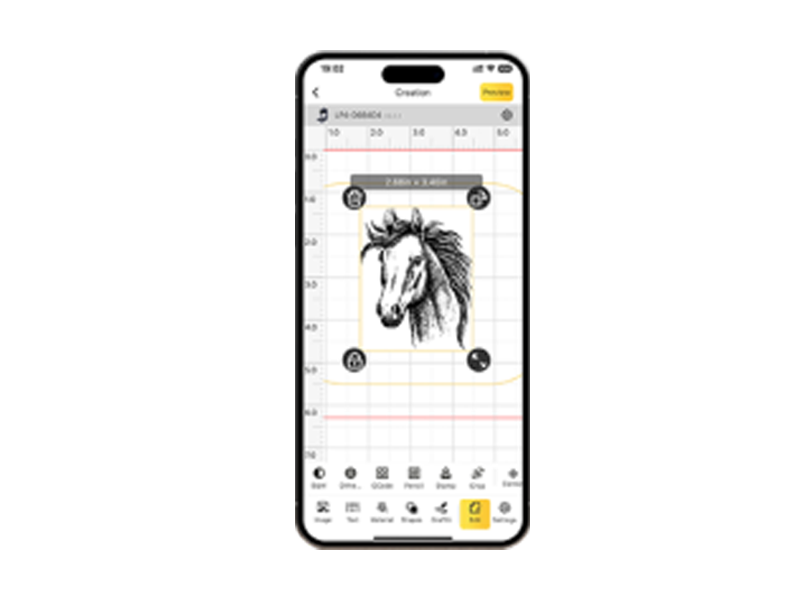
Créez ou importez votre motif à l'aide d'un logiciel graphique tel que LaserPecker Design Space ou LightBurn. Assurez-vous que le fichier est enregistré dans un format compatible avec le laser, tel que DXF, SVG ou AI, pour un traitement précis.
Étape 2 : Choisissez le bon laser
Pour découper l'aluminium, un découpeur laser à fibre est ce qu'il y a de plus efficace pour les métaux comme l'aluminium. Votre machine doit avoir une puissance suffisante (au moins un laser à fibre de 20W pour l'aluminium mince).
Étape 3 : Fixez la tôle d'aluminium
Placez la tôle d'aluminium à plat sur le lit du laser et fixez-la à l'aide de pinces ou d'aimants. Maintenir le matériau stable est essentiel pour obtenir des coupes nettes et précises.
Étape 4 : Ajustez les réglages du laser
Réglez la puissance, la vitesse et la fréquence en fonction de l'épaisseur de l'aluminium. Pour les tôles fines (moins de 1 mm), commencez par une puissance plus faible et une vitesse plus élevée. Testez toujours vos réglages sur une chute avant de continuer.
Étape 5 : Lancez la découpe
Commencez le processus de découpe et surveillez-le de près. Surveillez l'apparition d'étincelles, de flammes ou une éventuelle déformation du matériau pour garantir un fonctionnement sûr et constant.
Étape 6 : Finition et nettoyage
Inspectez les bords de coupe pour détecter d'éventuelles bavures ou rugosités. Un ponçage léger peut être nécessaire pour améliorer la finition. Enfin, nettoyez la surface pour éliminer tout résidu.

Partie 4 : Conseils pour une découpe laser parfaite de l'aluminium
Obtenir des résultats nets et de haute qualité lors de la découpe laser de l'aluminium nécessite plus qu'une simple machine performante. Ces conseils pratiques peuvent vous aider à améliorer la précision, la qualité des bords et l'efficacité globale :
Utilisez un gaz d'assistance pour des coupes plus nettes
L'utilisation de gaz d'assistance, tels que l'oxygène ou l'azote, aide à expulser le matériau en fusion pendant la coupe. Cela réduit les résidus et améliore la qualité des bords.
Gardez la lentille laser propre
Une lentille contaminée ou sale peut réduire la précision et les performances de coupe. Un nettoyage régulier garantit des résultats constants et protège le système optique.
Maintenez un refroidissement adéquat
L'aluminium conduit la chaleur efficacement, ce qui peut affecter à la fois le matériau et la machine. Assurez-vous que le système de refroidissement fonctionne correctement pour éviter la surchauffe et la déformation.
Effectuez d'abord des tests de coupe
Testez toujours vos réglages sur une chute d'aluminium avant de travailler sur la pièce finale. Cela permet d'optimiser les paramètres et d'éviter le gaspillage de matière.
Adaptez le laser à l'épaisseur du matériau
Les systèmes laser standards sont généralement adaptés aux tôles d'aluminium jusqu'à environ 1 mm d'épaisseur. Pour des matériaux plus épais, un système plus puissant ou de qualité industrielle peut être nécessaire.
Suivez les meilleures pratiques de sécurité
Portez des lunettes de sécurité appropriées, assurez une ventilation adéquate et surveillez la machine pendant son fonctionnement afin de minimiser les risques.
Partie 5 : Machines de découpe laser recommandées pour l'aluminium
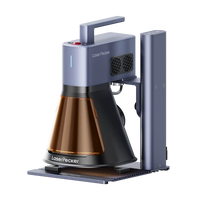
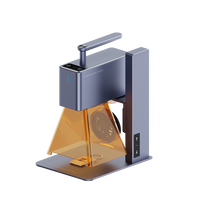
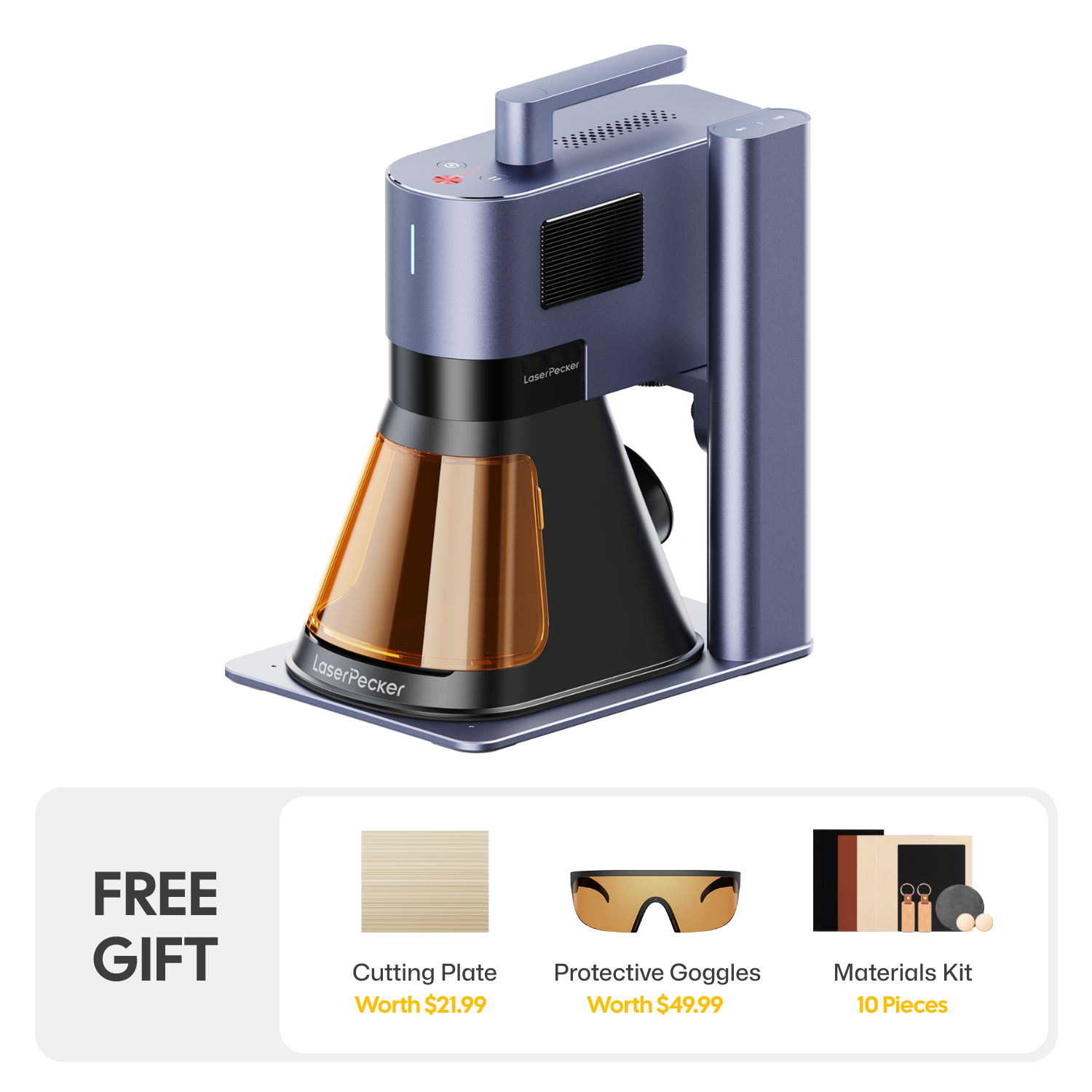
Si vous envisagez sérieusement de découper de l'aluminium, le choix d'un bon découpeur laser est essentiel. Un excellent choix actuel est le découpeur laser LP5. Il s'agit d'un système compact mais très performant, conçu aussi bien pour la gravure de précision que pour la découpe légère de métaux. Il allie portabilité et fonctionnalités avancées, ce qui le rend adapté aux créateurs, aux petits ateliers et aux utilisateurs professionnels.
Le LP5 se distingue par sa technologie innovante à double laser :
Laser à fibre 20W (1064 nm) : C'est votre outil de prédilection pour la découpe et la gravure des métaux. Il est parfait pour trancher des feuilles minces d'aluminium, d'acier inoxydable, de laiton et de titane.
Laser à diode 20W (450 nm) : Ce laser est idéal pour les matériaux non métalliques comme le bois, l'acrylique, le cuir et bien plus encore, vous offrant la flexibilité nécessaire pour aborder presque tous les projets.
Ce que le LP5 peut faire :
Gravure :
Le laser à fibre permet la gravure directe sur les métaux nus et revêtus, tandis que le laser à diode convient aux matériaux tels que le bois, le cuir et les surfaces peintes ou anodisées.
Découpe :
Laser à fibre : coupe l'aluminium, l'acier inoxydable, le laiton et le titane jusqu'à 1 mm.
Laser à diode : coupe l'acrylique foncé jusqu'à 15 mm et le bois de tilleul jusqu'à 20 mm.
Caractéristiques clés du LP5
Compact et portable
Conçu pour être léger et peu encombrant sans sacrifier les performances.
Haute vitesse
Des vitesses de gravure allant jusqu'à 10 000 mm/s améliorent la productivité et réduisent le temps de traitement.
Précision et contrôle de la profondeur
Capable de gravures aux détails fins, y compris des motifs complexes et des textures 3D.
Extensible avec des accessoires
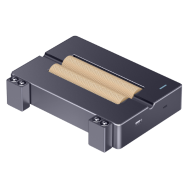
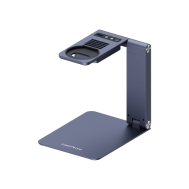
Prend en charge les extensions rotatives et coulissantes pour les objets cylindriques et les zones de travail plus vastes.
Compatibilité logicielle
Fonctionne avec LightBurn et LaserPecker Design Space pour une intégration flexible du flux de travail.
Fonctionnement fermé et plus sûr
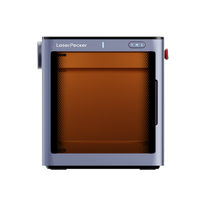
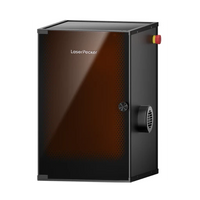
L'enceinte de sécurité permet une utilisation en intérieur dans les ateliers, les studios ou les environnements éducatifs.
Partie 6 : FAQ sur la découpe de tôles d'aluminium au laser
Q1. Puis-je utiliser n'importe quel découpeur laser sur l'aluminium ?
Pas tout à fait. Les différents types de laser se comportent de manière très différente avec l'aluminium.
- Les lasers à diode se limitent généralement au marquage des surfaces en aluminium revêtu, car ils reposent sur des réactions de surface plutôt que sur l'enlèvement de matière.
- Les lasers à fibre sont l'option privilégiée pour la découpe ou la gravure profonde. Ils concentrent l'énergie en un point très fin, permettant un enlèvement de métal efficace.
- Pour les amateurs ou les petits ateliers, une configuration à double laser (diode + fibre) offre une grande polyvalence pour les applications métalliques et non métalliques.
Q2. Quelle est l'épaisseur maximale qu'un laser peut couper ?
L'épaisseur maximale dépend de plusieurs facteurs :
- La puissance du laser
- La qualité du faisceau
- Le gaz d'assistance utilisé pendant la coupe
Les lasers à fibre d'entrée de gamme traitent généralement des tôles d'aluminium de l'ordre de 0,5 à 1,0 mm. Les systèmes industriels plus puissants peuvent traiter des matériaux plus épais, surtout lorsqu'ils sont combinés à une assistance à l'azote ou à l'oxygène.
Q3. Ai-je besoin de gaz d'assistance pour la découpe laser de l'aluminium ?
Oui, le gaz d'assistance améliore considérablement la qualité de la coupe.
- L'oxygène : augmente la vitesse de coupe mais peut laisser des bords oxydés.
- L'azote : produit des bords propres et sans oxyde (préférable pour des finitions professionnelles).
- L'air comprimé : acceptable pour des coupes basiques ou brutes.
Pour des résultats de haute qualité, l'azote est généralement recommandé.
Q4. La découpe laser de l'aluminium est-elle sûre ?
La découpe laser de l'aluminium peut être sûre si les précautions appropriées sont respectées.
- Utilisez des machines spécifiquement conçues pour le traitement des métaux.
- Assurez une ventilation adéquate pour éliminer les fumées et les particules.
- Portez l'équipement de protection approprié.
- Utilisez des systèmes laser fermés dès que possible.
Ces précautions sont particulièrement importantes dans les espaces de travail éducatifs ou partagés.
Q5. Pourquoi choisir la découpe laser plutôt que le plasma ou le jet d'eau ?
Chaque méthode de découpe a ses propres avantages :
- La découpe plasma : rapide et rentable pour les matériaux épais, mais produit des bords plus rugueux.
- La découpe au jet d'eau : extrêmement précise sans distorsion thermique, mais équipement coûteux et encombrant.
- La découpe laser : idéale pour l'aluminium de faible à moyenne épaisseur, offrant une grande précision, des bords propres et des détails fins.
La découpe laser est particulièrement adaptée à la signalétique, aux travaux décoratifs et aux composants de précision.
Q6. Un laser à fibre de 20W peut-il couper l'aluminium ?
Oui, un laser à fibre de 20W peut couper des tôles d'aluminium fines, généralement jusqu'à environ 1 mm, selon les réglages et le gaz d'assistance utilisé. Il est bien adapté aux travaux de précision, à la gravure et aux applications de découpe légère.
Q7. quel est le meilleur type de laser pour la découpe de l'aluminium ?
L'option la plus efficace est le laser à fibre. Les lasers à fibre fonctionnent à une longueur d'onde que les métaux absorbent efficacement, ce qui permet :
- Une meilleure efficacité énergétique
- Des bords de coupe plus nets
- Des performances plus constantes lors du traitement de matériaux métalliques
Conclusion
La découpe de tôles d'aluminium peut être un défi en raison de leur malléabilité, de leur conductivité thermique élevée et de leur tendance à former des bavures. Cependant, avec les bons outils et les bonnes techniques, obtenir des résultats nets et précis est tout à fait possible. Bien que les méthodes traditionnelles comme le sciage ou le cisaillement puissent fonctionner dans certaines situations, la découpe laser reste la solution la plus précise, la plus efficace et la plus polyvalente pour les applications modernes.
Pour ceux qui recherchent une précision et des capacités maximales, le découpeur laser LP5 se distingue par son système à double laser, permettant à la fois la découpe de métaux et la gravure multi-matériaux. Que vous travailliez sur des projets personnels ou que vous passiez à une production à plus grande échelle, une machine laser fiable vous permet de traiter les tôles d'aluminium avec constance et des résultats de qualité professionnelle.