
















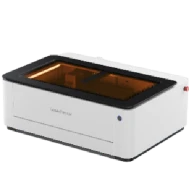
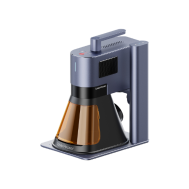
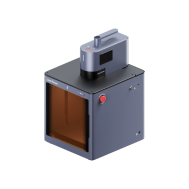
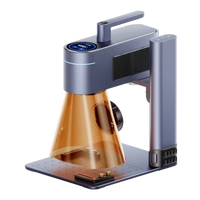












La gravure confère aux objets du quotidien une finition raffinée et personnalisée. Les boîtes en bois gravées, les coffrets à souvenirs et les boîtes cadeaux sont largement utilisés pour les occasions spéciales, les projets créatifs et l'emballage des petites entreprises.
Dans ce guide, nous expliquons pourquoi la gravure de boîtes est si populaire, nous comparons les différentes méthodes de gravure disponibles et nous fournissons des conseils pratiques pour graver au laser en toute sécurité à domicile ou en atelier. Nous suggérerons également des outils adaptés aux débutants et aux créateurs expérimentés.

Dans cet article :
- Partie 1 : Pourquoi aimons-nous graver des boîtes ?
- Partie 2 : 5 méthodes pour graver une boîte
- Méthode 1 : Gravure laser
- Méthode 2 : Gravure CNC
- Méthode 3 : Gravure à la main
- Méthode 4 : Gravure chimique (eau-forte)
- Méthode 5 : Hybrides Impression & Gravure
- Partie 3 : Comment graver une boîte par gravure laser
- Partie 4 : Conseils pour l'utilisation de la gravure laser
- Partie 5 : FAQ sur la gravure d'une boîte
Partie 1 : Pourquoi aimons-nous graver des boîtes ?
Graver une boîte est bien plus qu'un simple choix décoratif — cela apporte de l'originalité, du savoir-faire et une valeur durable. Partout en Europe, les boîtes gravées sont largement utilisées pour des projets personnels, des cadeaux et l'emballage des petites entreprises.
Voici les principales raisons pour lesquelles la gravure de boîtes reste si populaire :
Raison 1 : Personnalisation et distinction
L'ajout d'un nom, d'une date, d'une citation ou d'un motif personnalisé transforme instantanément une boîte ordinaire en un souvenir unique. Les boîtes gravées sont particulièrement appréciées pour les mariages, les anniversaires, les remises de diplômes et les grandes étapes de la vie, où chaque détail compte.
Raison 2 : Une finition propre et élégante
La gravure offre un rendu précis et raffiné. La gravure laser permet d'obtenir des détails constants, ce qui la rend idéale aussi bien pour les designs minimalistes que pour les motifs complexes.
Raison 3 : Un atout pour les entreprises
De nombreux commerçants et petites entreprises gravent des logos ou des éléments de marque sur leurs boîtes d'emballage. Cette approche renforce l'identité de la marque et donne aux produits un aspect plus haut de gamme.
Raison 4 : Conçu pour durer
Contrairement aux étiquettes imprimées ou aux autocollants, les motifs gravés ne s'effacent pas, ne pèlent pas et ne s'usent pas facilement. Cela fait de la gravure une option fiable pour les objets destinés à être conservés pendant des années.
Reason 5 : Une valeur émotionnelle ajoutée
Une boîte à souvenirs ou un coffret à bijoux gravé devient souvent un objet chargé de sens au fil du temps. Il porte des histoires personnelles et peut être conservé pendant de nombreuses années comme rappel d'occasions importantes.

Partie 2 : 5 méthodes pour graver une boîte
Il existe plusieurs méthodes pour graver une boîte, selon l'échelle de production, le type de matériau, les exigences de sécurité et l'expérience technique. Voici un aperçu des approches de gravure les plus utilisées en Europe.
Méthode 1 : Gravure laser
La gravure laser utilise un faisceau lumineux concentré pour marquer les matériaux de manière permanente avec une grande précision. Elle est efficace, répétable et adaptée aussi bien aux petits projets créatifs qu'à la production professionnelle.
La gravure laser fonctionne bien sur :
- Le bois
- Le cuir
- L'acrylique
- Certains plastiques
- Certains métaux revêtus ou traités (selon le type de laser)
La gravure laser est particulièrement efficace pour les logos, le texte, les numéros de série et les motifs graphiques complexes.
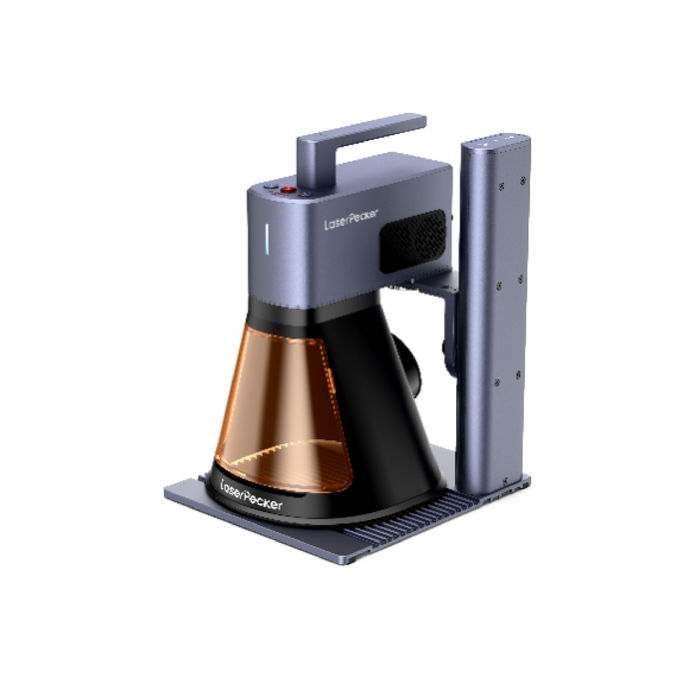
LP2 Plus – Compact et polyvalent pour la gravure à domicile
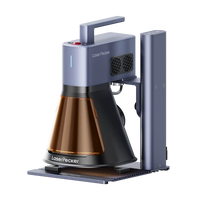
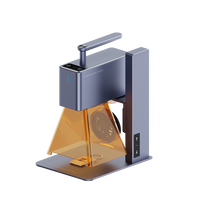
Pour les passionnés et les créateurs à domicile souhaitant graver une boîte avec rapidité et précision, le LaserPecker LP2 Plus offre un excellent équilibre entre puissance, portabilité et sécurité.
Caractéristique 1 : Performance à haute vitesse
Avec des vitesses de gravure allant jusqu'à 4 000 mm/s, le LP2 Plus vous permet de personnaliser des boîtes en bois efficacement. Ceci est particulièrement utile pour les projets de cadeaux en série ou l'emballage de petites entreprises.
Caractéristique 2 : Puissance laser diode 10W 450nm
Son laser à diode bleue de 10W fournit une puissance suffisante pour graver le bois, le cuir, l'acrylique et les surfaces revêtues. Pour la gravure de boîtes, cela signifie un contraste net sur les couvercles en bois dur et des détails précis sur les logos ou le texte.
Caractéristique 3 : Écosystème d'accessoires extensible
Le LP2 Plus prend en charge :
- Les accessoires rotatifs (idéaux pour les contenants cadeaux cylindriques)
- Les extensions de glissière pour les surfaces plus grandes
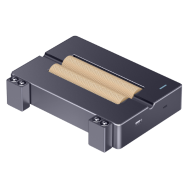
- Les rouleaux électriques multifonctions
Cette flexibilité permet aux utilisateurs de graver aussi bien des boîtes en bois plates que des formats d'emballage arrondis.
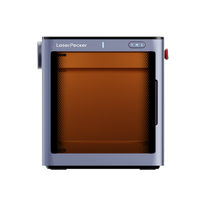
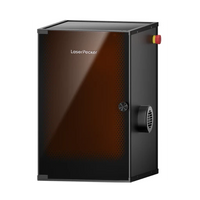
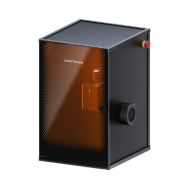
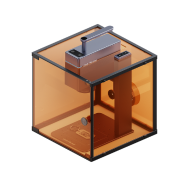
Caractéristique 4 : Sécurité renforcée avec enceinte de protection
Pour les utilisateurs de l'UE qui accordent une grande importance aux normes de sécurité, l'utilisation du LP2 Plus avec une enceinte de protection aide à isoler la zone de travail du laser. Cela réduit l'exposition accidentelle et le rend plus adapté à une utilisation dans des espaces domestiques partagés.
Caractéristique 5 : Utilisation intérieure plus propre avec purification de l'air
Lors de la gravure d'une boîte à l'intérieur, de la fumée et des particules fines sont générées. L'utilisation d'un purificateur d'air compatible aide à filtrer les fumées et les débris, maintenant un air plus propre — ce qui est particulièrement important dans les foyers avec enfants ou animaux domestiques.
Le LP2 Plus est un choix fiable pour les créateurs qui recherchent des performances de gravure rapides tout en maintenant un environnement d'atelier à domicile sûr et confortable.
LaserPecker LP4 - Graveur à double laser avancé
Pour les professionnels et les entreprises en pleine croissance, le LaserPecker LP4 offre une vitesse accrue, une plus grande flexibilité des matériaux et une précision supérieure.

Caractéristique 1 : Système à double laser
Équipé d'un laser à diode bleue de 10W et d'un laser infrarouge de 2W, il prend en charge plus de 300 matériaux, notamment :
- L'acier inoxydable
- L'aluminium
- La céramique
- Le bois
- L'acrylique
- Le cuir
Ce système double permet à la fois des détails d'une grande finesse et des tâches de gravure plus exigeantes.
Caractéristique 2 : Vitesse et résolution professionnelles
Avec des vitesses allant jusqu'à 4000 mm/s et une résolution 8K, il produit des résultats nets et constants adaptés à la production commerciale.
Caractéristique 3 : Contrôle intelligent et compatibilité logicielle
L'interface à écran tactile permet de commuter rapidement entre les lasers et de répéter les tâches. Il est compatible avec LightBurn (logiciel professionnel) et LaserPecker Design Space (flux de travail simplifié).
Idéal pour la croissance des entreprises :
- Marquage de boîtes en bois avec des logos gravés
- Production de boîtes à souvenirs détaillées
- Traitement de commandes pour mariages, entreprises et vente au détail
Caractéristique 4 : Durabilité et performance à long terme
Conçu pour une utilisation quotidienne constante, il réduit les erreurs et améliore l'efficacité du flux de travail dans les petits ateliers.
Le LaserPecker LP4 est adapté aux professionnels et aux petites entreprises qui développent leur production de boîtes gravées.
Méthode 2 : Gravure CNC
La gravure CNC (Computer Numerical Control) utilise des outils de coupe rotatifs pour enlever physiquement de la matière.
Avantages :
- Produit des coupes profondes et des finitions texturées
- Adaptée aux bois durs et aux métaux pleins
- Crée des effets de gravure dimensionnels
Limites :
- Plus lente que la gravure laser
- Plus bruyante pendant l'utilisation
- Nécessite plus d'entretien
La gravure CNC est souvent utilisée dans les ateliers produisant des boîtes en bois robustes ou pour des projets industriels.
Méthode 3 : Gravure à la main
La gravure à la main implique l'utilisation d'outils manuels tels que des ciseaux et des instruments de sculpture.
Avantages :
- Savoir-faire artisanal traditionnel
- Chaque pièce est unique
- Forte valeur artistique
Limites :
- Prend beaucoup de temps
- Nécessite une grande habileté
- Non adaptée à une production en série
Cette méthode séduit les artisans qui privilégient les détails faits à la main.
Méthode 4 : Gravure chimique (eau-forte)
La gravure chimique utilise des solutions acides ou chimiques pour créer des motifs, principalement sur des surfaces métalliques.
Avantages :
- Adaptée aux textes fins et aux motifs métalliques détaillés
- Marquage de surface constant
Limites :
- Nécessite une manipulation prudente des produits chimiques
- Non recommandée pour les débutants
- Limitée à certains matériaux
Méthode 5 : Hybrides Impression & Gravure
Certains fabricants de boîtes utilisent l'impression UV combinée à la gravure. L'impression ajoute des couleurs, tandis que la gravure apporte de la texture et assure une plus longue durabilité. Ce mélange est souvent utilisé pour les emballages de luxe.
Résumé comparatif pour la personnalisation de boîtes
| Méthode | Difficulté | Coût | Effet / Précision | Idéal pour |
|---|---|---|---|---|
| Gravure Laser | Facile | Moyen | Haute précision, répétable, durable | Débutants, professionnels, petites entreprises |
| Gravure CNC / Rotative | Moyenne | Élevé | Coupes profondes, fini texturé, processus plus lent | Ateliers, production industrielle |
| Gravure à la main | Difficile | Faible | Unique, artisanal, résultats irréguliers | Artistes, artisans traditionnels |
| Gravure Chimique / à l'Acide | Moyenne | Faible–Moyen | Marquage métallique détaillé, précautions de sécurité | Bijouterie, artisanat du métal |
| Hybrides Impression & Gravure | Moyenne | Moyen–Élevé | Combinaison couleur + texture, fini moderne | Emballage premium, boîtes de marque |
Partie 3 : Comment graver une boîte par gravure laser
Pour obtenir des résultats précis et constants lors de la gravure laser d'une boîte, il est important de suivre un flux de travail clair et sûr. Cela garantit un rendu de haute qualité tout en respectant les normes de fonctionnement appropriées.
Étape 1 : Préparez votre fichier de conception
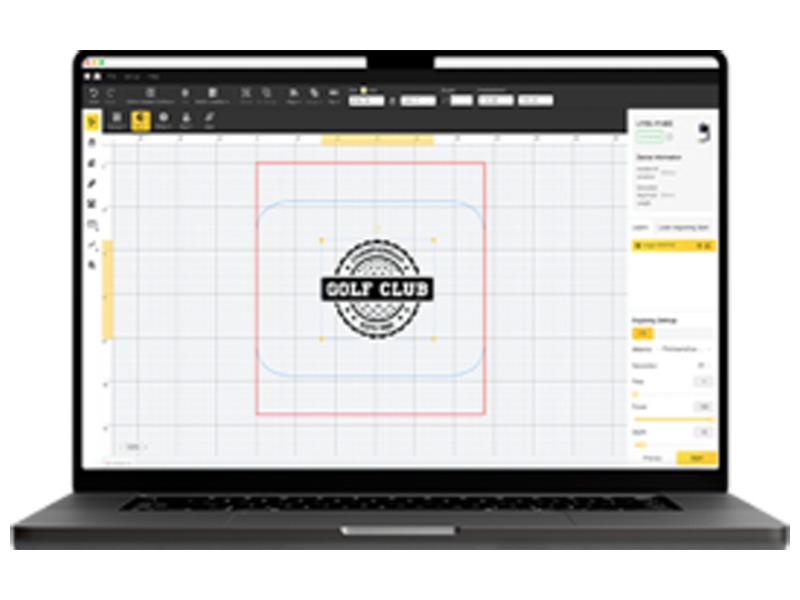
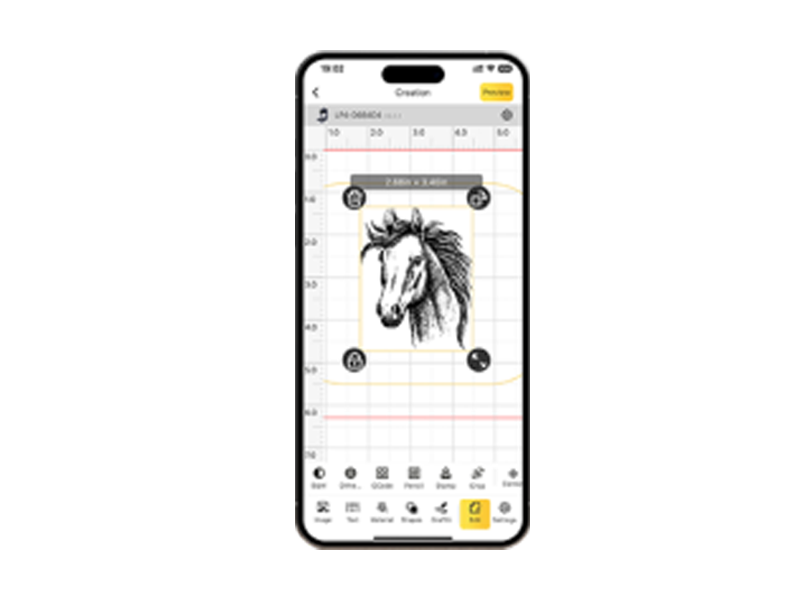
Créez ou importez votre motif à l'aide d'un logiciel compatible.
- Concevez des graphismes personnalisés
- Téléchargez des images vectorielles
- Ajoutez du texte personnalisé
Assurez-vous que la résolution et le format du fichier sont adaptés à la gravure pour maintenir la clarté des détails.
Étape 2 : Préparez la surface de la boîte
Avant de graver, assurez-vous que la boîte est :
- Propre et exempte de poussière
- Complètement sèche
- Positionnée de manière sûre et plane
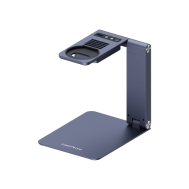
Si le couvercle ou la surface est irrégulier, utilisez des cales ou des supports réglables pour le stabiliser. Une surface stable évite les distorsions et améliore la précision de la gravure.
Étape 3 : Ajustez les réglages du laser
Définissez les paramètres de gravure corrects en fonction du type de matériau.
- Vitesse
- Intensité de la puissance
- Résolution
Le bois tendre nécessite généralement une puissance inférieure à celle du bois dur dense. Effectuez toujours une petite gravure de test sur une section cachée au préalable.
Étape 4 : Prévisualisez la zone de gravure
Les appareils tels que le LP2 Plus et le LP4 disposent d'un mode de prévisualisation ou de cadrage.
Cette fonction vous permet de confirmer l'emplacement avant le début de la gravure, réduisant ainsi le risque de mauvais alignement — ce qui est particulièrement important pour les commandes personnalisées et la production commerciale.
Étape 5 : Commencez la gravure
Lancez le processus de gravure et surveillez-le tout au long de l'opération. Même avec des systèmes automatisés, il est important de :
- Rester à proximité
- Assurer une ventilation adéquate
- Surveiller tout mouvement inattendu ou toute surchauffe
Pour les ateliers en intérieur, l'utilisation d'un purificateur d'air ou d'un système d'extraction de fumée améliore la qualité de l'air et le confort.
Étape 6 : Post-traitement et finition
Après la gravure, vous pouvez améliorer le résultat final en :
- Ponçant légèrement la surface
- Appliquant de l'huile ou du vernis
- Polissant les composants métalliques
La finition améliore le contraste et augmente la longévité du motif gravé.
Partie 4 : Conseils pour l'utilisation de la gravure laser
Pour maintenir la précision de la gravure et garantir un fonctionnement sûr, il est important de suivre des meilleures pratiques structurées — particulièrement lors de la gravure en intérieur ou dans un petit atelier.
Effectuez d'abord un échantillon de test
Avant de graver votre pièce finale, testez toujours votre motif sur une chute du même matériau. Cela vous permet de :
- Confirmer les bons réglages de puissance et de vitesse
- Vérifier la profondeur et le contraste de la gravure
- Éviter d'endommager votre boîte terminée
Le test ne prend que quelques minutes mais peut éviter des erreurs coûteuses.
Assurez une ventilation adéquate
La gravure laser produit de la fumée et des particules fines, particulièrement lors du travail du bois ou de l'acrylique. Pour une utilisation en intérieur :
- Travaillez dans une zone bien ventilée
- Utilisez un ventilateur ou un système d'extraction d'air
- Envisagez un purificateur d'air de bureau pour améliorer la qualité de l'air
Un flux d'air approprié aide à maintenir un espace de travail plus sûr et plus confortable.
Ajustez les réglages pour chaque matériau
Différents matériaux réagissent différemment à la puissance du laser. Par exemple :
- Le bois tendre nécessite généralement une puissance plus faible
- Le bois dur peut nécessiter une vitesse plus lente pour un contraste plus profond
- L'acrylique nécessite une puissance contrôlée pour éviter de fondre
De petits ajustements de vitesse et d'intensité peuvent considérablement améliorer la précision de la gravure.
Gardez la lentille et les composants propres
La poussière ou les résidus sur la lentille laser peuvent réduire la précision et la netteté de la gravure. Régulièrement :
- Inspectez la lentille
- Nettoyez-la avec les outils appropriés
- Retirez les débris de la zone de travail
Un entretien de routine garantit des résultats constants et prolonge la durée de vie de la machine.
Priorisez la sécurité à tout moment
Suivez toujours les consignes de sécurité recommandées :
- Portez des lunettes de sécurité laser appropriées lorsque cela est requis
- Ne laissez jamais la machine sans surveillance pendant son fonctionnement
- Gardez les matériaux inflammables à l'écart de la zone de gravure
Si vous utilisez un système fermé de classe 1, les risques de sécurité sont réduits ; cependant, la surveillance reste essentielle lors de la gravure.
Partie 5 : FAQ sur la gravure d'une boîte
Q1. Tous les types de boîtes peuvent-ils être gravés au laser ?
La plupart des boîtes en bois, cuir, acrylique et certains polymères sélectionnés conviennent à la gravure laser. Certains métaux revêtus peuvent également être marqués à l'aide de lasers infrarouges.
Il est conseillé aux débutants de commencer par des bois tendres comme le pin ou le peuplier. Les bois durs denses et les métaux nécessitent des systèmes laser plus puissants ou spécialisés.
Effectuez toujours une petite gravure de test avant de commencer votre projet final.
Q2. Quelle est la profondeur de gravure typique lors de l'utilisation d'un laser ?
La gravure laser produit généralement une profondeur de surface comprise entre 0,1 mm et 1 mm. La profondeur est influencée par :
- La puissance du laser
- Les réglages de vitesse
- La dureté du matériau
- Le nombre de passages
Pour un contraste visuel plus profond, plusieurs passages peuvent être appliqués avec précaution. Si une sculpture structurelle est requise, l'usinage CNC peut être plus approprié.
Q3. La gravure laser est-elle plus précise que la gravure à la main ?
Oui. La gravure laser offre :
- Une haute répétabilité
- Un alignement constant
- Une précision des détails fins
La gravure à la main offre une individualité artistique mais est moins constante et plus lente pour de grandes quantités.
Pour les petites entreprises ou les commandes personnalisées, la gravure laser est généralement plus efficace.
Q4. La gravure laser peut-elle être utilisée pour l'emballage des petites entreprises ?
Oui. De nombreuses petites entreprises européennes gravent des logos sur des boîtes en bois ou des emballages pour améliorer la présentation de leur marque.
L'utilisation de gabarits d'alignement et le traitement par lots garantissent des résultats constants sur plusieurs unités.
Q5. Les graveurs laser sont-ils autorisés pour un usage domestique dans l'UE ?
Les graveurs laser peuvent être utilisés à domicile, à condition qu'ils soient conformes aux classifications de sécurité pertinentes et qu'ils soient utilisés de manière responsable.
Les utilisateurs doivent :
- Assurer une ventilation adéquate
- Suivre les normes de sécurité
- Éviter de graver des matériaux dangereux
- Vérifier les réglementations nationales en cas d'exploitation commerciale
Les systèmes certifiés de sécurité ou fermés sont recommandés pour une utilisation en intérieur.
Q6. Quelle ventilation est requise lors de la gravure en intérieur en Europe ?
La gravure en intérieur nécessite une gestion efficace du flux d'air. Les mesures recommandées incluent :
- Des systèmes d'extraction locale
- Des unités de filtration d'air
- L'évitement des matériaux revêtus ou traités sans ventilation adéquate
Ceci est particulièrement important lors de la gravure d'acrylique ou de surfaces peintes.
Conclusion
La gravure est un moyen efficace de transformer une simple boîte en un objet personnalisé et durable. En ajoutant des noms, des dates, des logos ou des créations personnalisées, vous augmentez à la fois la valeur émotionnelle et la qualité de la présentation.
Des techniques manuelles et de l'usinage CNC aux processus chimiques, plusieurs options de gravure sont disponibles. Parmi elles, la gravure laser se distingue par sa précision, sa répétabilité et son efficacité — particulièrement pour les boîtes en bois personnalisées et les applications d'emballage professionnel.
Pour les débutants et les amateurs, le LP2 Plus offre un point d'entrée compact et rentable dans la gravure laser. Il est adapté aux petits projets et à l'expérimentation créative.
Pour les professionnels et les petites entreprises, le LP4 offre une productivité accrue, une compatibilité de matériaux étendue et un rendu constant — ce qui le rend parfaitement adapté aux commandes commerciales et à la production d'emballages de marque.
Que vous développiez des cadeaux personnalisés, construisiez une marque ou agrandissiez un atelier créatif, graver une boîte offre un mélange pratique d'artisanat et de technologie moderne.