









































La réalisation de rainures dans le bois est une technique essentielle en menuiserie. Elle est couramment utilisée dans la fabrication de meubles, la construction de boîtes, la création d’enseignes et même dans les applications mécaniques. Les rainures permettent aux composants de s’assembler avec précision, de guider les pièces mobiles et d’améliorer à la fois la solidité structurelle et la finition visuelle.
Grâce à la disponibilité croissante d’outils avancés tels que les découpeuses laser, les menuisiers disposent aujourd’hui d’options plus efficaces et plus précises que jamais.
Ce guide explique comment réaliser une rainure dans le bois à l’aide de plusieurs méthodes couramment utilisées. Nous présenterons les avantages et les limites de chaque technique et fournirons des instructions étape par étape, notamment sur l’utilisation de la technologie moderne de découpe laser pour obtenir facilement des résultats nets et précis.

Dans cet article :
- Partie 1 : Pourquoi devez-vous réaliser une rainure dans le bois ?
- Partie 2 : Quatre façons de réaliser une rainure dans le bois
- Méthode 1 : Réaliser une rainure avec une scie à main et un ciseau à bois
- Méthode 2 : Utiliser une défonceuse pour réaliser une rainure dans le bois
- Méthode 3 : Utiliser une perceuse à colonne et un ciseau à bois pour réaliser une rainure
- Méthode 4 : Réaliser une rainure dans le bois avec une découpeuse laser
- Partie 3 : Pourquoi la découpe laser est une excellente méthode pour réaliser une rainure dans le bois
- Partie 4 : Conseils pour réaliser une rainure dans le bois par découpe laser
- Partie 5 : FAQ sur la réalisation de rainures dans le bois
Partie 1 : Pourquoi devez-vous réaliser une rainure dans le bois ?
Les rainures dans le bois — également appelées canaux ou entailles à mi-bois — jouent un rôle important dans les applications d’ébénisterie fonctionnelles et décoratives. Dans les habitations et ateliers européens, elles sont largement utilisées pour les meubles sur mesure, le mobilier peu encombrant et les aménagements intérieurs modernes, afin d’améliorer la précision de l’assemblage et la qualité globale du design.
Voici quelques-unes des utilisations les plus courantes :
N° 1 : Assemblages structurels
Les rainures contribuent à former des assemblages solides dans les meubles tels que les étagères, les armoires, les meubles de cuisine et les systèmes de rangement, en garantissant un ajustement précis et une stabilité durable. Cela est particulièrement utile dans les petits appartements urbains, où les meubles intégrés optimisent un espace limité.
N° 2 : Détails décoratifs
Les rainures peuvent créer des lignes décoratives, des effets de panneau ou des incrustations qui s’harmonisent avec les intérieurs contemporains de style scandinave, les meubles de cuisine allemands minimalistes ou les boiseries traditionnelles méditerranéennes.
N° 3 : Éléments fonctionnels
Les rainures sont souvent intégrées à des éléments nécessitant un déplacement guidé ou un positionnement contrôlé, comme les étagères réglables des bureaux à domicile ou les systèmes de rangement modulaires.
N° 4 : Mécanismes coulissants
Elles permettent le déplacement fluide d’éléments tels que les portes coulissantes d’armoire, les panneaux dissimulés ou les cloisons séparatrices escamotables, couramment utilisés dans les appartements européens.
N° 5 : Logement des éléments de quincaillerie
Les rainures permettent de dissimuler discrètement les câbles électriques pour l’éclairage, les appareils de cuisine intégrés ou les installations domotiques, en préservant un intérieur propre et organisé tout en maintenant sa fonctionnalité.
Partie 2 : Quatre façons de réaliser une rainure dans le bois
Il existe quatre méthodes principales couramment utilisées pour découper des rainures dans le bois. Chacune offre un niveau différent de précision, d’efficacité et de facilité d’utilisation, selon les exigences du projet et les outils disponibles.
Voici un aperçu des méthodes les plus utilisées en 2026, ainsi que de leurs avantages et limites.
Méthode 1 : Découper une rainure avec une scie à main et un ciseau
La méthode de la scie à main et du ciseau est une approche traditionnelle qui repose entièrement sur les compétences manuelles. Elle consiste à découper les bords de la rainure à la scie, puis à retirer le matériau restant à l’aide d’un ciseau.
Cette méthode offre un excellent contrôle et crée une finition naturelle et artisanale. Elle nécessite peu d’équipement, ce qui en fait un choix pratique pour les débutants ou les petits ateliers.
En revanche, il peut être difficile de maintenir des dimensions constantes. Il faut de la patience et de l’expérience pour obtenir des résultats précis et nets.
Particulièrement adaptée à : menuiserie de base, designs rustiques et petits projets
Méthode 2 : Utiliser une défonceuse pour découper une rainure dans le bois
Les défonceuses sont largement utilisées dans la menuiserie moderne en raison de leur polyvalence et de leur efficacité. En changeant la fraise, il est facile de créer des rainures, des gorges et des découpes décoratives précises.
Les défonceuses produisent des bords lisses et permettent un réglage précis de la profondeur, ce qui les rend idéales pour la fabrication de meubles et les travaux d’ébénisterie. Le processus consiste généralement à fixer le matériau, puis à guider la défonceuse le long d’un bord droit ou d’un gabarit.
Cependant, les défonceuses peuvent générer du bruit et des vibrations, et leur utilisation sûre et précise exige un certain savoir-faire. Plusieurs passes peuvent être nécessaires pour les rainures longues ou étroites.
Particulièrement adaptée à : fabrication de meubles, ébénisterie et projets nécessitant des rainures nettes et régulières.
Méthode 3 : Utiliser une perceuse à colonne et un ciseau pour découper une rainure
Cette méthode combine le perçage et le ciselage pour obtenir des résultats plus maîtrisés. La perceuse à colonne sert à retirer la majeure partie du matériau, tandis que le ciseau affine la forme et aiguise les bords.
Elle est particulièrement efficace pour les rainures profondes et les assemblages structurels qui exigent une profondeur constante. Comparée aux méthodes entièrement manuelles, elle offre une meilleure précision et une meilleure répétabilité.
Cependant, cette méthode est plus lente que le fraisage et nécessite toujours une finition manuelle pour obtenir des bords nets.
Particulièrement adaptée à : assemblages à tenon et mortaise, projets en bois dur et travaux de menuiserie structurelle.
Méthode 4 : Découper une rainure dans le bois avec une découpeuse laser
La découpe laser est devenue une solution de choix pour réaliser des rainures en bois extrêmement précises. Elle produit des bords exceptionnellement nets et réguliers, qui ne nécessitent souvent ni ponçage ni finition supplémentaire.
Parce que le laser suit une conception numérique, chaque rainure est identique, ce qui le rend idéal pour la production en série et les travaux détaillés. La découpe laser est particulièrement efficace pour les panneaux, les boîtes, les incrustations et les motifs complexes difficiles à réaliser avec des outils traditionnels.
Le procédé est rapide, silencieux et capable de gérer facilement les courbes serrées et les détails fins. Toutefois, l’épaisseur du matériau est un facteur essentiel De nombreux lasers de bureau offrent leurs meilleures performances sur du bois d’une épaisseur allant jusqu’à environ 10 à 20 mm, selon leur puissance.
Idéal pour : les applications de haute précision, les conceptions détaillées et la production répétitive.
Tableau comparatif des méthodes de découpe de fentes
| Méthode | Précision | Vitesse | Niveau de compétence requis | Idéal pour |
|---|---|---|---|---|
| Scie à main + ciseau à bois | Faible à moyenne | Lente | Élevée | Assemblages rustiques, petits projets de bricolage |
| Défonceuse | Moyenne à élevée | Rapide | Moyenne | Mobilier, ébénisterie, fentes incurvées |
| Perceuse à colonne + ciseau à bois | Moyenne | Moyenne | Moyenne | Fentes profondes, assemblages à mortaise |
| Machine de découpe laser | Très élevée | Très rapide | Faible | Bois fin à moyen, fentes de précision, production en série |
Partie 3 : Pourquoi la découpe laser est une excellente méthode pour découper une fente dans le bois
La découpe laser est largement reconnue comme l’une des méthodes les plus précises et efficaces pour découper des fentes dans le bois. Elle permet d’obtenir des résultats cohérents et reproductibles à partir d’un fichier de conception numérique. Elle convient donc particulièrement aux travaux de production, à la signalétique et aux applications où la précision est essentielle.
Par rapport aux outils traditionnels, la découpe laser produit des bords plus nets, sans arrachement ni contrainte mécanique. Comme le procédé est sans contact, le matériau reste stable tout au long de l’opération, même lors du travail sur des feuilles fines ou des géométries complexes.
Elle permet également d’accélérer les itérations lors du prototypage ou de l’ajustement des conceptions, améliorant ainsi considérablement l’efficacité du flux de travail.
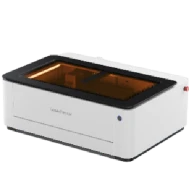
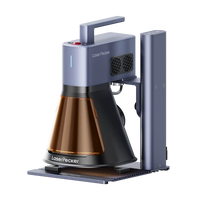
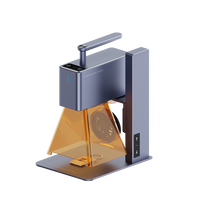
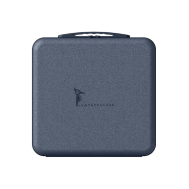
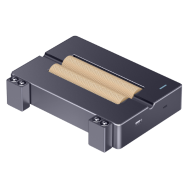
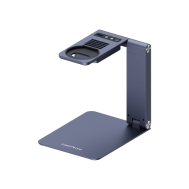
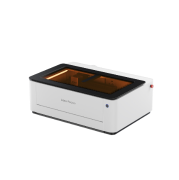
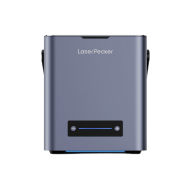
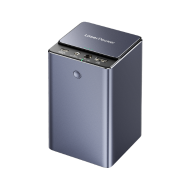
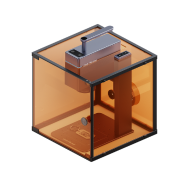
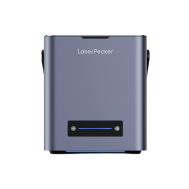
C’est pourquoi la machine de découpe laser LaserPecker LX2 se démarque. Elle est spécialement conçue pour réaliser des découpes détaillées dans le bois avec efficacité et précision.
La LX2 dispose d’une grande zone de travail (500 × 305 mm), permettant de traiter des pièces plus longues ou plusieurs éléments en une seule opération. Elle prend en charge des modules laser interchangeables, notamment des lasers à diode de 20 W et 40 W ainsi qu’un laser infrarouge de 2 W, ce qui la rend adaptable à différents types et épaisseurs de bois.
L’alignement est facilité par un système de caméra de 12 MP et une fonction de positionnement du point à la forme, garantissant un placement précis à chaque utilisation. Avec des vitesses de découpe allant jusqu’à 1 000 mm/s et une accélération rapide, la LX2 contribue à maximiser la productivité.
Elle propose également des réglages logiciels ajustables pour minimiser les traces de brûlure et s’intègre parfaitement à LightBurn et LaserPecker Design Space. Grâce à son format portable, la LX2 convient aussi bien aux ateliers qu’aux petits studios.
En résumé, la LX2 offre rapidité, précision, flexibilité et facilité d’utilisation, ce qui en fait un excellent choix pour découper des fentes dans le bois en 2026.
Étapes pour découper une fente dans le bois avec la LX2
La LaserPecker LX2 est conçue pour les créateurs, les passionnés et les petits ateliers qui ont besoin de résultats fiables et de haute qualité. Son système de déplacement stable et sa grande zone de travail en font une solution idéale pour réaliser des fentes nettes et professionnelles dans le bois.
Outils et matériaux à préparer
- Machine de découpe laser LX2
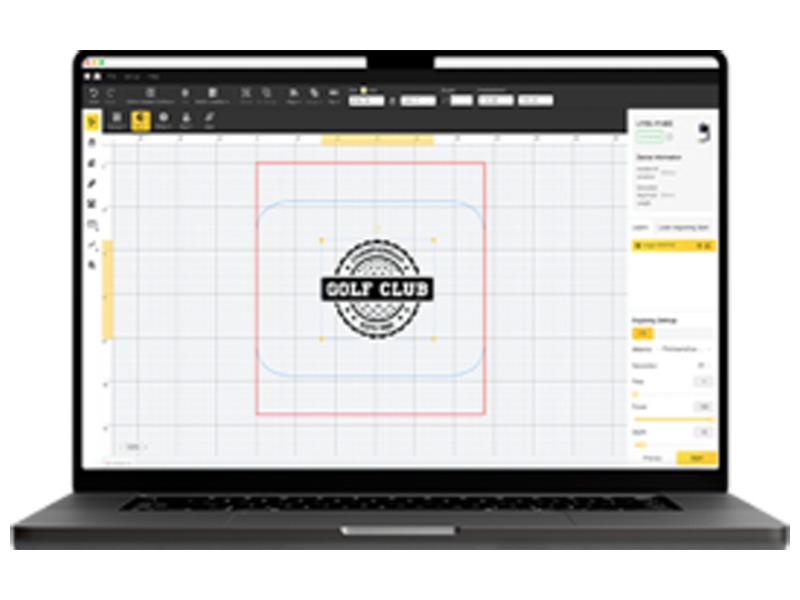
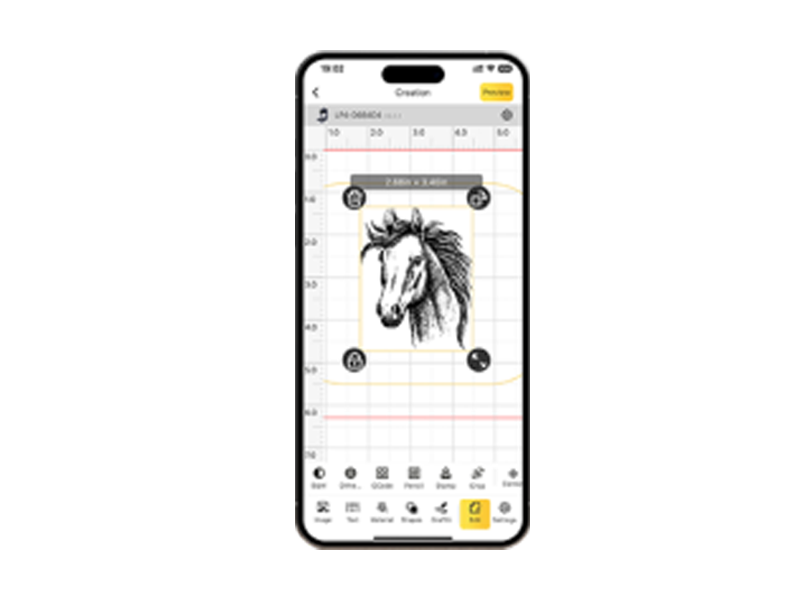
- Logiciel compatible avec la machine de découpe (comme LightBurn ou LaserPecker Design Space)
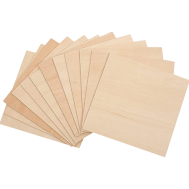
- Le type de bois adapté (tilleul, contreplaqué de bouleau ou bois dur, selon votre projet)
- Un plateau en nid d’abeille ou une surface à utiliser comme support de découpe
- Une assistance pneumatique pour garder les bords propres
- Des outils pour mesurer la largeur des rainures
- Des pinces ou des cales pour maintenir les éléments en place, si nécessaire
Situation 1 : Rainures traversantes dans du bois
Étape 1 : Préparez votre bois
Assurez-vous que le bois est plat et stable. Mesurez ensuite la largeur et la longueur souhaitées pour la rainure. Une bonne préparation évite les erreurs.
Étape 2 : Concevez votre rainure dans un logiciel
Utilisez un logiciel pour dessiner une ligne vectorielle ou un rectangle correspondant à votre rainure. Modifiez les réglages de saignée pour les adapter aux dimensions de votre projet.
Étape 3 : Préparez votre LX2
Placez le bois sur le plateau en nid d’abeille. Activez l’assistance pneumatique et assurez-vous que le LX2 est bien focalisé. Une mise au point correcte réduit les marques de brûlure et garantit la précision.
Étape 4 : Choisissez vos réglages de découpe
Choisissez la puissance, la vitesse et le nombre de passes en fonction de l’épaisseur du bois. Le LX2 peut découper du tilleul jusqu’à 20 mm d’épaisseur en quelques passes.
Étape 5 : Effectuez une petite découpe test
Les tests évitent de gaspiller du matériau. Modifiez la puissance ou la vitesse jusqu’à ce que les bords soient nets.
Étape 6 : Découpez la rainure
Laissez le LX2 terminer la rainure. Surveillez-le, mais ne touchez pas au bois.
Étape 7 : Examinez la rainure terminée
La découpe devrait se détacher facilement, avec des bords lisses ne nécessitant pas de ponçage.
Situation 2 : Découper une rainure de 1/4 de pouce dans du bois
Étape 1 : Dessinez une rainure de 1/4 de pouce dans votre logiciel de conception
Assurez-vous que la largeur du rectangle est exactement de 0,25 pouce et ajustez le décalage de saignée si nécessaire.
Étape 2 : Sélectionnez les réglages de découpe optimaux.
Les bois durs plus épais peuvent nécessiter des vitesses de découpe plus lentes. Les utilisateurs du LX2 découpent souvent des rainures de 1/4 de pouce en 2 à 6 passes, selon la densité du matériau.
Étape 3 : Effectuez la découpe et vérifiez la largeur.
Utilisez un pied à coulisse pour confirmer que la rainure mesure exactement 1/4 de pouce. Si ce n’est pas le cas, ajustez les réglages de saignée et recommencez la découpe pour obtenir un ajustement parfait.
Partie 4 : Conseils pour découper une rainure dans du bois avec un laser
Obtenir des rainures nettes et précises avec la découpe laser ne dépend pas uniquement de la machine : la technique et les réglages jouent également un rôle. Voici quelques conseils pratiques pour obtenir des résultats réguliers et de haute qualité :
1. Effectuez des tests de saignée avant la découpe finale
Testez toujours votre saignée (la matière retirée par le laser) avant de commencer la découpe finale. Même de petites différences peuvent affecter l’ajustement des pièces, notamment pour les assemblages ou les rainures étroites.
2. Utilisez l’assistance pneumatique pour des découpes plus nettes
L’assistance pneumatique joue un rôle essentiel dans l’amélioration de la qualité de découpe. Elle réduit les marques de brûlure, évite un assombrissement excessif et empêche la résine ou les débris de s’accumuler sur la surface et la lentille.
3. Réduisez la vitesse pour les matériaux plus épais
Lorsque vous découpez du bois plus épais ou des rainures plus profondes, réduisez la vitesse de découpe et augmentez le nombre de passes si nécessaire. Cela garantit une pénétration complète sans carbonisation excessive.
4. Gérez l’accumulation de chaleur
Évitez de faire trop de découpes rapprochées en une seule fois. Espacer les découpes permet au matériau de refroidir, ce qui réduit les marques de brûlure et évite les déformations.
5. Fixez les matériaux légers
Le contreplaqué fin ou les panneaux légers peuvent bouger pendant la découpe. Utilisez des serre-joints, des aimants ou des cales de positionnement pour maintenir le matériau stable et préserver la précision.
6. Tenez compte du sens du fil du bois
Le fil du bois peut influencer la régularité de vos bords. Une découpe dans le sens du fil produit généralement des bords plus nets, tandis qu’une découpe perpendiculaire au fil peut nécessiter de légers ajustements des réglages.
Partie 5 : FAQ sur la découpe d’une rainure dans le bois
Q1. Quel outil convient le mieux pour découper des rainures dans le bois ?
Le meilleur outil dépend du niveau de précision dont vous avez besoin. Pour la plupart des travaux de menuiserie, une défonceuse offre un bon équilibre entre rapidité, contrôle et polyvalence.
Cependant, si vous avez besoin d’une précision ou d’une répétabilité extrêmement élevées, notamment pour une production en série, la découpe laser est la solution privilégiée en 2026. Les découpeuses laser produisent des bords nets, des résultats constants et nécessitent un post-traitement minimal, ce qui les rend adaptées aux débutants comme aux professionnels.
Q2. Comment réaliser une rainure profonde dans le bois ?
Pour créer une rainure profonde, on utilise généralement des outils tels qu’une perceuse à colonne associée à un ciseau à bois, ou une défonceuse plongeante. Ces outils offrent un meilleur contrôle de la profondeur et une meilleure stabilité.
Pour les bois plus épais ou plus durs, il est préférable d’effectuer plusieurs passes peu profondes plutôt que de tout découper en une seule fois. Cela améliore la qualité des bords et réduit la sollicitation des outils.
Les découpeuses laser peuvent également être utilisées pour réaliser des rainures plus profondes en effectuant plusieurs passes, notamment pour les applications non structurelles ou décoratives.
Q3. Comment découper une rainure dans le bois sans défonceuse ?
Si vous n’avez pas accès à une défonceuse, vous pouvez tout de même utiliser une scie à main et un ciseau à bois, une perceuse à colonne ou une découpeuse laser.
Les outils manuels conviennent aux projets simples ou rustiques, tandis qu’une perceuse à colonne améliore la régularité de la profondeur. Les découpeuses laser, quant à elles, offrent des résultats très précis et nets, en particulier pour les bois plus fins et les conceptions détaillées.
Q4. Peut-on utiliser une découpeuse laser pour découper des rainures dans le bois ?
Oui, les découpeuses laser sont très efficaces pour découper des rainures dans le bois. Elles excellent dans la réalisation de détails fins, de tolérances serrées et de formes complexes difficiles à obtenir avec des outils traditionnels.
Par exemple, des machines comme la LaserPecker LX2 peuvent découper du tilleul jusqu’à environ 20 mm d’épaisseur en plusieurs passes, en offrant des résultats constants et reproductibles, idéaux pour le prototypage comme pour la production.
Q5. Quelle est la méthode la plus précise pour découper une rainure dans le bois ?
La méthode la plus précise est la découpe laser, car elle suit une conception numérique et garantit des dimensions constantes pour chaque coupe. Le fraisage CNC est également très précis, mais la découpe laser offre généralement des bords plus nets, nécessitant moins de finition.
Q6. Comment garantir un ajustement serré lors de la découpe de rainures dans le bois ?
Pour obtenir un ajustement serré, vous devez tenir compte du trait de coupe (la matière retirée pendant la découpe). Réaliser des coupes d’essai et ajuster légèrement les dimensions de votre conception peut contribuer à garantir des assemblages précis, en particulier pour les pièces emboîtables.