






























L'acrylique (PMMA) est un matériau thermoplastique largement utilisé dans la signalétique industrielle, les systèmes d'affichage, la fabrication et les applications DIY. Il offre une grande transparence, une bonne résistance aux chocs et une facilité d'usinage, ce qui en fait un substitut courant au verre.
Ce guide présente quatre méthodes éprouvées pour couper l'acrylique — allant des découpeuses laser aux outils mécaniques tels que les outils rotatifs, les scies et les couteaux à rainurer — afin de vous permettre de choisir la technique la plus adaptée à vos besoins techniques et de production.

Dans cet article :
- Méthode 1 : Couper l'acrylique avec une découpeuse laser
- Méthode 2 : Couper l'acrylique avec un outil rotatif
- Méthode 3 : Couper l'acrylique avec une scie
- Méthode 4 : Couper l'acrylique avec un couteau à rainurer
Méthode 1 : Couper l'acrylique avec une découpeuse laser
La découpe de plaques d'acrylique au laser consiste à utiliser une découpeuse laser pour diriger un faisceau concentré sur la surface du matériau. L'énergie thermique contrôlée fait fondre et vaporise l'acrylique le long d'un trajet vectoriel programmé, produisant des coupes propres et précises.
La découpe laser de l'acrylique est largement utilisée dans :
- La signalétique industrielle
- Les ateliers de fabrication
- La fabrication de présentoirs
- Le prototypage de précision
En tant que procédé sans contact, la découpe laser élimine les contraintes mécaniques et réduit considérablement le risque de microfissures, en particulier dans les plaques d'acrylique fragiles ou fines.
Applications adaptées :
- Motifs complexes et détaillés
- Projets nécessitant des bords lisses et polis directement à la sortie de la machine
- Découpe et gravure dans un même processus
Niveau de précision de la découpe de l'acrylique avec une découpeuse laser
Très élevé :
Les systèmes laser offrent :
- Des angles internes nets
- La capacité de tracer des lignes très fines
- Une grande régularité de répétition
- Un contrôle de niveau CNC
Qualité de finition des bords lors de la découpe de l'acrylique avec une découpeuse laser
Élevée :
La découpe laser produit un bord poli à la flamme, particulièrement sur l'acrylique coulé.
Plage d'épaisseur optimale
Généralement idéale pour les plaques fines à moyennes : 1.5 mm – 12 mm (1/16″ – 1/2″)
Peut couper de l'acrylique plus épais avec des lasers plus puissants, mais plus lentement et peut nécessiter plusieurs passes.
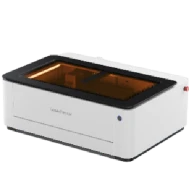
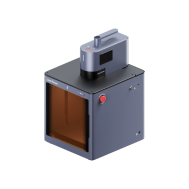
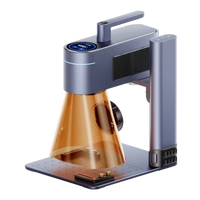
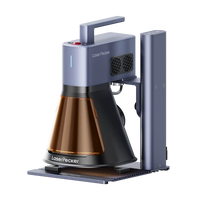
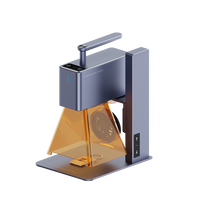
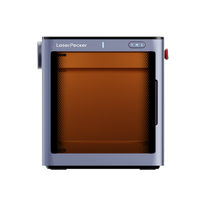
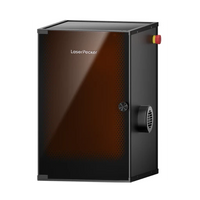
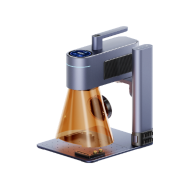
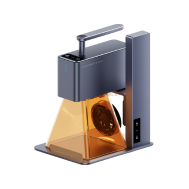
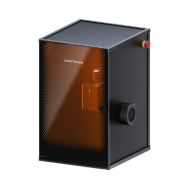
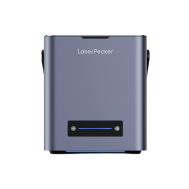
Par exemple, une découpeuse laser de 10W telle que la LP2 Plus peut couper des plaques d'acrylique jusqu'à 6mm d'épaisseur en une seule passe dans des conditions optimales. Un système de 60W tel que la LX2 peut couper des plaques d'acrylique jusqu'à 20mm d'épaisseur en une seule passe, ce qui la rend plus adaptée aux travaux de fabrication exigeants ou aux applications sur matériaux plus épais.
Avantages et inconvénients de la découpe de l'acrylique avec une machine laser
Avantages
- Précision et répétabilité exceptionnelles
- Bords propres et polis
- Permet de découper des formes complexes et des détails fins
- Peut couper et graver dans une seule configuration
Inconvénients
- Profondeur de coupe limitée sur les machines de faible puissance
- Produit des fumées — nécessite une ventilation appropriée
- Non idéal pour les plaques très grandes sans plateau de grande dimension
Méthode 2 : Couper l'acrylique avec un outil rotatif
Un outil rotatif est un appareil mécanique portatif qui travaille l'acrylique à l'aide d'accessoires interchangeables de coupe et de meulage. Il est couramment utilisé pour la fabrication à petite échelle, les opérations de découpe de précision et les tâches de mise en forme détaillées.
Comparée aux systèmes de découpe laser, la découpe avec un outil rotatif repose entièrement sur un contrôle manuel et un contact mécanique direct avec le matériau.
Idéal pour :
- Petites pièces en acrylique et coupes détaillées
- Façonner les bords ou créer des motifs décoratifs
- Ajuster ou modifier des pièces en acrylique déjà découpées
Niveau de précision de la découpe de l'acrylique avec un outil rotatif
Moyen à élevé :
Offre un bon contrôle pour les petites coupes et les courbes, mais nécessite une main stable pour maintenir des lignes parfaitement droites.
Qualité de finition des bords lors de la découpe de l'acrylique avec un outil rotatif
Moyenne
Les bords peuvent apparaître rugueux ou fondus si la vitesse et la pression ne sont pas correctement contrôlées ; un ponçage ou un polissage à la flamme peut être nécessaire par la suite pour obtenir une finition lisse.
Plage d'épaisseur optimale
Plaques fines à moyennes : 1.5 mm – 6 mm (1/16″ – 1/4″)
Non idéal pour couper de l'acrylique épais en une seule passe
Avantages et inconvénients de la découpe de l'acrylique avec un outil rotatif
Avantages
- Très polyvalent — peut couper, meuler, poncer et polir
- Idéal pour les courbes, les découpes internes et les formes complexes
Inconvénients
- L'accumulation de chaleur peut faire fondre l'acrylique si la vitesse est trop élevée
- Nécessite une main stable et un peu de pratique pour obtenir des résultats propres
- Les bords nécessitent souvent un post-traitement
Quand choisir un outil rotatif
Un outil rotatif est idéal pour les amateurs et les petits projets DIY où la flexibilité est plus importante que la vitesse de production. Pour la découpe de grandes plaques d'acrylique ou pour des résultats très précis, des méthodes automatisées comme la découpe laser peuvent offrir des résultats plus constants.
Méthode 3 : Couper l'acrylique avec une scie
La découpe à la scie est une méthode mécanique couramment utilisée dans les ateliers de fabrication pour travailler les plaques d'acrylique sur différentes plages d'épaisseur.
Idéal pour :
- Coupes droites sur de grandes plaques d'acrylique
- Mise en forme grossière avant une finition de précision
- Utilisation aussi bien en DIY que dans les ateliers professionnels
Niveau de précision de la découpe de l'acrylique avec une scie
Moyen à élevé :
Une grande précision est possible avec des guides et des gabarits appropriés, mais cette méthode est moins adaptée aux formes extrêmement fines et complexes.
Qualité de finition des bords lors de la découpe de l'acrylique avec une scie
Moyenne :
Les bords peuvent présenter des marques de scie et nécessiter un ponçage ou un polissage ; il existe un risque d'écaillage ou de fusion si la vitesse de lame n'est pas adaptée.
Plage d'épaisseur optimale
Convient bien aux plaques fines à épaisses : 2 mm – 25 mm (1/16″ – 1″)
Les plaques très fines peuvent se fissurer si elles ne sont pas correctement soutenues
Avantages et inconvénients de la découpe de l'acrylique avec une scie
Avantages
- Permet de couper rapidement de grandes pièces
- Traite facilement les plaques d'acrylique plus épaisses
Inconvénients
- Les bords nécessitent généralement un post-traitement
- Non idéal pour les motifs très complexes
- Bruyant et génère de la poussière/des débris
La découpe à la scie est adaptée à la préparation de panneaux en grande quantité et aux matériaux plus épais. Pour des bords polis, des tolérances serrées ou des géométries complexes, des méthodes de découpe thermique automatisées peuvent offrir une meilleure régularité.
Méthode 4 : Couper l'acrylique avec un couteau à rainurer
Un couteau à rainurer, parfois appelé coupe-acrylique, est un outil simple et économique conçu pour couper des plaques d'acrylique fines. Il fonctionne en créant une ligne de rainure répétée à la surface, ce qui permet de casser proprement le matériau le long de cette ligne.
Cette technique est silencieuse, propre et nécessite peu de préparation, ce qui en fait une option pratique pour des coupes droites simples dans des projets de petite taille.
Idéal pour :
- Plaques et panneaux d'acrylique fins
- Coupes droites rapides sans outils électriques
Niveau de précision de la découpe de l'acrylique avec un couteau à rainurer
Moyen :
Fonctionne bien pour les lignes droites mais pas pour les courbes ou les formes complexes. La précision dépend de l'utilisation d'une règle ou d'un guide.
Qualité de finition des bords lors de la découpe de l'acrylique avec un couteau à rainurer
Moyenne à faible :
Le bord cassé peut être légèrement rugueux et nécessite souvent un ponçage ou un polissage pour obtenir une finition lisse.
Plage d'épaisseur optimale
Idéal pour les plaques fines : jusqu'à environ 3–5 mm (1/8″–3/16″)
Peu efficace sur l'acrylique épais
Avantages et inconvénients de la découpe de l'acrylique avec un couteau à rainurer
Avantages
- Économique et portable
- Idéal pour les débutants et les petits travaux
Inconvénients
- Limité à l'acrylique fin
- Fonctionne uniquement pour les coupes droites
- Non adapté aux designs complexes ou aux courbes
FAQ : Découpe de l'acrylique
Q1 : Quelle est la méthode la plus précise pour couper des plaques d'acrylique ?
Pour une haute précision dimensionnelle et des bords propres, la découpe laser est généralement considérée comme la méthode la plus précise. Elle permet de réaliser des géométries complexes, des tolérances serrées et une production répétable par rapport aux techniques manuelles ou à la scie.
Q2 : L'acrylique peut-il être découpé au laser dans de petits ateliers en Europe ?
Oui, l'acrylique peut être travaillé dans de petits studios ou ateliers à l'aide de systèmes laser de bureau fermés avec une ventilation ou une filtration appropriée. Un flux d'air suffisant et une extraction des fumées sont essentiels pour respecter les bonnes pratiques en matière de qualité de l'air intérieur et de sécurité.
Q3 : Quelle épaisseur d'acrylique peut être découpée au laser ?
L'épaisseur maximale dépend de la puissance du laser et de la configuration du système. Les machines de bureau à faible puissance sont généralement adaptées aux plaques plus fines, tandis que les machines plus puissantes peuvent traiter de l'acrylique beaucoup plus épais dans des conditions contrôlées.
Q4 : La découpe laser de l'acrylique produit-elle des bords polis ?
La découpe laser de l'acrylique coulé produit souvent des bords lisses et polis à la flamme grâce à la chaleur contrôlée du faisceau. Cela peut réduire le besoin de post-traitement par rapport aux méthodes de coupe mécaniques.
Q5 : L'acrylique coulé ou extrudé est-il meilleur pour la découpe laser ?
L'acrylique coulé est généralement préféré pour la découpe et la gravure au laser, car il produit des bords plus nets et un meilleur contraste de gravure. L'acrylique extrudé peut également être découpé, mais la finition des bords et l'apparence de la gravure peuvent varier.
Q6 : Qu'est-ce qui provoque la fusion ou un marquage excessif des bords lors de la découpe laser ?
Une fusion excessive peut se produire lorsque les paramètres de puissance sont trop élevés ou lorsque la vitesse de coupe est trop lente. Un réglage correct de la puissance, de la vitesse et de l'assistance d'air est essentiel pour maintenir des bords propres et une bonne précision dimensionnelle.
Q7 : Quand la découpe laser est-elle plus adaptée que la découpe mécanique ?
La découpe laser est particulièrement adaptée aux designs détaillés, aux découpes internes, à la production en série et aux applications nécessitant une qualité de bord constante. Les outils mécaniques peuvent rester appropriés pour des coupes droites simples dans des plaques structurelles plus épaisses.
Conclusion :
Que vous recherchiez la finition propre et polie d'une découpe laser ou la simplicité d'un couteau à rainurer pour des coupes droites, il existe une méthode adaptée à chaque application sur l'acrylique. Chaque technique offre des avantages différents en termes de précision, de qualité de surface et de compatibilité avec le matériau.
Avec une bonne compréhension de ces méthodes, vous pouvez choisir en toute confiance l'approche la plus adaptée à votre projet et obtenir des résultats constants et de haute qualité. Choisir la bonne technique de découpe est essentiel pour garantir à la fois efficacité et résultats professionnels.