








































Custom rubber stamps are widely used across offices, logistics, schools, craft businesses, and product branding throughout Europe. Whether for packaging logos, custom seals, or address stamps, demand for accurate and efficient stamp production continues to increase, especially among small businesses and independent makers.
Selecting the right rubber stamp making machine is about more than print quality alone. Factors such as engraving precision, production speed, material versatility, and workflow efficiency all influence long-term performance.
This guide explains how rubber stamp making machines work, compares the main production methods, and helps you choose the best machine for your budget and application needs.

In this article:
- Part 1: What Is a Rubber Stamp Making Machine
- Part 2: 4 Types of Rubber Stamp Making Machines
- Type 1: Photopolymer Stamp Making Machines
- Type 2: Manual Rubber Carving Tools
- Type 3: CNC Engraving Machines
- Type 4: Laser Engraving and Cutting Machines
- Part 3: Why Laser Engravers Are the Best Choice for Stamp Making
- FAQs: Frequently Asked Questions About Rubber Stamp Making Machines
Part 1: What Is a Rubber Stamp Making Machine?
A rubber stamp making machine is designed to create customised stamps by engraving or forming designs onto rubber or polymer materials. These machines use either digital artwork or manually prepared designs to transfer text, logos, or patterns onto the stamp surface for repeated ink printing.
Depending on the production method, the process may involve UV exposure for photopolymer stamps, manual rubber carving, CNC engraving, or laser engraving technology. Across the EU market, laser engraving machines are increasingly preferred for their precision, production efficiency, and flexibility when producing custom business stamps, packaging marks, and creative craft designs.
The purpose of every stamp making machine is to create accurate, durable, and repeatable stamp impressions with reliable quality.

What Makes a Good Rubber Stamp?
A well-made rubber stamp should provide clean impressions and stable performance over long-term use. Key factors include:
- Precision: Small details and fine characters should appear clear and well defined.
- Depth Control: Proper engraving depth improves ink transfer and reduces smudging.
- Durability: The stamp should maintain its shape and detail after frequent use.
- Consistency: Each print should remain uniform across repeated impressions.
- Material Compatibility: The machine should support different rubber or polymer materials depending on the application.
Without these qualities, users may experience unclear prints, uneven ink distribution, or faster material wear, which can affect both appearance and usability.
Part 2: 4 Types of Rubber Stamp Making Machines
Several types of machines are used for rubber stamp manufacturing, each designed for different production requirements, engraving styles, and levels of automation. From manual carving techniques to fully digital laser systems, every method offers different advantages in terms of precision, production efficiency, and material flexibility.
Below are four widely used rubber stamp making methods and how they are commonly applied across professional workshops, creative businesses, and industrial environments in Europe.
Type 1: Photopolymer Stamp Making Machines for Rubber Stamps
Photopolymer stamp making machines use UV exposure to harden liquid photopolymer resin into a solid stamp surface. A negative film is placed over the resin so that exposed sections cure while unexposed areas remain soft and are washed away during processing.
This process is capable of producing detailed stamp surfaces and is often used for small to medium-volume stamp production.
Pros
- Efficient for Batch Production: Suitable for repeated small and medium production runs.
- Lower Equipment Investment: More affordable than advanced automated systems.
- Good Surface Detail: Produces relatively clean and accurate stamp impressions.
Cons
- Multi-Stage Workflow: Requires exposure, washing, drying, and curing.
- Resin Handling Required: Liquid materials can create additional cleanup work.
- Limited Material Support: Mainly compatible with photopolymer materials.
- Reduced Long-Term Durability: Stamps may wear faster than laser-engraved alternatives.
Type 2: Manual Rubber Carving Tools for Rubber Stamps
Manual rubber carving uses hand tools to carve designs directly into rubber sheets. The artwork is first transferred or sketched onto the material before excess rubber is removed manually.
This approach is often chosen for artistic projects, handmade crafts, and customised one-off stamp production.
Pros
- Low Startup Cost: Requires only simple hand tools.
- Suitable for Creative Projects: Allows more artistic and handcrafted results.
- Simple Workflow: No software or machine setup required.
Cons
- Limited Precision: Fine details and small characters are difficult to reproduce accurately.
- Labour Intensive: Carving manually requires considerable time and effort.
- Low Production Consistency: Difficult to reproduce identical stamps repeatedly.
- Experience Dependent: Final results vary according to user skill level.
Type 3: CNC Engraving Machines for Rubber Stamps
CNC engraving machines use computer-controlled rotary cutters to engrave rubber and similar materials. Digital toolpaths guide the cutting process, allowing the machine to create consistent engraving depth and repeatable shapes.
These systems are commonly used in professional production environments where controlled machining and repeatability are priorities.
Pros
- Reliable Precision: Produces consistent engraving quality.
- Adjustable Depth Control: Improves stamp performance and ink transfer.
- Suitable for Professional Workshops: Useful for medium-scale manufacturing.
Cons
- Less Effective for Intricate Designs: Very fine details may be difficult to achieve.
- Slower Production Workflow: Detailed engraving can require longer machining times.
- Ongoing Tool Maintenance: Cutting tools require replacement over time.
- Higher Equipment Costs: Machines require greater investment and setup space.
Type 4: Laser Engravers for Rubber Stamps
Laser engraving machines use a focused laser beam to vaporise rubber material and create detailed stamp patterns. The laser removes selected material areas while leaving raised surfaces that form the final stamp design.
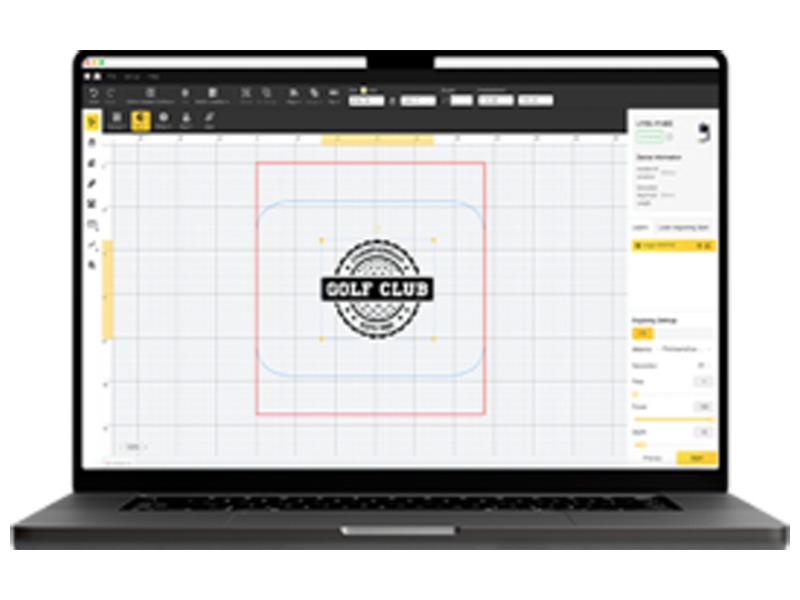
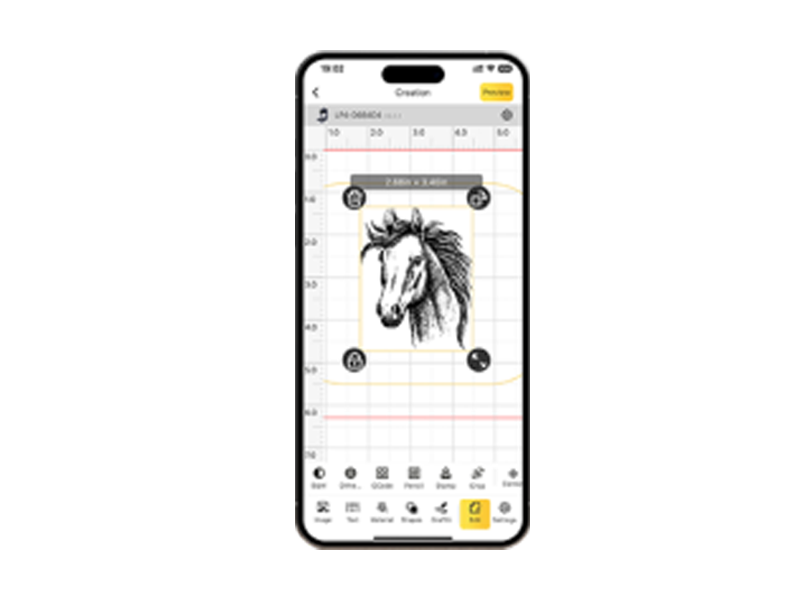
Because the entire process is digitally controlled, users can create, edit, and repeat designs directly from software with minimal setup time. This significantly improves workflow efficiency for both customised production and batch manufacturing.
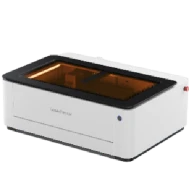
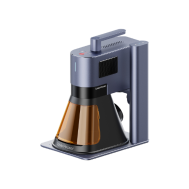
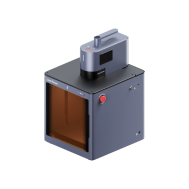
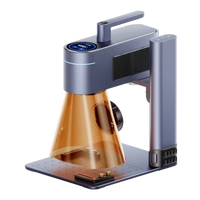
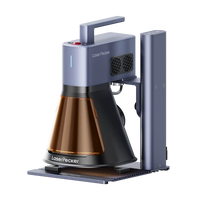
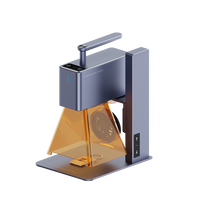
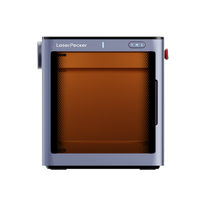
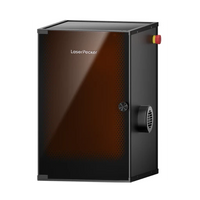
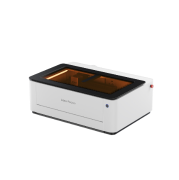
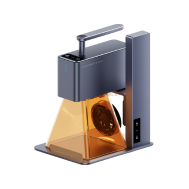
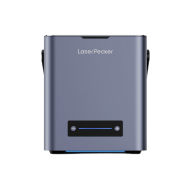
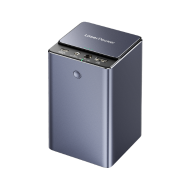
Across the EU market, laser engravers such as the LP4, LP5, and LX2 are increasingly popular among makers and small businesses due to their precision, production flexibility, and compact design. Enclosed systems with Class 1 Laser Safety are particularly valued for safer indoor operation. When paired with the LaserPecker Desktop Smoke Purifier, machines like the LX2 can also help reduce engraving fumes and odours during indoor use.
Pros
- High Precision Engraving: Ideal for logos, detailed graphics, QR codes, and fine text.
- Clean and Consistent Results: Produces reliable stamp quality across repeated jobs.
- Efficient Digital Workflow: Fast setup and streamlined production process.
- Easy File Management: Designs can be edited and reproduced quickly.
- Excellent for Business Production: Suitable for both custom orders and larger production batches.
- Reduced Manual Processing: Minimises labour compared to traditional methods.
Cons
- Higher Initial Investment: Equipment costs are higher than manual carving solutions.
Part 3: Why Laser Engravers Are the Best Choice for Stamp Making
| Method | Precision | Speed | Contact Process | Edge Quality | Complex Designs | Setup Cost |
|---|---|---|---|---|---|---|
| Photopolymer Stamp Making Machines | High | Medium | No (UV Exposure) | Clean | Good | Low to Medium |
| Manual Rubber Carving Tools | Low | Slow | Yes (Hand Tools) | Rough to Moderate | Limited | Low |
| CNC Engraving Machines | Medium | Slow to Medium | Yes (Tool Contact) | Moderate | Moderate | Medium to High |
| Laser Engraving and Cutting Machines | High | Fast | No (Non-Contact) | Very Clean | Excellent | Medium to High |
Among all rubber stamp manufacturing methods, laser engraving machines provide the strongest combination of precision, production efficiency, and workflow flexibility. They are widely adopted across the EU market for customised stamp production, business branding, packaging applications, and creative manufacturing where consistent output quality is essential.
Reason 1: High Precision for Detailed Engraving
Laser engraving systems are capable of producing fine characters, detailed logos, and complex elements such as QR codes with exceptional clarity. The laser beam is digitally controlled, allowing highly accurate engraving with sharp edges and minimal material distortion.
This makes laser engraving particularly effective for professional stamp applications requiring clean and detailed impressions.
Reason 2: Fast and Efficient Workflow
Once the design file is prepared, laser engraving requires very little setup time. The production process is fast and highly streamlined, making laser systems suitable for both customised single-piece orders and larger production batches.
Compared with manual carving and photopolymer processing, laser engraving improves operational efficiency while reducing production complexity.
Reason 3: Non-Contact Technology for Cleaner Results
Laser engraving is a non-contact process, meaning there is no physical cutting tool pressing against the material surface. This helps prevent tool wear, uneven pressure, and mechanical deformation during production.
The result is a cleaner engraved surface with stable quality and fewer physical defects compared to mechanical engraving methods.
Reason 4: Reliable Repeatability for Commercial Production
Laser engraving machines follow digital design files with extremely high consistency. Once engraving parameters are configured, the same stamp design can be reproduced repeatedly with identical results.
This level of repeatability is especially important for businesses producing branded stamps, logistics markings, packaging seals, and customised commercial designs.
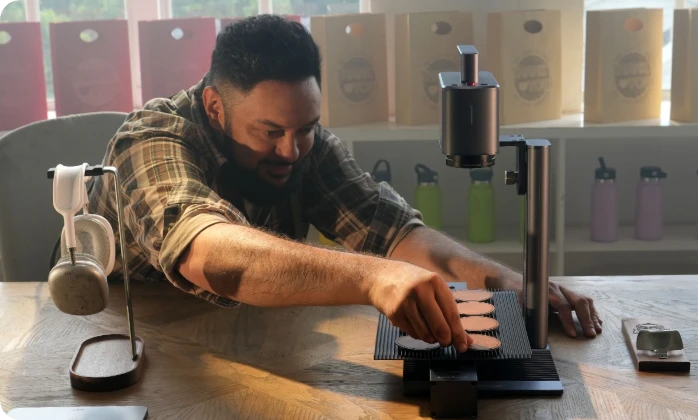
Recommended Laser Engraver for Rubber Stamps: LP2 Plus
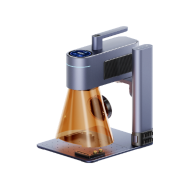
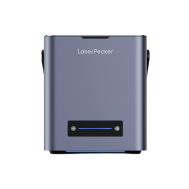
The LP2 Plus is a versatile solution for makers, workshops, and small businesses looking to create customised rubber stamps efficiently. It combines precision engraving, portability, and user-friendly operation, making it suitable for both entry-level users and professional creators.
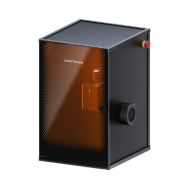
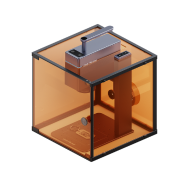
For safer indoor operation, the LP2 Plus can be combined with the LaserPecker Standard Enclosure to achieve Class 1 Laser Safety protection. When paired with the LaserPecker Desktop Smoke Purifier, the system can help filter fumes, particles, and engraving odours generated during operation, making it more suitable for indoor studios and workshop environments across the EU.
Overall, the LP2 Plus is a strong option for users launching a custom stamp business or producing personalised stamp products with professional-quality consistency.
-
High-Precision Engraving
Produces clean engraving results for fine text, logos, QR codes, and detailed graphics. -
Compact Workspace Footprint
The compact structure fits easily into small studios, workshops, and office environments. -
Adjustable Engraving Power
Power settings can be optimised for different rubber materials and engraving depths. -
User-Friendly Software Workflow
Simple software controls allow beginners to start engraving quickly and efficiently. -
Fast Production Speed
Supports efficient handling of customised orders and repeat production jobs. -
Portable Design
Lightweight construction allows flexible positioning and workspace mobility. -
Safer Indoor Engraving Setup
Using the LaserPecker Standard Enclosure together with the LaserPecker Desktop Smoke Purifier helps create a cleaner and safer indoor engraving environment.
FAQs: Frequently Asked Questions About Rubber Stamp Making Machines
Q1: Which machine is best for making custom rubber stamps?
For professional-quality custom stamp production, laser engraving machines are widely considered the best option. They offer precise engraving performance, efficient workflows, and excellent flexibility for producing personalised stamps, company logos, address stamps, and detailed text designs.
Q2: Why are laser engraving machines popular for stamp making?
Laser engraving systems are popular because they simplify the production process and eliminate the need for film exposure or chemical washing. Compared with photopolymer methods, laser systems provide faster setup, easier customisation, and more efficient repeat production.
Q3: Can laser engraving machines process rubber materials?
Yes, laser engraving machines are commonly used to engrave laser-safe rubber sheets for custom stamp production. The laser removes surface material to form raised stamp patterns with precise detail and consistent results.
Q4: How deep should a rubber stamp be engraved?
Rubber stamp engraving depth is typically between 0.8 mm and 1.5 mm, depending on the design complexity and intended ink transfer performance. Proper depth helps ensure clear stamping results and prevents excess ink spreading.
Q5: Are laser engraving machines suitable for small creative businesses?
Yes, many EU workshops, makerspaces, and independent product businesses use desktop laser engraving systems for custom rubber stamp production. They are especially suitable for personalised products, branding applications, and small-batch manufacturing workflows.
Q6: Is ventilation important when engraving rubber with a laser?
Yes, proper ventilation and smoke extraction are highly recommended during rubber engraving because the process can generate fumes and odours. Many indoor creative workspaces use air purification or smoke filtration systems to improve air quality and support safer operation.
Conclusion
Rubber stamp manufacturing has developed from traditional carving and photopolymer techniques into a more efficient digital production process powered by modern laser technology. Today, laser engraving machines provide an excellent balance of precision, workflow efficiency, and production flexibility for customised stamp manufacturing.
For EU workshops, creative studios, and independent businesses, laser systems make it easier to produce professional-quality logo stamps, office stamps, branding tools, and personalised products with consistent engraving accuracy. Their ability to support detailed customisation and efficient small-batch production makes them a future-ready solution for the growing personalised product market.