
















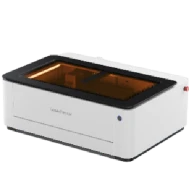
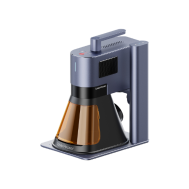
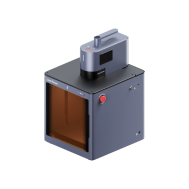
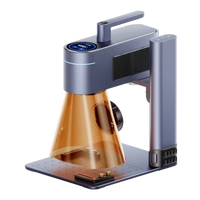

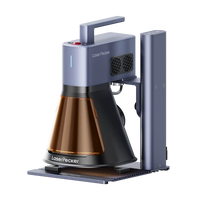
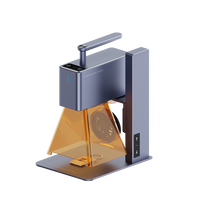


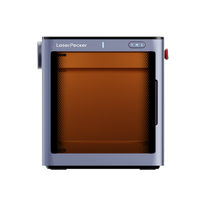
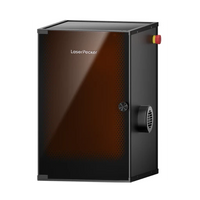





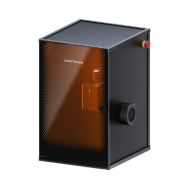


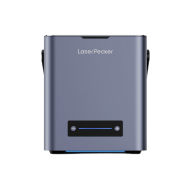
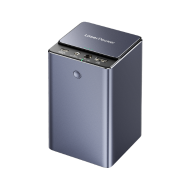












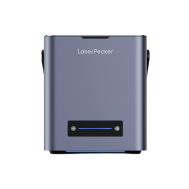


Laser engraving has become easier to access thanks to compact and portable machines like the LaserPecker LP2 series. Designed to be handheld and user-friendly, these engravers allow hobbyists, makers, and small businesses to personalise a wide range of materials without needing a large workshop.
In this article, we'll compare the LP2 Plus and LP2 side by side, looking at their key differences and shared features to help you decide which handheld laser engraver best suits your needs.

In this article:
- Part 1: Introduction to LaserPecker LP2 series
- Part 2: LP2 Plus vs. LP2 — Key Differences
- Part 3: LP2 Plus vs. LP2 — Key Similarities
- Part 4: Which One Should You Choose?
Part 1: Introduction to LaserPecker LP2 series
The LaserPecker LP2 Series is designed to make laser engraving more portable and easier to use. Both the LP2 and LP2 Plus are compact, handheld laser engravers that allow users to personalise a wide range of materials without the size and complexity of traditional desktop machines.
Within the series, the LaserPecker LP2 became the #1 crowdfunded tech product on Kickstarter in 2020, raising over $10 million globally and quickly becoming one of LaserPecker's flagship products.
The LP2 Plus is the latest upgraded version of the LP2, offering improvements in laser power, engraving speed, and overall performance
In the following sections, we'll compare the LP2 Plus and LP2 in detail to help you decide which handheld laser engraver is the right choice for your needs.
Part 2: LP2 Plus vs. LP2 — Key Differences
In this section, we will break down the seven key differences between the LP2 Plus and LP2, covering aspects such as laser power, engraving speed, resolution, focusing system, preview functions, safety features, and accessory support.
Understanding these differences will help you choose the model that best fits your engraving needs.
#1: 10W vs 5W Laser Power
One of the biggest differences between the LaserPecker LP2 Plus and LP2 is their laser power.
The LP2 Plus features a 10W 450 nm diode laser, while the LP2 is equipped with a 5W 450 nm diode laser. This means the LP2 Plus delivers twice the power of the LP2.
With higher power, the LP2 Plus can handle both engraving and light cutting. For example, it can cut materials such as up to 6 mm basswood or acrylic in a single pass, making it suitable for projects like wooden crafts, acrylic keychains, and small DIY products.
The LP2, on the other hand, is mainly designed for engraving and marking. Its 5W laser works well for materials such as wood, leather, paper, and coated metals, but it does not offer the same cutting capability.
Overall, the LP2 Plus is better suited for users who want both engraving and cutting capabilities, while the LP2 remains a solid option for portable engraving and everyday customisation projects.

#2: 4000 mm/s vs 600 mm/s Engraving Speed
Another key difference between the LaserPecker LP2 Plus and LP2 is engraving speed.
The LP2 Plus can reach engraving speeds of up to 4000 mm/s, while the LP2 supports speeds of up to 600 mm/s. In practical terms, the LP2 Plus is more than six times faster than the LP2.
This higher speed helps improve overall workflow efficiency. Larger designs and repeated engraving tasks can be completed much faster, which is especially useful for batch production or small business use.
The LP2's speed is still suitable for casual DIY projects and occasional personalisation, but the LP2 Plus offers a clear advantage for users who need faster production and higher productivity.

#3: 4K vs 2K Engraving Resolution
Another difference between the LaserPecker LP2 Plus and LP2 is engraving resolution.
The LP2 Plus supports engraving resolutions of up to 4K, while the LP2 offers up to 2K resolution. A higher resolution allows the machine to reproduce finer lines and more detailed patterns, resulting in sharper engraving results.
With 4K resolution, the LP2 Plus is better suited for detailed images, logos, and small text. The LP2's 2K resolution is still capable of handling general engraving tasks, such as names, simple graphics, and everyday personalisation projects.

#4: Smart Focusing
Another improvement in the LaserPecker LP2 Plus is its focusing system.
The LP2 uses manual focusing, which usually requires a ruler or measuring tool to set the correct distance between the laser head and the material. While this method works well, it takes a bit more time to adjust.
The LP2 Plus introduces a dual red-dot focusing system. When the two red dots overlap into a single point, the laser is correctly focused.

This makes focusing faster, easier, and more intuitive, especially for beginners or users who often switch between materials with different thicknesses.
#5: Advanced "Outline Preview"
Another improvement in the LaserPecker LP2 Plus is the Outline Preview feature.
This function allows the laser to trace the outer boundary of the design before engraving begins. By showing the exact size and position of the engraving area, users can easily check whether the design is correctly aligned on the material.
The LP2, in comparison, provides more basic preview modes that help with general positioning but do not display the full outline of the design.
With Outline Preview, the LP2 Plus makes positioning more accurate and reduces the chance of misalignment, especially when engraving detailed designs or working with limited space.
- Rectangle Preview
- Outline Preview
- Central Point Preview
These additional preview options give users more control and precision when positioning designs, making it easier to align patterns on irregular objects or specific areas. This improvement significantly enhances positioning accuracy and overall engraving confidence—especially useful for first-time users.
#6: Enhanced Safety Features
Safety is another area where the LaserPecker LP2 Plus introduces upgrades.
The LP2 includes standard safety features suitable for everyday engraving tasks. The LP2 Plus, however, adds several enhanced protections, including a security key, an emergency stop button, and a lid-open halt function that automatically pauses the machine if the protective cover is opened.
These additional features provide better control and added protection during operation, making the LP2 Plus a safer option for workshops, studios, or small business environments.
#7: Expanded Accessory Support
The LP2 Plus also offers broader accessory compatibility than the LP2, allowing users to handle a wider range of engraving projects.
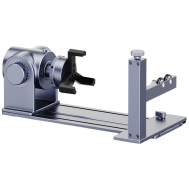
While the LP2 Plus supports all LP2 accessories, it is also compatible with the Rotary Extension and Slide Extension, which are shared with higher-end models like the LP4, LP5, and LX2.
The Rotary Extension allows engraving on cylindrical objects such as tumblers, rings, and bottles. The Slide Extension expands the working area to 6.30″ × 11.81″ (160 × 300 mm), making it possible to engrave larger designs or longer materials.

With these additional accessories, the LP2 Plus provides greater flexibility and scalability for users who want to explore more engraving applications.
Part 3: LP2 Plus vs. LP2 — Key Similarities
While the LaserPecker LP2 Plus introduces several performance upgrades, both the LP2 Plus and LP2 share the same core concept: portable and easy-to-use laser engraving.
As part of the LP2 series, both machines feature a compact handheld design that allows users to engrave on a wide range of materials without the need for a large or fixed workspace. They are built for makers, hobbyists, and small businesses who want a laser engraver that is simple to set up, flexible to use, and suitable for different creative projects.
Both models also support portable power, compatible accessories, and broad material compatibility, making them useful for everything from DIY crafts and personalised gifts to small business products.
In the following section, we'll highlight the key similarities between the LP2 Plus and LP2 to show what makes the LP2 series a popular choice for portable laser engraving.
#1 Power Bank Supported
Both the LP2 Plus and LP2 support power bank operation, allowing users to engrave without relying on a wall outlet. This makes the machines easy to use in different locations, such as outdoor projects, craft markets, events, or mobile workshops. With a compatible power bank, users can start engraving almost anywhere.
#2 Trolley & Rotary Modes
Both models are compatible with the Electric Roller accessory, which enables Trolley Mode and Rotary Mode.
Trolley Mode allows the machine to engrave while moving across a flat surface, making it possible to work on long or oversized materials that exceed the normal working area.
Rotary Mode allows engraving on cylindrical or curved objects, such as tumblers, bottles, rings, and other round items, expanding the types of projects users can create.
#3 Wide Material Compatibility
Both the LP2 Plus and LP2 support engraving on over 100 materials, including:
- Wood
- Leather
- Paper
- Acrylic
- Coated metals
- Plastics

This wide material compatibility makes the LP2 series suitable for a variety of applications, such as DIY projects, personalized gifts, small business products, and creative maker projects.
Part 4: Which One Should You Choose?
Both the LaserPecker LP2 Plus and LP2 are portable handheld laser engravers designed for flexible and creative use. They share many core features, including power bank support, compatibility with the Electric Roller accessory, and the ability to engrave on 100+ materials. This makes both machines suitable for DIY projects, personalised gifts, and small creative businesses.
The main difference comes down to performance and intended use.
If you mainly need a portable engraver for occasional projects, the LP2 is a simple and cost-effective option. It works well for common engraving tasks on materials such as wood, leather, paper, and coated metals, making it suitable for beginners and casual makers.
If you want more power and higher efficiency, the LP2 Plus is the better choice. With its 10W laser, faster engraving speed, higher resolution, and expanded accessory support, it is better suited for users who want to engrave more detailed designs, work faster, or try light cutting projects.