








































If you enjoy crafting, creating personalised items, or running a small creative business in Europe, you've likely encountered both laser cutters and Cricut machines. These tools make it possible to transform digital designs into real products — cutting, engraving, or shaping a wide range of materials with high precision.
While they may appear similar at first, the technologies behind them are quite different, and each is better suited to specific applications and materials.
In this guide, we'll compare laser cutters and Cricut machines in terms of power, material compatibility, speed, and design flexibility. Whether you're a hobbyist, a small business owner, or part of a professional workshop in the EU, this comparison will help you make an informed decision.

In this article:
Part 1: What Is a Cricut Machine?
Cricut machines are widely regarded as versatile crafting tools, making them popular among hobbyists, DIY enthusiasts, and small creative businesses across Europe. These machines use precision blades to cut materials, allowing users to transform digital designs into physical products with ease.
They are commonly used for projects such as custom stickers, paper crafts, vinyl decals, and fabric patterns. Across the EU, Cricut machines are valued for their accessibility and ease of use, making them a practical choice for beginners and small-scale creators.
How Does a Cricut Machine Work?
Cricut machines operate using a small, precise blade to cut materials like paper, vinyl, and textiles. The typical workflow includes:
- Selecting a design from Cricut's software or uploading a custom file
- Adjusting settings according to the material
- Allowing the machine to automatically cut the design
Many Cricut models also support additional features, such as:
- Scoring for foldable designs
- Drawing or writing with pens
- Foil embellishment for decorative effects
Cricut machines are best suited for thin materials. Achieving clean and accurate results depends on selecting the correct blade, pressure settings, and material combination.

Pros and Cons of Cricut Machines
Pros:
- Cost-effective and suitable for beginners across the EU
- Compact size, ideal for home or small studio use
- Compatible with paper, vinyl, fabric, and other lightweight materials
- Easy-to-learn software interface
Cons:
- Limited when working with thick or rigid materials
- Not capable of engraving metal or deep cutting
- Multi-layer or intricate designs can be time-consuming
- Not intended for industrial-scale production
Part 2: What Is a Laser Cutter?
Laser cutters are precision tools that use focused beams of light to cut or engrave materials. Unlike conventional cutting tools, laser cutters do not make direct contact with the surface, which allows for highly accurate and clean results.
Across Europe, laser cutters are commonly used in industries such as manufacturing, signage production, and jewellery design, as well as by DIY enthusiasts and small workshops. They are suitable for both professional applications and creative personal projects.
How Does a Laser Cutter Work?
Laser cutters function by focusing a high-energy light beam onto a material. This energy either melts, burns, or vaporises the material, enabling precise cutting or engraving.
Most modern laser cutters are computer-controlled, allowing users to import designs from CAD or vector software and execute them with consistent accuracy.
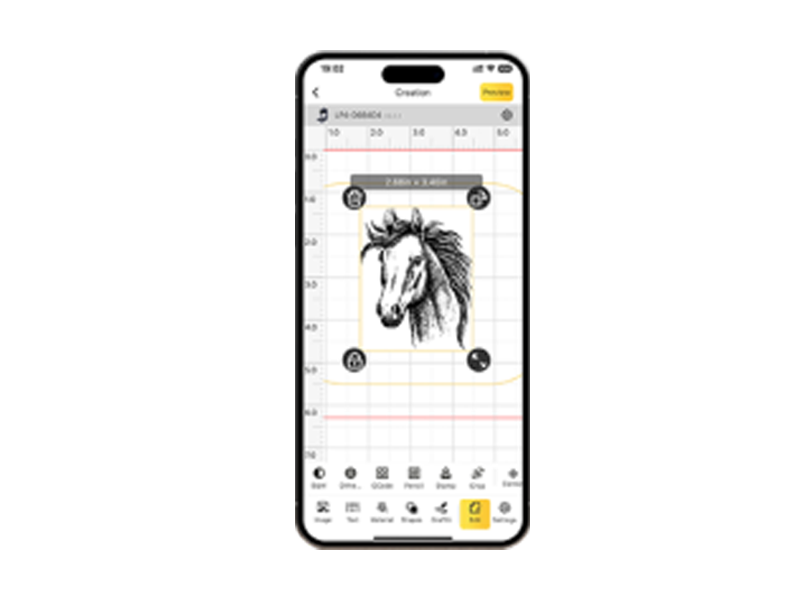
Some advanced, compact, and portable desktop laser cutters are designed to be user-friendly and accessible. Across the EU, many users prefer systems that can be operated via a smartphone app, simplifying the workflow and reducing the learning curve.
Depending on whether the machine uses fibre or diode laser technology, laser cutters can process a wide variety of materials, including:
- Wood
- Acrylic
- Leather
- Plastics
- Selected metals
Users can fine-tune parameters such as power, speed, and focus to achieve different engraving depths and surface effects.
In the EU, safety and compliance are key considerations. Machines with Class 1 Laser Safety are often preferred for enclosed operation, while additional accessories such as protective covers and air filtration systems help ensure safe indoor use.
Pros and Cons of Laser Cutters
Pros
- High precision, suitable for complex and detailed designs
- Compatible with a broad range of materials
- Produces clean and professional results
- Supports cutting, engraving, and marking in one device
Cons:
- More expensive than entry-level crafting machines like Cricut
- Requires some technical learning for new users
Part 3: Laser Cutter vs Cricut: 6 Key Differences Explained
When comparing laser cutters and Cricut machines across the EU, the key differences become clear when looking at performance, materials, and practical applications. While both tools support creative work, they serve very different purposes depending on project requirements.
Here is a structured comparison to help you make an informed decision.
1. Precision and Cutting Ability
Cricut machines provide reliable accuracy for basic shapes and lightweight materials. However, they may struggle with fine details or thicker substrates.
Laser cutters offer a much higher level of precision, enabling detailed engraving, sharp cutting edges, and consistent results — particularly important for professional or commercial applications in the EU.
2. Materials You Can Cut
Material compatibility is one of the most important distinctions.
Laser cutters can work with a broad range of materials, including:
- Wood
- Acrylic
- Leather
- Plastics
- Glass and ceramics
- Selected metals
Advanced fibre laser systems can even process thin metals such as brass, aluminium, stainless steel, and titanium, making them suitable for diverse applications across EU industries.
Cricut machines are limited to lighter materials, including:
- Paper and cardstock
- Vinyl and heat transfer films
- Textiles
- Thin wood and leather
They are not designed for cutting metals or thick materials.
3. Design Complexity
Cricut machines are ideal for simple designs, including text, decals, and basic layered projects.
Laser cutters, powered by digital design software, can handle complex geometries, detailed engravings, and precision-based designs — making them a better fit for advanced creative or commercial work in the EU.
4. Cutting and Engraving Speed
Laser cutters typically offer faster performance, especially when engraving or processing thin materials, due to their non-contact operation.
Cricut machines may require more time for intricate or multi-step designs.
5. Cost Comparison
Laser cutters generally involve a higher upfront cost, but for EU-based businesses or frequent users, they provide greater efficiency and long-term value.
Cricut machines are more affordable and suitable for hobbyists or occasional use.
6. Ease of Use
Cricut machines are easy to learn and operate, making them accessible for beginners.
Laser cutters require more familiarity with design software and material settings. However, newer models — including machines like the LP5 — feature improved software interface, making them more beginner-friendly across the EU.
7. Application and Use Cases
Laser cutters are widely used in professional and semi-industrial environments across Europe, including:
- Signage production
- Jewellery design
- Product prototyping
- Custom manufacturing
Cricut machines are better suited for:
- DIY crafts
- Educational projects
- Home décor
- Personalised items
Choosing between the two depends on your production needs, materials, and level of complexity.
In addition, laser cutters can also function as laser engravers, allowing for detailed customisation and expanded creative possibilities.
Part 4: Cricut vs Laser Cutter: Which One Should You Choose?
When deciding between a Cricut machine and a laser cutter in the EU, the right choice depends on your project requirements, materials, and production goals.
For lightweight and creative applications — such as paper crafts, vinyl designs, or simple personalised items — a Cricut machine is a cost-effective and user-friendly solution. It is widely used by hobbyists and DIY creators across Europe.
When to Choose a Laser Cutter
A laser cutter is more suitable for demanding applications that require precision, material flexibility, and efficiency.
Across the EU, laser cutters are commonly chosen by small businesses, workshops, and professionals who need consistent, high-quality results.
Choose a laser cutter if you:
- Work with materials like wood, acrylic, leather, or metal
- Require precise engraving or complex design execution
- Need faster production for repeated or commercial projects
- Plan to scale your creative work into a business
Recommended Option: the LP5
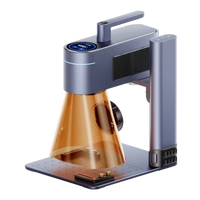
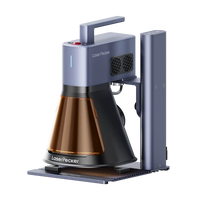
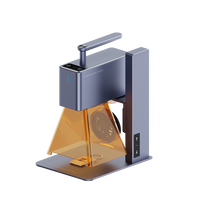
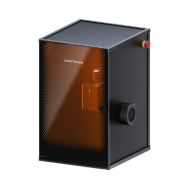
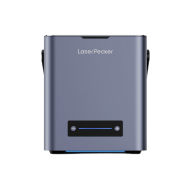
For users in the EU looking for a versatile solution, the LP5 offers a dual-laser system combining a 20W fibre laser (1064nm) and a 20W diode laser (450nm).
- The diode laser supports materials such as wood, plastics, leather, glass, and coated surfaces
- The fibre laser is ideal for metals including stainless steel, aluminium, brass, and titanium
This combination enables a wide range of applications across creative and commercial use cases.
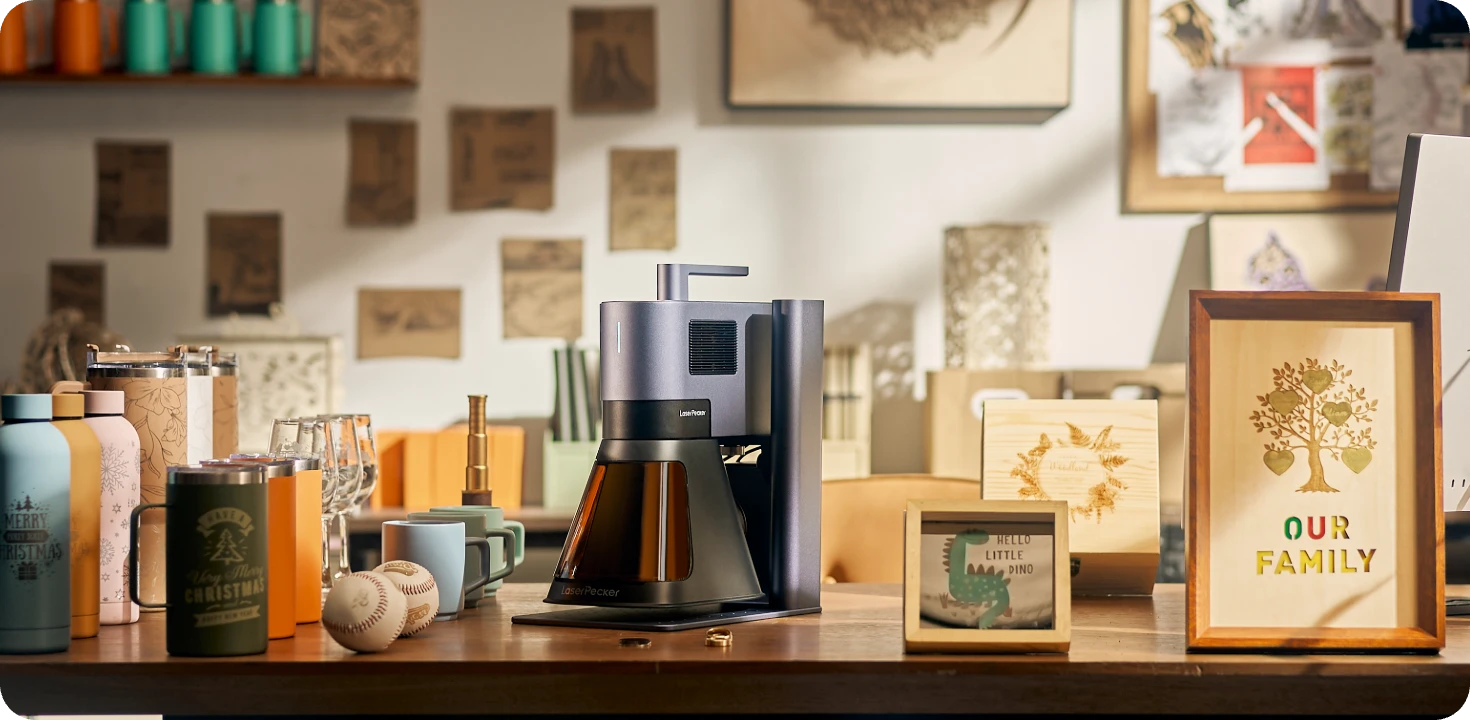
Performance and Features
The LP5 delivers strong performance for both hobby and professional use:
- Cuts up to 15 mm dark acrylic and 20 mm basswood
- Processes thin metal sheets (approximately 1 mm)
- High engraving speed of up to 10,000 mm/s
- Expandable working area (up to 160 × 300 mm)
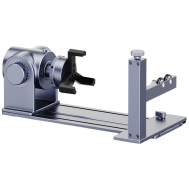
- Rotary accessory for cylindrical engraving
Software and Usability
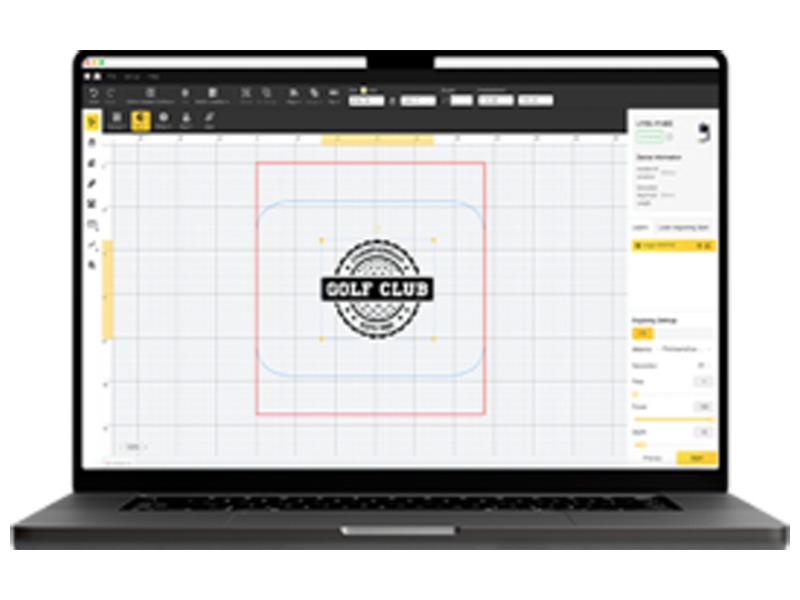
The LP5 is compatible with LightBurn and LaserPecker Design Space software, offering flexibility for both beginners and experienced users. It supports operation via computer or mobile devices.
With its compact footprint and advanced capabilities, the LP5 is well-suited for users across the EU, from hobbyists to small-scale production environments.
From a safety perspective, EU users often prioritise compliant systems and proper ventilation. Using enclosed designs or air filtration accessories can help ensure safe indoor operation.
Part 5: FAQs About Cricut vs Laser Cutter
Q1. Can a Cricut machine cut wood or metal?
Cricut machines are suitable for light materials such as thin wood sheets, cardboard, and faux leather. However, they are not designed to cut metal or thick, dense wood. Using them on unsuitable materials may damage the blade and reduce performance.
For cutting metal or thicker materials, a laser cutter is the more appropriate solution.
Q2. Which is better for beginners in the EU: a laser cutter or a Cricut machine?
Cricut machines are generally more beginner-friendly, with simple setup and easy-to-use software. They are ideal for DIY projects involving paper, vinyl, and textiles.
Laser cutters require more knowledge of materials and settings, but newer models such as the LP5 offer simplified software and pre-configured settings, making them increasingly accessible to beginners across the EU.
Q3. How long does a laser cutter typically last?
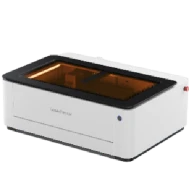
A well-maintained laser cutter can operate reliably for many years, even under frequent use. Diode-based machines such as the LX2 are built for long-term performance, offering stable engraving and cutting results.
The LX2 combines high-speed operation (up to 1000 mm/s and 10,000 mm/s² acceleration) with an optimised structural design, helping maintain efficiency while minimising mechanical stress. Its tool-free quick-swap laser modules also simplify maintenance and reduce handling wear over time.
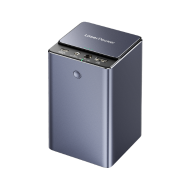
To extend lifespan, users should clean optical components regularly, maintain proper alignment, and follow recommended usage guidelines. Across the EU, many users pair the LX2 with a smoke purifier or air purifier to reduce fumes and residue, which helps protect internal components and improve long-term durability in indoor workspaces.
With appropriate maintenance, a compact laser cutter like the LX2 can provide consistent performance for hobbyists and small workshops alike.
Q4. Is a laser cutter a good investment for EU-based businesses?
Yes, for many EU-based businesses, a laser cutter offers strong value. It enables faster production, supports a wider range of materials, and allows for high levels of customisation.
This makes it particularly useful for industries such as signage, product design, and personalised goods.
Q5. What can a laser cutter do that a Cricut machine cannot?
Laser cutters provide capabilities that go beyond Cricut machines, including:
- Engraving on metal and glass
- Cutting thicker materials
- Producing highly detailed and precise designs
- Supporting both industrial and creative applications
These features make laser cutters more suitable for advanced or commercial use cases.
Q6. Should I choose a laser cutter or Cricut for long-term use?
For long-term use, a laser cutter is often the better choice due to its versatility, durability, and scalability.
Cricut machines are ideal for entry-level crafting, but users who plan to expand into more complex or higher-volume projects in the EU may benefit more from investing in a laser cutter.
Conclusion
Laser cutters and Cricut machines both play important roles in creative production, but they are suited to different types of projects. Cricut machines are cost-effective, easy to use, and well-suited for lightweight applications such as paper crafts, vinyl designs, and basic customisation.
Laser cutters are designed for more demanding tasks. For users across the EU — especially those involved in small businesses or professional workshops — they offer higher precision, broader material compatibility, and greater scalability.
Solutions like the LP5 combine versatility with performance, enabling users to work with multiple materials and achieve consistent, high-quality results. This makes them a strong choice for both creative and commercial applications.