


Cork board is widely used across Europe for crafts, interior decoration, sound insulation, and custom DIY projects. Whether you're cutting lightweight cork sheets for creative applications or shaping thicker cork panels for practical installations, choosing the right cutting tool is essential for achieving clean and accurate results.
Several types of machines and hand tools can be used to cut cork board, including laser cutters, craft knives, Cricut machines, and rotary cutters. However, their performance varies depending on material thickness, cutting precision, and project requirements.
In this guide, we'll examine the most common cork-cutting methods, compare their strengths and limitations, and help you identify the best option for your needs. If you value precision, efficiency, and design flexibility, laser cutting is typically the preferred solution.

In this article:
- Method 1: Cut Cork Board Using a Laser Cutter
- Method 2: Cut Cork Board Using a Craft Knife
- Method 3: Cut Cork Board Using Cricut
- Method 4: Cut Cork Board Using a Rotary Cutter
- FAQs: Hot Questions about Cutting Cork Board
Method 1: Cut Cork Board Using a Laser Cutter
When precision and efficiency are priorities, a laser cutter is often the best tool for cutting cork board. Compared with manual cutting tools and blade-based cutting machines, laser cutting delivers cleaner edges, greater consistency, and the ability to create highly detailed shapes with minimal effort.
This makes laser cutting an excellent solution for decorative cork products, interior design applications, custom signage, craft production, and small-scale manufacturing projects across Europe.
Why Use a Laser Cutter for Cork Board?
Benefits include:
- Precise and repeatable cuts
- Smooth edges with minimal material damage
- Efficient processing of complex designs
- Reduced waste through accurate positioning
- Suitable for both hobby and commercial applications
- Consistent results across multiple projects
Steps to Cut Cork Board with a Laser Cutter
- Create a vector-based design.
- Position the cork sheet securely on the work surface.
- Configure laser settings according to material thickness.
- Perform a test cut to verify results.
- Start the cutting process.
- Remove and clean the finished pieces.
Because cork generates smoke and odours during processing, proper extraction or filtration is recommended when working indoors.
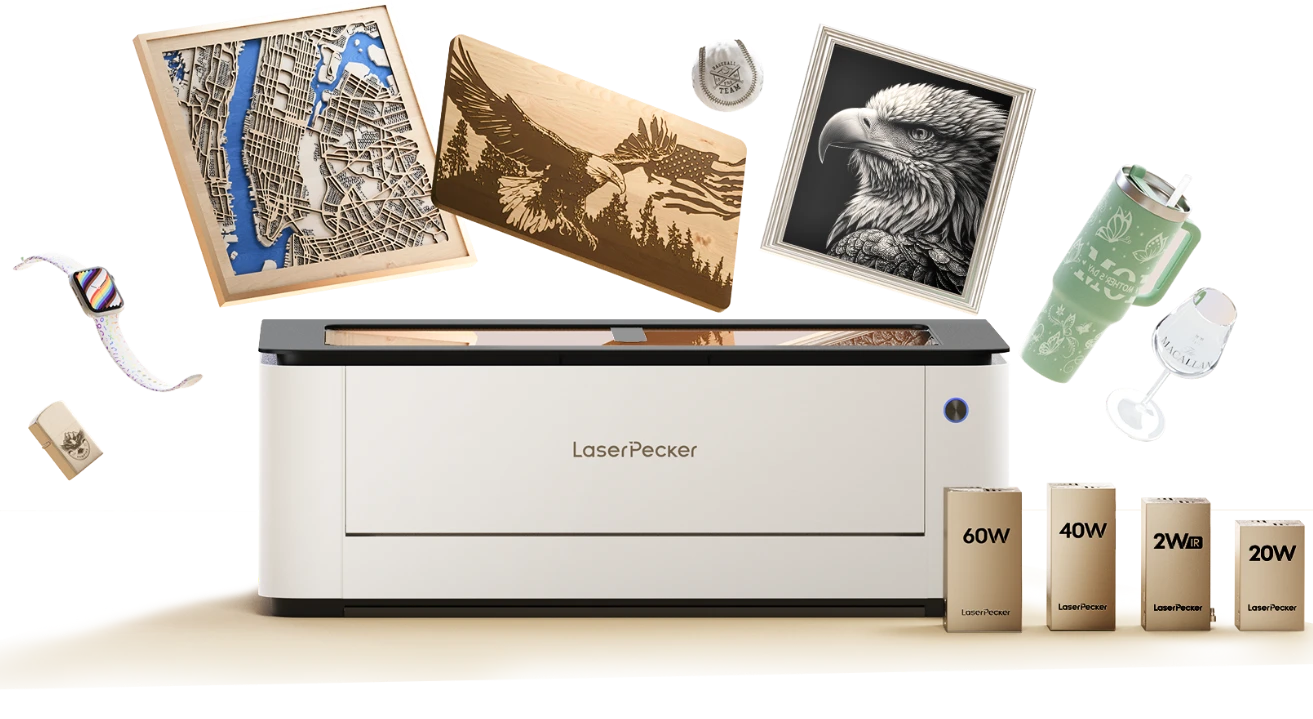
Recommended Laser Cutter for Cork Board: LaserPecker LX2
For creators seeking reliable cork-cutting performance, the LaserPecker LX2 provides a combination of precision, safety, and flexibility.
The system is suitable for producing decorative cork panels, personalised products, packaging inserts, educational materials, and custom craft projects. Its advanced features help users achieve professional-quality results while maintaining a straightforward workflow.
A major advantage for European users is the integrated Class 1 Laser Safety design, which offers enhanced protection and makes the LX2 well suited to home workshops, maker spaces, and small businesses.
To further improve indoor working conditions, the LX2 can be used together with the LaserPecker Desktop Smoke Purifier. This solution helps remove smoke, airborne particles, and unwanted odours produced during cutting and engraving, supporting safer indoor operation.
-
High-Precision Laser Spot
Produces accurate cuts and smooth contours for detailed cork projects and decorative applications. -
Class 1 Laser Safety
The enclosed safety design helps provide a safer user experience and supports operation in a wider range of indoor environments. -
High-Speed Cutting and Engraving
Optimised performance helps improve efficiency when producing multiple cork components or processing larger jobs. -
Large Working Area (500 × 305 mm)
Allows users to cut larger cork panels or arrange multiple pieces within a single production cycle. -
Camera-Based Positioning System
Accurate alignment tools help reduce errors and improve material utilisation. -
Flexible Modular Design
Quick laser module changes make it easier to adapt to different materials and project requirements. -
Extensive Material Compatibility
In addition to cork, the LX2 supports wood, leather, acrylic, paper, and other commonly used creative materials.
How to Cut Cork Board with the LaserPecker LX2
- Create your design file.
- Select the appropriate cork material.
- Position the cork sheet securely.
- Configure laser settings.
- Test and adjust if required.
- Start the cutting process.
- Inspect and clean the finished piece.
- Use the completed component in your project.
Method 2: Cut Cork Board Using a Utility Knife or Craft Knife
For simple cork-cutting tasks, a utility knife or craft knife can be a practical and budget-friendly option. It is commonly used for crafts, decorative projects, and basic trimming where high precision is not essential.
While this method is suitable for occasional use, it can be time-consuming when cutting multiple pieces or working with thicker cork materials. Achieving smooth curves and detailed shapes also requires considerable patience and control. For users seeking greater accuracy and efficiency, machine-based solutions such as laser cutters generally deliver superior results.
Steps to Cut Cork Board with a Utility Knife
- Measure and mark the desired cutting line.
- Secure the cork board on a stable work surface.
- Align a metal ruler along the marked area.
- Score the surface lightly to establish a guide line.
- Cut gradually using several passes with steady pressure.
- Remove excess material and tidy any uneven edges.
Advantages
- Low initial cost
- Easy to find and use
- Suitable for small DIY projects
- No electrical equipment required
Limitations
- Limited precision compared with laser cutting
- Challenging for intricate designs and curves
- Can leave rough edges on thicker cork boards
- Labour-intensive for larger projects
- Less suitable for producing identical pieces consistently
A utility knife is often sufficient for simple projects involving thin cork sheets. However, for decorative products, custom designs, or small-scale production, laser cutting offers greater precision, cleaner edges, and a more efficient workflow.
Method 3: Cut Cork Board Using a Cricut Machine
For hobbyists and craft enthusiasts, a Cricut machine can be an effective way to cut thin cork sheets with greater accuracy than manual tools. It is commonly used for decorative shapes, custom lettering, scrapbooking elements, and other creative projects.
While Cricut machines provide a convenient cutting experience, they are best suited to lightweight cork materials. Thicker cork boards may not cut cleanly and often require multiple passes, which can affect edge quality and overall efficiency. For more demanding applications, laser cutting typically offers superior precision and material flexibility.
Steps to Cut Cork Board with a Cricut Machine
- Design or upload your artwork in Cricut Design Space.
- Select the material profile closest to your cork sheet.
- Attach the cork sheet securely to a StrongGrip mat.
- Load the mat into the machine.
- Begin the cutting process and monitor the results.
- Remove the finished pieces carefully to prevent tearing.
- Clean or refine the edges if necessary.
Advantages
- User-friendly workflow
- Suitable for creative and decorative applications
- More accurate than hand-cutting methods
- Supports repeatable designs
- Well suited to thin cork sheets
Limitations
- Limited cutting depth compared with laser cutters
- Not ideal for thicker cork boards
- Multiple passes may be required
- Blade replacement increases maintenance costs
- Less suitable for intricate details and commercial production
A Cricut machine works well for lightweight cork projects and creative applications. However, users seeking cleaner cuts, greater material compatibility, and higher productivity often prefer laser cutters for advanced cork-cutting tasks.
Method 4: Cut Cork Board Using a Rotary Cutter
A rotary cutter offers a quick and efficient way to cut cork sheets, making it a popular choice for crafting, classroom projects, and simple decorative applications. It performs particularly well when making long, straight cuts or preparing multiple pieces of the same size.
While this tool can improve cutting speed compared with a craft knife, its design is best suited to basic shapes and linear cuts. Complex patterns, detailed artwork, and curved contours remain challenging and often require more advanced cutting equipment.
Steps to Cut Cork Board with a Rotary Cutter
- Measure and mark the required cutting lines.
- Place the cork board on a protective self-healing cutting mat.
- Align a metal ruler or guide along the cutting path.
- Roll the cutter steadily along the marked line while applying consistent pressure.
- Repeat the process if additional cutting depth is required.
- Trim and refine any uneven edges.
Advantages
- Quick cutting process
- Effective for straight lines and repetitive cuts
- User-friendly operation
- Suitable for lightweight and medium-thickness cork sheets
- Cost-effective for occasional projects
Limitations
- Limited design flexibility
- Not ideal for intricate shapes or fine details
- Performance decreases on thicker cork boards
- Less accurate than machine-based cutting methods
- Not suitable for production-scale applications
For straightforward cutting tasks, a rotary cutter can be a practical solution. However, users who require detailed designs, cleaner edges, or the ability to work with a wider range of cork materials often find laser cutters to be the more capable and versatile option.
FAQs: Common Questions About Cutting Cork Board
Q1. Can I cut cork board with a regular utility knife?
Yes, a utility knife can be used for thin and medium-thickness cork boards. Making several controlled passes usually produces better results than applying excessive force in a single cut.
For thicker cork materials, edge quality may decrease and additional finishing may be required.
Q2. How thick should cork board be for different applications?
The recommended thickness depends on the project.
- 1–3 mm: Crafts and decorative projects
- 5–10 mm: Wall coverings and notice boards
- 10–20 mm: Sound insulation and underlayment applications
Selecting the correct thickness helps improve durability and performance.
Q3. Can I cut cork board with a handsaw?
Yes, a handsaw is suitable for thicker cork boards and simple shaping tasks.
A fine-tooth blade is recommended to reduce tearing and create cleaner edges. Sanding afterwards can further improve the finish.
Q4. What's the best tool for cutting thick cork boards?
Laser cutters are often considered the best solution for thick cork boards because they provide precise cuts, smooth edges, and excellent consistency.
For basic construction projects, a saw may also be suitable, although additional finishing work is usually required.
Q5. Can laser cutters cut cork safely?
Yes. Cork is generally compatible with laser cutting when appropriate settings and ventilation are used.
For indoor use, systems such as the LaserPecker LX2 combined with the LaserPecker Desktop Smoke Purifier can help manage smoke and odours generated during cutting while maintaining a cleaner working environment.
Q6. Which cutting method provides the cleanest cork board edges?
Among the most common cutting methods, laser cutting typically produces the cleanest and most consistent edges.
While utility knives, rotary cutters, and Cricut machines can be effective for specific applications, laser cutters are generally preferred for detailed designs, thicker materials, and professional-quality results.
Conclusion
The most suitable method for cutting cork board depends on the material thickness, project complexity, and level of accuracy you require.
Manual tools such as utility knives and rotary cutters are practical for simple cuts and occasional DIY projects, while Cricut machines can be effective for thin cork sheets and decorative applications. However, these methods often have limitations when handling thicker materials, detailed designs, or larger production runs.
For users who prioritise precision, efficiency, and professional-quality results, laser cutting remains the preferred solution. The LaserPecker LX2 offers a combination of accurate cutting performance.
No matter which method you choose, matching the right tool to your project requirements will help you achieve cleaner cuts, improve efficiency, and maximise the potential of your cork board creations.


