


Creating a dollhouse is a popular DIY project for crafters, families, educators, and makers across Europe. Today, there are several practical ways to build a dollhouse, ranging from simple cardboard construction to traditional woodworking and advanced laser cutting technology.
The right method depends on factors such as budget, available tools, design complexity, and the level of precision you want to achieve. In this guide, we'll compare three common dollhouse-building methods, highlight their advantages and limitations, and help you determine which approach best suits your project. For those seeking precise cuts, easy customisation, and professional-looking results, laser cutting is often the preferred choice.

In this article:
- Method 1: Make a Cardboard Dollhouse with a Craft Knife
- Method 2: Make a Wooden Dollhouse with a Jigsaw
- Method 3: Make a Dollhouse with a Laser Cutter
- FAQs: Hot Questions about Making a Dollhouse
Method 1: Make a Cardboard Dollhouse with a Craft Knife
Building a cardboard dollhouse is a practical and cost-effective option for DIY enthusiasts, educators, and families. Using recycled cardboard and a few basic tools, you can create a personalised dollhouse without specialised equipment. This method works well for simple projects, although it offers less precision and durability than woodworking or laser-cut alternatives.
Materials and Tools Needed
- Cardboard sheets or cardboard boxes
- Craft knife
- Metal ruler
- Glue or hot glue gun
- Pencil
- Paint, decorative paper, or craft materials
Steps to Make a Cardboard Dollhouse with a Craft Knife
-
1. Create a Design Plan
Draw a basic floor plan and determine the size, room arrangement, and structural components of the dollhouse. -
2. Cut the Parts
Carefully cut the walls, floors, roof sections, doors, and windows using a craft knife and ruler. -
3. Assemble the Dollhouse
Join all components using glue and allow the structure to dry completely before handling. -
4. Customise the Appearance
Decorate the dollhouse with paint, patterned paper, miniature furniture, and other decorative elements.
Pros and Cons of Using a Craft Knife for a Cardboard Dollhouse
Pros
- Low material cost
- Easy for beginners and educational projects
- No specialised equipment required
- Simple to customise
Cons
- Lower structural strength and lifespan
- Hand-cut pieces may vary in accuracy
- Time-consuming for complex designs
- Not ideal for highly detailed dollhouse models
Method 2: Make a Wooden Dollhouse with a Jigsaw
Building a wooden dollhouse with a jigsaw is a popular choice for makers who want a stronger and more professional-looking result than cardboard can provide. Wood materials such as plywood or MDF offer excellent durability and allow for larger, more detailed dollhouse designs. However, this method requires additional tools, manual cutting skills, and more time to complete.
Materials and Tools Needed
- Plywood or MDF boards
- Jigsaw
- Measuring tape
- Pencil
- Wood glue
- Screws or nails
- Sandpaper
- Paint and decorative finishes
Steps to Make a Wooden Dollhouse with a Jigsaw
-
1. Plan the Design
Create a detailed layout showing the dimensions, room configuration, windows, doors, and roof sections. -
2. Cut the Wooden Panels
Use a jigsaw to cut each structural component, including walls, floors, roofs, doors, and windows. -
3. Assemble the Dollhouse
Attach all parts using wood glue, screws, or nails to ensure a secure structure. -
4. Sand and Decorate
Sand all edges and surfaces before applying paint, decorative finishes, or miniature accessories.
Pros and Cons of Using a Jigsaw for a Wooden Dollhouse
Pros
- Durable and long-lasting construction
- More realistic than cardboard models
- Suitable for custom designs and larger projects
- Better structural stability
Cons
- Requires specialised tools
- Greater learning curve for beginners
- Manual cutting may reduce accuracy
- Complex patterns and fine details can be challenging to produce
Method 3: Make a Dollhouse with a Laser Cutter
Laser cutting is widely regarded as one of the most advanced methods for building a custom dollhouse. Compared with hand-cut cardboard or traditional woodworking techniques, laser cutting offers higher precision, cleaner edges, and greater design flexibility.
Because the machine follows a digital design file, every component can be produced with consistent accuracy. Laser cutters can also engrave decorative details directly onto wood panels, making it possible to create realistic textures, architectural features, and personalised designs with minimal additional work.
Materials and Tools Needed
- Laser cutter
- Plywood, basswood, or MDF sheets
- Vector design software
- Wood glue
- Sandpaper
- Paint and decorative finishes
Steps to Make a Dollhouse with a Laser Cutter
-
1. Design the Dollhouse Components
Create digital vector files for the walls, floors, roof sections, doors, windows, and decorative features. -
2. Prepare the Material
Position the wood sheet inside the laser cutter and configure the machine settings according to the selected material. -
3. Cut and Engrave the Parts
Produce all structural and decorative components using a single digital workflow. -
4. Assemble the Structure
Use wood glue to join the laser-cut panels and build the complete structure. -
5. Decorate and Finish
Apply paint, wallpaper, miniature furniture, and accessories to customise the final appearance.
Pros and Cons of Using a Laser Cutter for a Dollhouse
Pros
- High precision and dimensional accuracy
- Clean cuts with reduced manual finishing
- Suitable for detailed and complex designs
- Faster production process
- Excellent customisation potential
- Repeatable results for multiple projects
Cons
- Requires access to laser cutting equipment
- Higher upfront investment
- Some design software experience may be required
Recommended Laser Cutter for Dollhouse Projects: LaserPecker LX2
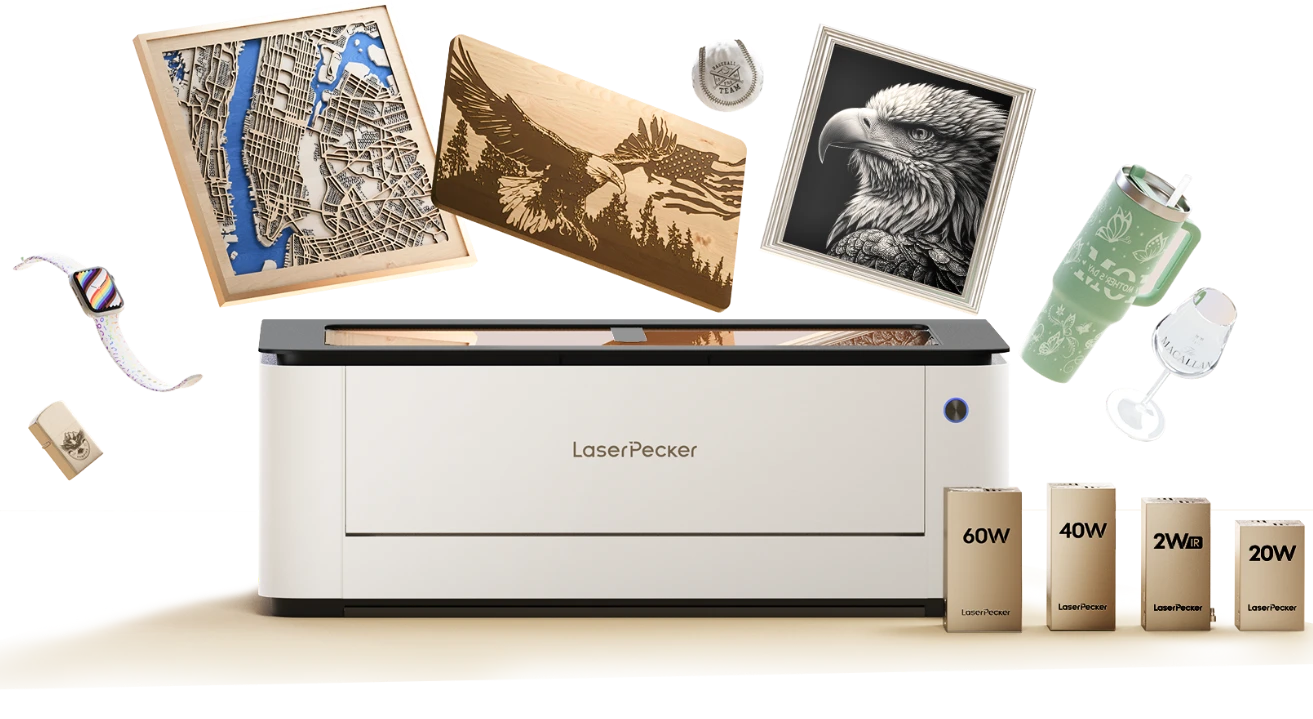
For makers looking to create detailed dollhouses efficiently, the LaserPecker LX2 offers an effective combination of laser cutting and engraving capabilities. By streamlining the design-to-production process, it enables users to create accurate, repeatable, and highly customised dollhouse components.
-
Precision Cutting for Detailed Dollhouse Construction
Creating a high-quality dollhouse requires precise parts that fit together accurately. The LX2 can cut miniature walls, roofs, windows, staircases, room dividers, and furniture components with excellent precision, helping makers achieve cleaner assembly and professional results. -
Decorative Laser Engraving for Realistic Architectural Effects
The LX2 enables users to engrave realistic brick textures, wood grain effects, floor designs, decorative trim, and customised details directly onto dollhouse materials. These engraved features can significantly enhance the realism and visual appeal of finished projects. -
Dual-Laser Flexibility for Multi-Material Dollhouse Designs
Many dollhouse builders use a combination of wood, acrylic, cardboard, leather, and decorative materials. The LX2's dual-laser configuration supports a broader range of materials, allowing makers to create both structural and decorative components using a single machine. -
Consistent Digital Reproduction for Large Builds
Large dollhouses often require repeated elements such as doors, windows, furniture sets, and decorative panels. Digital production makes it easy to reproduce identical components while maintaining consistent quality throughout the project. -
Spacious Working Area for Greater Productivity
The large 500 mm × 305 mm workspace allows multiple dollhouse parts and accessories to be processed simultaneously, helping makers and small workshops complete projects more efficiently. -
Class 1 Laser Safety for Indoor Maker Spaces
The LX2 features Class 1 Laser Safety, making it particularly suitable for indoor workshops, creative studios, educational spaces, and maker environments across Europe where safety is an important consideration. -
Indoor-Friendly Operation with Smoke Filtration
When paired with the LaserPecker Desktop Smoke Purifier, the LX2 helps reduce smoke, odours, and airborne particles generated during cutting and engraving. This supports a cleaner indoor workspace, which is especially beneficial for users working on detailed dollhouse projects over extended periods.
Comparison of Dollhouse-Making Methods
| Method | Cost | Difficulty | Precision | Customisation | Durability |
|---|---|---|---|---|---|
| Cardboard + Craft Knife | Low | Easy | Low | Medium | Low |
| Wood + Jigsaw | Medium | Medium | Medium | Medium | High |
| Laser Cutter | Medium-High | Easy-Medium | High | High | High |
FAQs: Hot Questions about Making a Dollhouse
Q1: How difficult is it to build a dollhouse at home?
The difficulty depends on the construction method you choose. Cardboard dollhouses are generally the easiest option for beginners, while wooden dollhouses require additional tools and woodworking skills. Laser cutters can simplify the process by producing accurate parts directly from digital designs.
Q2: Which material is best for a DIY dollhouse?
Popular materials include cardboard, plywood, basswood, and MDF. Plywood is often preferred for its strength and durability, while MDF offers smooth surfaces and precise cutting results. The best choice depends on your budget, desired appearance, and construction method.
Q3: Is a laser cutter worth it for dollhouse projects?
If you regularly create miniature models, custom dollhouses, or detailed craft projects, a laser cutter can save significant time while improving precision and consistency. It is especially useful for projects that require repeatable parts or intricate decorative details.
Q4: Can a laser cutter engrave details on a dollhouse?
Yes. In addition to cutting structural components, laser cutters can engrave decorative features such as brick textures, floor patterns, roof details, window frames, and personalised names. This helps create a more realistic and customised appearance.
Q5: What is the most common dollhouse scale?
A 1:12 scale is widely considered the standard dollhouse scale and is compatible with a large selection of miniature furniture and accessories. Smaller scales, such as 1:24, are also commonly used for compact projects and display models.
Conclusion
Building a dollhouse is an enjoyable way to explore DIY crafting, model making, and creative design. From affordable cardboard projects to durable wooden constructions, each method offers different advantages in terms of cost, durability, customisation, and ease of use.
For makers, educators, and creative professionals across Europe seeking higher precision and greater efficiency, laser cutting provides the most advanced and versatile solution. The ability to accurately cut and engrave detailed components makes it ideal for custom dollhouses, architectural miniatures, educational projects, and small-batch production.
Desktop laser cutters such as the LaserPecker LX2 combine precision, flexibility, and ease of operation in a compact system, helping users throughout Europe create professional-quality dollhouse projects with consistent results.


