
















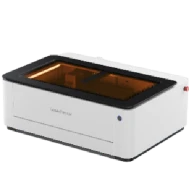
























Les machines de gravure de pierres tombales sont essentielles pour produire des monuments commémoratifs durables et de haute qualité, avec précision et régularité. Des techniques traditionnelles telles que le sablage aux technologies avancées comme la gravure CNC et laser, chaque méthode offre des avantages spécifiques selon le matériau, la complexité de la conception et les exigences de production.
Que vous réalisiez un simple texte ou des images détaillées, choisir la machine de gravure appropriée est essentiel pour garantir une durabilité à long terme et un rendu visuel net. Connaître les principaux types de machines de gravure de pierres tombales vous aidera à prendre une décision éclairée pour votre atelier ou votre entreprise.

Dans cet article :
- Partie 1 : 4 types de machines de gravure de pierres tombales
- Type 1 : Machines CNC de gravure sur pierre
- Type 2 : Machines de gravure par percussion
- Type 3 : Machines de gravure laser
- Type 4 : Systèmes de sablage
- Partie 2 : Pourquoi le graveur laser est la meilleure machine de gravure de pierres tombales
- FAQ : Questions fréquentes sur les machines de gravure de pierres tombales
Partie 1 : 4 types de machines de gravure de pierres tombales
Il existe différents types de machines utilisées pour la gravure de pierres tombales, chacune étant adaptée à des matériaux, à une complexité de conception et à des exigences de production spécifiques.
Des méthodes de fabrication traditionnelles aux technologies numériques avancées, chaque solution offre des avantages en matière de précision, de durabilité et d’efficacité du flux de travail. Voici quatre types de machines de gravure de pierres tombales couramment utilisés ainsi que leurs applications habituelles.
Type 1 : Machines CNC de gravure sur pierre pour pierres tombales
Les machines CNC de gravure sur pierre sont couramment utilisées pour la sculpture et la gravure précises de pierres tombales. Ces systèmes fonctionnent grâce à des mouvements contrôlés par ordinateur qui guident les outils de coupe sur la surface de la pierre, garantissant des résultats précis et reproductibles.
Elles conviennent à des matériaux tels que le granit, le marbre et d’autres pierres naturelles. La technologie CNC permet de réaliser des inscriptions, des portraits, des bordures décoratives et des sculptures profondes, ce qui la rend adaptée à la production standard comme aux créations commémoratives personnalisées.
Avantages
Production constante : Convient à la fabrication en série et aux commandes répétées.
Inconvénients
Nécessite des outils spécifiques : Requiert un outillage dédié au traitement de la pierre.
Temps de traitement plus long : Les matériaux durs augmentent le temps de gravure.
Configuration technique : Un calibrage approprié est nécessaire pour obtenir une précision optimale.
Type 2 : Machine de gravure par percussion pour pierres tombales
Les machines de gravure par percussion créent des marquages en frappant la surface de la pierre à l’aide d’un mécanisme vibrant ou rotatif. Au lieu de réaliser une coupe profonde, elles produisent des points ou des lignes gravés qui forment du texte et des éléments graphiques.
Cette méthode est fréquemment utilisée pour les pierres tombales en granit, car elle produit un fort contraste visuel sur les surfaces en pierre polie et convient aux motifs de type portrait.
Avantages
Fort contraste visuel : résultats très visibles sur la pierre polie.
Adapté aux portraits : la gravure basée sur des points permet de créer des effets d’ombrage.
Inconvénients
Profondeur limitée : gravure moins profonde que la sculpture CNC.
Moins efficace sur les grandes surfaces : ne convient pas aux motifs étendus ou profonds.
Type 3 : Machines de gravure laser pour pierres tombales
Les machines de gravure laser utilisent un faisceau laser focalisé pour graver ou marquer les surfaces en pierre avec une grande précision. Le procédé est sans contact, ce qui signifie qu’aucune pression physique n’est exercée sur le matériau.
Les systèmes laser sont largement utilisés sur le granit revêtu, la pierre noire et les surfaces polies nécessitant un contraste élevé et des détails fins. Ils sont particulièrement efficaces pour les portraits photographiques, les graphismes détaillés et les motifs décoratifs complexes.
Avantages
Grande précision : offre des détails fins et un texte net.
Technologie sans contact : réduit les contraintes mécaniques exercées sur la pierre.
Excellent pour les images : idéal pour les portraits et la gravure de photos.
Commande numérique : garantit un résultat reproductible et constant.
Inconvénients
Profondeur de gravure limitée : ne convient pas aux applications de sculpture profonde.
Type 4 : Système de sablage pour pierres tombales
Les systèmes de sablage utilisent des abrasifs projetés à haute pression pour retirer de la matière de la surface de la pierre. Un pochoir est appliqué, puis les zones exposées sont traitées afin de créer les motifs gravés.
Cette méthode est couramment utilisée pour les monuments funéraires en granit, car elle produit des gravures profondes et durables adaptées à une utilisation extérieure à long terme. Elle convient particulièrement aux grandes inscriptions et aux styles de design traditionnels.
Avantages
Gravure profonde et durable : convient aux monuments funéraires conçus pour durer.
Efficace sur le granit : fonctionne bien sur les matériaux en pierre dure.
Inconvénients
Détails fins limités : ne convient pas aux images très détaillées.
Préparation supplémentaire requise : nécessite la création d’un pochoir et un masquage.
Processus en plusieurs étapes : moins rationalisé que les méthodes numériques.
Partie 2 : Pourquoi la graveuse laser est la meilleure machine pour graver les pierres tombales
Vue d’ensemble comparative
| Méthode | Précision | Vitesse | Contact | Qualité des bords | Motifs complexes | Coût d’installation |
|---|---|---|---|---|---|---|
| Machine de gravure CNC sur pierre | Élevé | Moyen | Oui | Net (sculpture profonde) | Excellent | Élevé |
| Machine de gravure par percussion | Moyen à élevé | Moyen | Oui | Modéré (basé sur des points) | Bon (images et ombrage) | Moyen |
| Machine de gravure laser | Très élevé | Élevé | Non | Net (gravure de surface) | Excellent | Moyen à élevé |
| Système de sablage | Moyen | Faible à moyen | Oui | Brut (gravure profonde) | Limité | Moyen |
La gravure laser est de plus en plus adoptée dans le secteur funéraire en raison de sa précision, de sa flexibilité et de sa grande capacité à reproduire des images détaillées.
Raison 1 : Niveau de détail et personnalisation élevés
La technologie laser répond aux exigences modernes en matière de monuments commémoratifs, notamment les designs personnalisés et les portraits haute résolution. La conversion des images en niveaux de gris permet une gravure précise par points pour les photographies, les textes et les éléments décoratifs.
Raison n° 2 : traitement sans contact et protection des matériaux
En tant que méthode sans contact, la gravure laser réduit les contraintes mécaniques exercées sur les surfaces en pierre. Elle contribue ainsi à limiter les dommages de surface et convient aux matériaux polis ou délicats.
Raison n° 3 : efficacité du flux de travail numérique
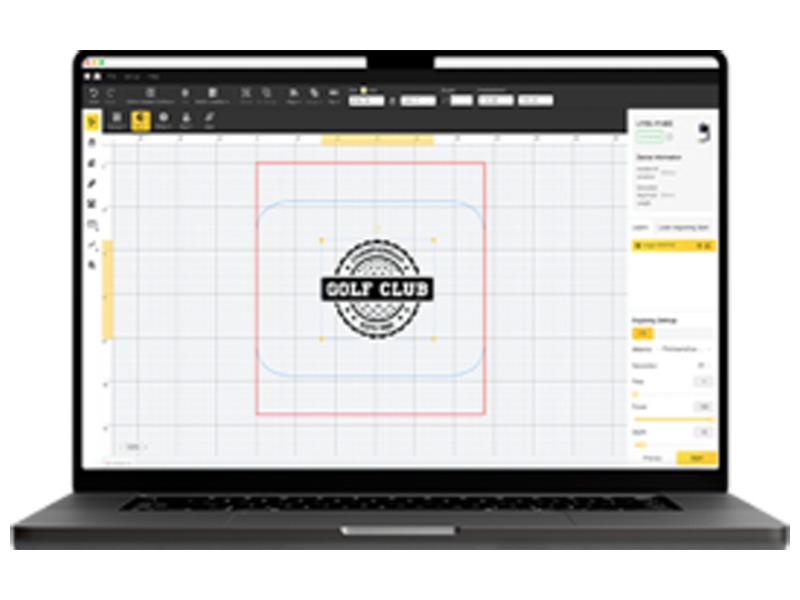
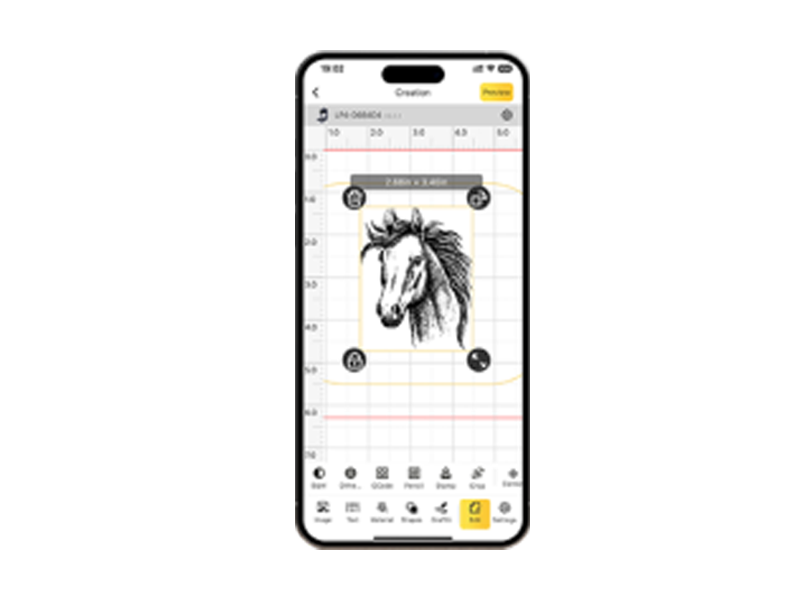
Les systèmes laser fonctionnent à partir de fichiers numériques, ce qui permet une configuration rapide et une modification facile des designs sans préparer de pochoir. Avec LaserPecker Design Space, les utilisateurs peuvent gérer efficacement les mises en page et optimiser les paramètres de gravure, favorisant des environnements de production flexibles.
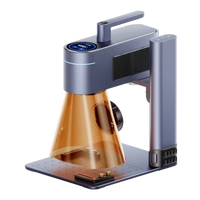
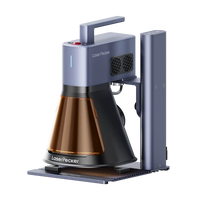
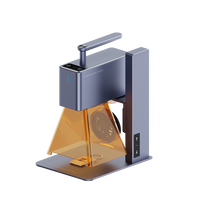
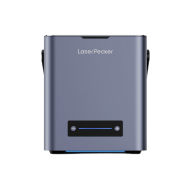
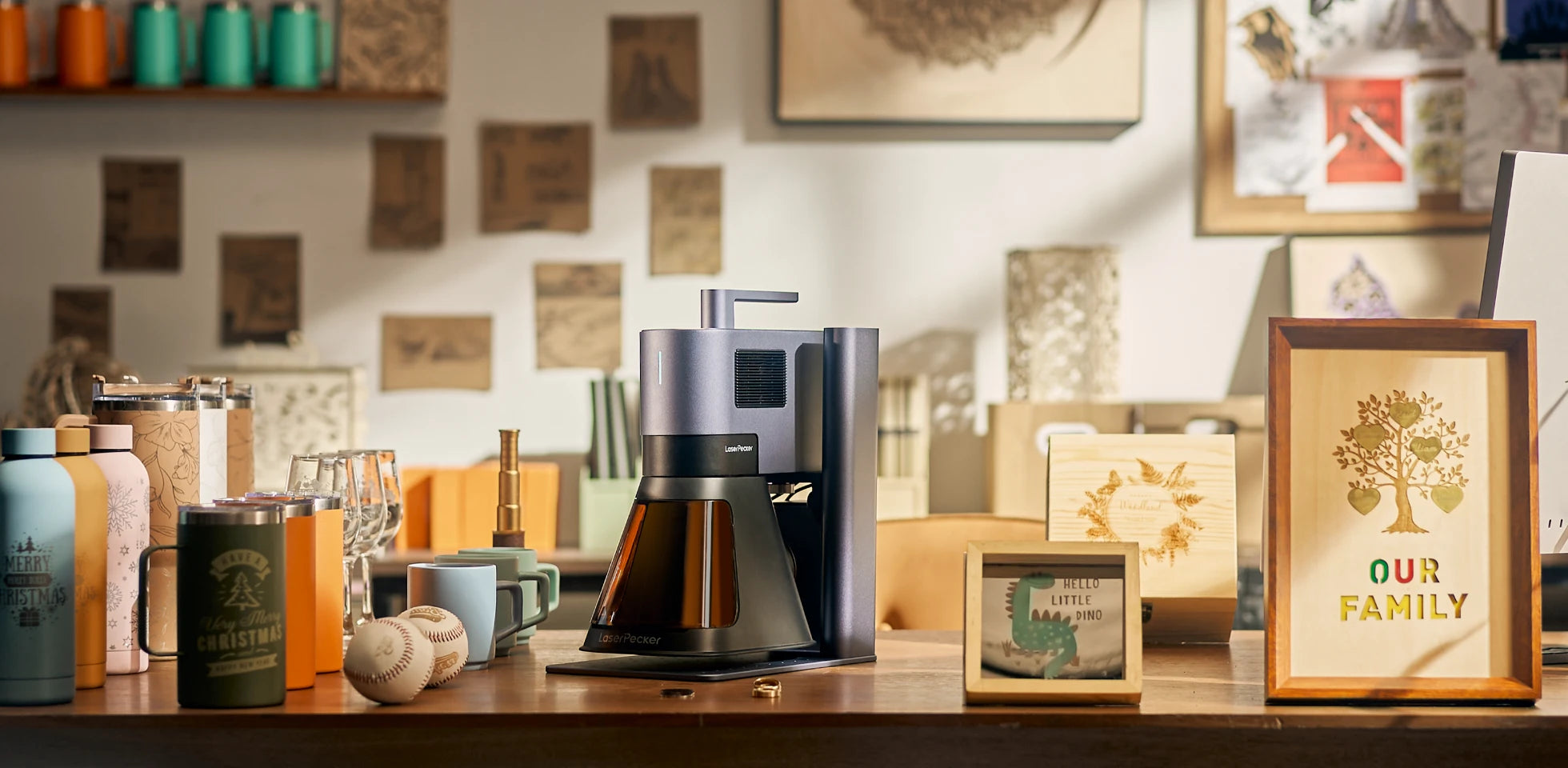
Machine de gravure laser recommandée pour les pierres tombales : LaserPecker LP5
Pour la gravure professionnelle de pierres tombales, le choix de la machine dépend des exigences de précision, de la compatibilité avec les matériaux et des besoins liés au flux de travail.
Comparée à la sculpture traditionnelle ou au sablage, la gravure laser offre une précision supérieure, une meilleure qualité d'image et un contrôle numérique simplifié. Elle convient particulièrement à la production de monuments commémoratifs personnalisés et à la gravure de portraits.
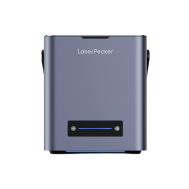
Le LaserPecker LP5 constitue donc une solution performante pour les ateliers et les entreprises professionnelles de gravure.
Technologie laser double (diode + fibre) :
Prend en charge une plus grande variété de matériaux, notamment les métaux et les surfaces en pierre couramment utilisées pour les monuments commémoratifs.
Résolution ultra-élevée :
Avec la prise en charge du traitement d'images jusqu'à 8K, le LP5 permet de réaliser des portraits détaillés et des graphiques commémoratifs complexes.
Vitesse de gravure élevée :
Jusqu'à 10 000 mm/s pour une production efficace de commandes personnalisées et de petites séries.
Performances constantes :
Garantit une qualité de gravure stable et reproductible sur plusieurs travaux.
Intégration logicielle :
Compatible avec LaserPecker Design Space (mobile et ordinateur) ainsi qu'avec LightBurn, pour permettre un traitement avancé des images et un contrôle du flux de travail.
Sécurité et utilisation en intérieur
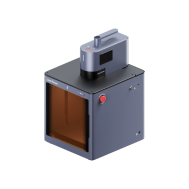
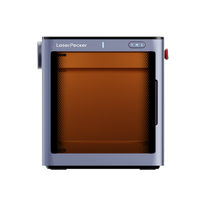
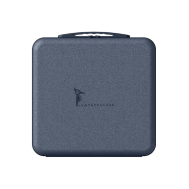
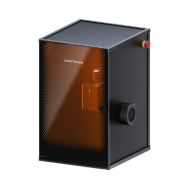
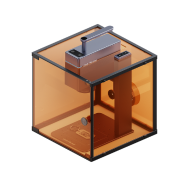
Associé à l'enceinte de sécurité LaserPecker LP5, le système atteint le niveau de sécurité laser Classe 1, améliorant la protection de l'opérateur.
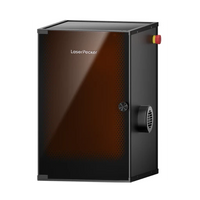
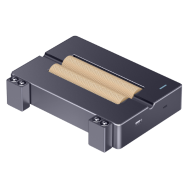
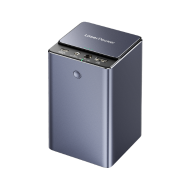
Le LP5 peut également être utilisé avec le purificateur de fumée de bureau LaserPecker pour filtrer les fumées et les odeurs générées lors des processus de gravure et de découpe, favorisant une utilisation en intérieur plus propre et plus sûre.
FAQ : questions fréquentes sur la machine de gravure de pierres tombales
Q1. Le laser peut-il graver des pierres tombales en granit ?
Oui, la gravure laser convient aux pierres tombales en granit, en particulier aux variétés plus foncées. Le laser modifie la couche superficielle pour créer des marques gris clair ou blanches, idéales pour les portraits, les designs détaillés et les textes fins. Les résultats dépendent du type de pierre et de la finition de sa surface.
Q2. Quelle est la meilleure machine pour les pierres tombales en granit ?
La meilleure option dépend de votre application. Les machines de gravure laser sont largement utilisées pour les images très détaillées et la reproduction de photos. Les machines CNC conviennent à la sculpture profonde et aux designs structurés. Les systèmes de sablage sont couramment utilisés pour les inscriptions commémoratives traditionnelles.
Q3. Quelle doit être la profondeur d’une gravure de pierre tombale ?
La profondeur dépend de la méthode. La CNC et le sablage produisent généralement des gravures plus profondes (environ 1 à 3 mm ou davantage), offrant une grande durabilité. La gravure laser agit généralement en surface, mais offre un excellent contraste visuel et une grande précision.
Q4. Le sablage est-il meilleur que la gravure laser ?
Chaque méthode présente des avantages. Le sablage est efficace pour les lettres profondes et classiques. La gravure laser excelle dans les portraits détaillés, les graphiques complexes et les designs personnalisés modernes. De nombreux ateliers européens combinent les deux technologies selon leurs besoins de production.
Q5. Combien coûte une machine de gravure de pierres tombales dans l’UE ?
Les prix varient selon le type et la configuration de la machine. Les systèmes laser d’entrée de gamme peuvent commencer à environ 900–1 200 €, tandis que les machines laser ou CNC avancées peuvent nécessiter un investissement nettement plus élevé. Les dépenses supplémentaires peuvent inclure les logiciels, la maintenance, la formation des opérateurs et l’aménagement de l’espace de travail.
Q6. Quels facteurs les entreprises de l’UE devraient-elles prendre en compte lors du choix d’une machine de gravure de pierres tombales ?
Les ateliers de l’UE devraient évaluer les exigences de précision, la compatibilité des matériaux (comme le granit, couramment utilisé en Europe), le volume de production, les normes de sécurité et les considérations environnementales. Pour les environnements intérieurs, les systèmes laser associés à des enceintes de protection et à une filtration des fumées peuvent favoriser une utilisation plus sûre et plus conforme.
Conclusion
La technologie de gravure des pierres tombales est passée des méthodes de fabrication traditionnelles à des solutions numériques avancées, offrant un plus large éventail d’options en matière de précision, de flexibilité de conception et de production personnalisée. Chaque technique — CNC, gravure par impact, gravure laser et sablage — présente des avantages spécifiques selon la profondeur de gravure, les exigences de conception et les attentes en matière de flux de travail.
Pour les applications nécessitant des gravures profondes et durables, les systèmes CNC et le sablage restent des options fiables. Pour les œuvres très détaillées, la gravure de portraits et les designs commémoratifs personnalisés modernes, la technologie laser offre une précision, une flexibilité et une efficacité numérique supérieures, ce qui la rend particulièrement adaptée aux environnements de production contemporains en Europe.